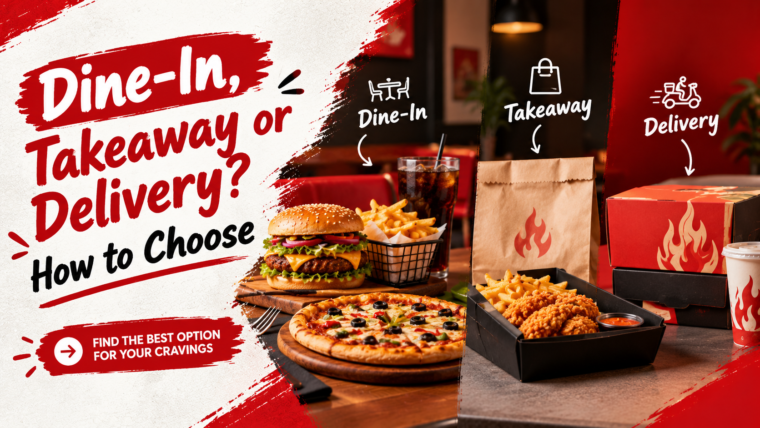

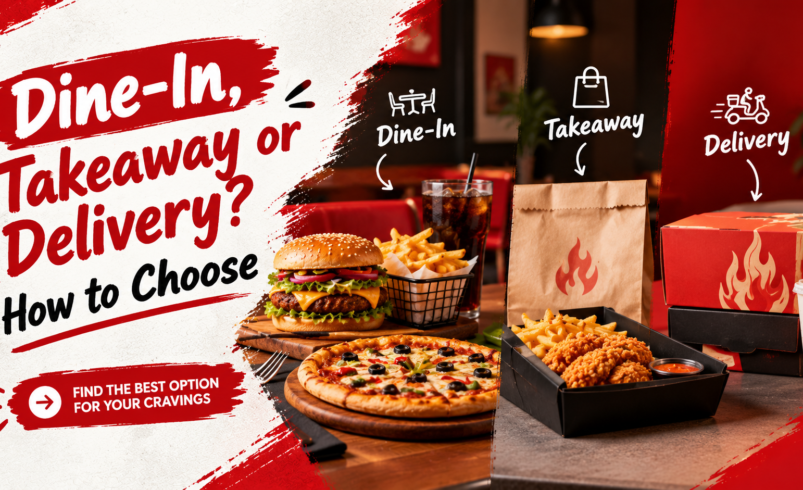

The same burger can reach a hungry person in three different ways: served at a table, collected at a counter, or brought to a door. The food is identical. Almost everything around it is not.
Each method changes the cost, the speed, the temperature, and even how enjoyable the meal feels. Choosing well is less about habit and more about matching the method to the moment, and a little thought makes all three work better.
Three Ways to Eat the Same Meal
Dine-in, takeaway and delivery solve different problems, and each one trades something for something else.
Dining in offers the freshest food and a proper setting, but it costs time and travel. Takeaway gives control over timing and avoids delivery charges, but it needs a trip. Delivery removes the trip entirely, at the price of a fee and a longer journey for the food.
When comparing the best fast food Lahore has to offer, it helps to ask three simple questions first:
- How much time is available?
- How important is it that the food is at its absolute best?
- How much is the convenience worth?
The answers usually point to one method straight away, and thinking them through takes less than a minute.
Dine-In: Freshness and Atmosphere
Eating at the restaurant is the closest anyone can get to the food as the kitchen intended it.
The meal goes from the pass to the table in minutes. Fries are still crisp, cheese is still melted and fried chicken keeps its coating. There is no packaging to trap steam and no journey to cool anything down. For dishes that are at their best in the first few minutes, such as mozzarella sticks or fresh fries, this makes a real difference.
Dining in also suits occasions that call for company. A table, conversation and no need to clear up afterwards turn a meal into an outing. The trade-off is the time and effort involved: getting there, finding a table, waiting and getting home again. For a quick, ordinary meal, that can feel like a lot.
Takeaway: Control and Savings
Takeaway sits in the middle, and it is often the most underrated of the three.
The customer chooses when to collect, which gives control over timing. There is no delivery fee, and the food travels only a short distance, usually in a person’s own hands or car. For anyone living or working close to the restaurant, it can be the fastest and cheapest way to get a hot meal.
A few practical advantages:
- No delivery charge, which saves money on every order
- A shorter journey, so the food is hotter on arrival
- A chance to check the order at the counter before leaving
- Flexibility to order ahead and collect when ready
The main limitation is the trip itself. It only makes sense when the restaurant is close, and it can be less appealing in bad weather or heavy traffic. Not every restaurant offers pickup either, so it is worth checking before planning around it.
Delivery: Convenience at a Cost
Delivery is the easiest method, and it is the one most people choose most often.
The meal arrives at the door with no travel and no waiting at a counter. It suits busy evenings, bad weather, large groups and anyone who simply wants to stay in. That convenience is real, and for many people it is worth paying for.
The cost comes in three forms. There is the fee itself, there is the extra time food spends travelling and there is the packaging, which has to hold heat without trapping too much steam. Fried and crisp items suffer most. Dishes that travel well, such as pizza, wraps and burgers, tend to do better.
Comparing Cost and Time
A simple comparison shows how the methods differ.
Dining in usually costs the menu price plus travel, while takeaway costs the menu price and a short trip. Delivery costs the menu price plus a fee, and sometimes additional charges that depend on distance and demand. In terms of time, takeaway and dine-in both need a journey, while delivery needs a wait.
It helps to look at the whole cost, not just the price on the screen. A delivery fee may be less than the cost of fuel and time for a longer trip, particularly in heavy traffic. For a nearby restaurant, the opposite is often true, and a short walk saves money and gives a hotter meal.
Matching the Method to the Moment
No method is best in every situation, and the right choice changes with the occasion.
A quick weekday lunch near the office often suits takeaway. A relaxed weekend meal with friends suits dining in. A tired evening at home or a family gathering suits delivery, especially for a group, where one order saves several trips.
Hungrie takes orders through its own website and is also listed on foodpanda, so someone choosing delivery can compare the final totals on both before deciding. Reviews of Hungrie’s pizza on foodpanda also mention the crust and toppings, which is a useful sign for a dish that has to survive a delivery journey. It is a small detail, but it shows how reading reviews for the specific dish can help choose what to order when the meal will travel.
When searching for fast food restaurants in Lahore, it is also worth checking which methods each place offers, since not every restaurant provides dine-in, pickup and delivery together. A short list of options for each situation makes the decision faster next time.
Conclusion
Dine-in, takeaway and delivery each have a place. Dining in gives the freshest food and the best setting, takeaway gives control and savings, and delivery gives comfort at a modest cost. Thinking about time, quality and convenience before ordering, and choosing the method that fits the moment, usually makes the same meal taste better and feel easier.