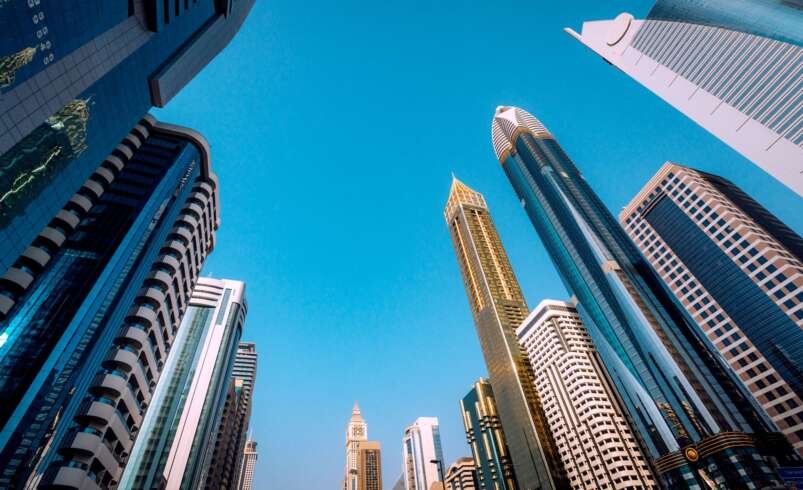

Dubai’s real estate market has reached a critical inflection point as we move through late 2026, transitioning from a period of high-speed speculative growth into a disciplined, fundamentals-driven cycle. The emirate is now positioned not just as a regional hotspot, but as a mature global safe haven, achieving a low bubble risk score of 0.64 on the UBS Global Real Estate Bubble Index. With total market sales hitting AED 340 billion across 115,000 transactions by August 2026 alone, capital is flowing into the city at historic rates. However, today’s market demands rigor; buyers are taking longer to decide, heavily prioritizing developer reputation, established infrastructure, and long-term community value over quick flips.
For global investors, corporate executives, and expanding families, navigating this nuanced landscape requires a thorough understanding of macroeconomic drivers, segment performance, and targeted neighborhood analysis.
The Macro-Economic Foundations of 2026 Demand
The structural integrity of Dubai’s property sector in 2026 is anchored by robust demographic and economic tailwinds.
Population Expansion and Long-Term Residency
Dubai’s population officially surpassed the 4 million mark in 2025, with conservative estimates projecting an additional 175,000 to 225,000 residents throughout 2026. Crucially, this growth is being driven by long-term residents and skilled migrants rather than transient workers, thereby providing a solid foundation for end-user housing demand and sustained rental absorption.
Economic Vigor and High Cash Equity
The wider UAE economy is projected by the IMF to grow at approximately 5% in 2026, significantly outpacing the global average and driving wealth creation across financial services, tech, and tourism. A major differentiator of the current property cycle is the profound volume of deployed equity. Institutional surveys indicate that cash purchases account for over 70% of all secondary and off-plan sales. This massive cash equity buffer practically eliminates the systemic foreclosure risks associated with high-leverage markets during global economic slowdowns.
Favorable Tax Environment and Ownership Rights
Global capital continues to flock to Dubai to escape tightening fiscal policies abroad. The emirate’s lack of annual property taxes, capital gains taxes, and income taxes on rental yields ensures that gross rental income translates directly into net profits. Furthermore, international buyers enjoy full, 100% freehold ownership rights in designated zones, providing unconditional security without the need for local sponsorship.
Market Trends: Elite Yields and the Flight to Quality
As the market matures, the “rising tide lifts all boats” phenomenon has ended. Pricing performance now varies significantly between communities and individual developments.
Global Leading Rental Yields
Despite rising valuations, Dubai remains one of the most lucrative global markets for landlords. As of late 2026, the citywide average gross rental yield sits at an incredibly attractive 6.8%. Mid-market and suburban hubs are generating exceptional returns—often between 6.5% and 8.2%—making them prime targets for investors focused on aggressive cash flow.
Real Estate “Shrinkflation” and Segment Performance
A notable trend in the apartment segment is “shrinkflation.” As the price per square foot increases, developers are designing smaller, highly efficient layouts to maintain accessible total transaction values. Studio and one-bedroom units are frequently outperforming larger configurations in terms of yield. Conversely, the villa market is experiencing massive capital appreciation due to sheer scarcity. Mature family villa communities simply cannot be replicated at scale, driving significant price growth for existing inventory. Townhouses remain the middle ground, offering essential family space at a lower price per square foot.
Navigating the 2026 Neighborhood Map
Strategic community selection dictates investment success. The 2026 buyer places a massive premium on established connectivity, lifestyle amenities, and structural quality.
Dubai Marina: The Resilient Yield Engine
Dubai Marina is a global benchmark for waterfront, high-density residential living. Defined by its iconic high-rises, sprawling canal, and cosmopolitan lifestyle, it remains a favorite among young professionals and tourists. For investors, this translates into exceptional liquidity and robust performance in the short-term vacation rental market. As of late 2026, properties here are averaging a solid 6.9% yield.
Palm Jumeirah: The Global Trophy Asset
Operating almost independently of broader market cooling, Palm Jumeirah serves as the ultimate wealth preservation vehicle. With its strictly finite land supply and ultra-exclusive beachfront estates, it acts as a defensive asset class against global economic turbulence. Demand here is less about yield (averaging closer to 5.2%) and entirely focused on legacy ownership, lifestyle prestige, and long-term capital preservation.
Jumeirah: Traditional Coastal Prestige
Contrasting the high-rises of the Marina, Jumeirah is a storied, low-rise residential district characterized by sprawling private villas and immediate sea access. It is the preferred choice for established families seeking understated elegance, privacy, and community-centric living, resulting in low tenant turnover and incredibly stable income streams.
DAMAC Hills 1: The Suburban Sanctuary
As prime freehold villa prices have soared, suburban master-planned communities have become major beneficiaries. DAMAC Hills 1 is built around an international-standard golf course and features expansive parks, family amenities, and modern townhouses. It captures the massive demographic shift of families prioritizing green space and integrated schooling, offering excellent entry-price value.
Sobha Hartland and Al Jaddaf: The Value-Add Investment
For investors seeking higher capital growth potential, strategically located emerging hubs are highly attractive. Sobha Hartland, positioned within Mohammed Bin Rashid City, offers premium green living just minutes from Downtown Dubai. Meanwhile, Al Jaddaf, nestled along the historic Dubai Creek, benefits from continuous public infrastructure upgrades, providing a highly accessible price point for early investors aiming for medium-term capital gains.
Strategic Avenues: Off-Plan Versus Secondary
The acquisition strategy in late 2026 requires weighing the benefits of off-plan developments against completed homes.
The Scrutiny of Off-Plan Investments
Off-plan sales remain immensely popular due to staggered, interest-free payment plans and the potential for capital appreciation prior to handover. However, buyers have become extremely analytical. The market now rigorously evaluates developer delivery histories, build quality, and true community appeal. A payment plan alone is no longer enough; the total acquisition cost and long-term resale potential must align with the neighborhood’s future infrastructure.
The Immediate Cash Flow of the Ready Market
The secondary (ready) market is highly appealing to end-users wishing to upgrade their lifestyle immediately and investors seeking instant rental yield. Purchasing a ready property allows the buyer to physically inspect the asset, completely bypass construction timelines, and leverage immediate, proven rental demand. Given that a majority of secondary market purchases are executed with cash, the sector is insulated from interest rate fluctuations and localized credit contractions.
The Critical Role of Expert Advisory
As Dubai’s property market transitions from a speculative boom into a highly selective, high-value investment environment, the margin for error has significantly narrowed. Selecting the right property based on location, genuine demographic scarcity, and structural quality is now the primary driver of portfolio performance.
Attempting to navigate this segmented landscape independently introduces substantial risk. Property pricing, off-plan developer track records, and localized service charges require institutional-grade analysis. Expert real estate professionals possess the localized knowledge necessary to interpret shifting transaction volumes, evaluate micro-market pricing, and secure access to exclusive off-plan launches before they hit the general public.
Whether you are evaluating the capital appreciation potential of an emerging district like Al Jaddaf, or balancing the high-yield mechanics of a Dubai Marina apartment, working with a trusted real estate company in Dubai ensures that your capital is deployed with strategic precision. A reputable agency provides end-to-end management of the entire transaction lifecycle. They leverage expert negotiation skills to ensure optimal pricing, handle the complex documentation and escrow protocols mandated by the Dubai Land Department, and offer strategic guidance tailored to your specific risk tolerance and financial objectives.
For those seeking to navigate this complex cycle, partnering with dedicated Dubai real estate agents guarantees that you have the market transparency and personalized guidance necessary to secure an asset that performs.
Conclusion
The late 2026 Dubai property market rewards the meticulous and penalizes the speculative. The city has unequivocally solidified its status as a global financial and residential powerhouse, offering an exceptional blend of tax-free yields, rigorous legal frameworks, and dynamic economic growth. By focusing on long-term demographic trends, scrutinizing developer quality, and leveraging the unparalleled expertise of seasoned real estate professionals, global investors can confidently navigate this mature cycle to build highly profitable, resilient property portfolios.