

A bathroom floor can look perfectly clean while hiding a maintenance problem in plain sight. The tiles may still have their original shine, the fixtures may look spotless, and the room may appear well maintained. Yet, between those attractive tile surfaces, narrow grout joints can gradually collect moisture, soap residue, and everyday contaminants.
This is one reason bathroom maintenance deserves more attention than occasional mopping. The visible condition of a floor does not always reveal how well its materials are handling repeated exposure to water.
Understanding the relationship between tile surfaces, grout, and moisture can help homeowners make better maintenance decisions. Rather than waiting for discoloration or deterioration to become obvious, it is worth understanding where bathroom floors are most vulnerable and how protective treatments fit into a sensible care routine.
The Smallest Gaps Can Create the Biggest Maintenance Challenges
Tiles and grout perform different functions, even though they work together as one flooring system.
Tiles provide the finished walking surface, while grout fills the spaces between individual pieces. These joints help create a continuous installation and prevent debris from collecting in open gaps.
However, grout composition matters.
Traditional cement-based grout contains pores that can absorb moisture and certain contaminants. Repeated exposure to water, shampoo, soap, and cleaning products can gradually affect its appearance.
The problem becomes particularly noticeable around:
-
Shower entrances and bathroom doorways.
-
Areas surrounding bathtubs.
-
Floors near frequently used sinks.
-
Corners where water tends to collect.
-
Spaces beneath bathroom accessories and storage units.
These locations often experience repeated moisture exposure. Even when standing water is removed regularly, residual moisture can remain in grout joints.
This does not automatically mean the grout is damaged. It simply means that different flooring materials require different maintenance approaches.
Why a Bathroom Floor Can Look Clean but Still Need Attention
A freshly mopped bathroom floor creates the impression that everything is protected. Unfortunately, cleaning and sealing serve different purposes.
Cleaning removes surface contaminants. Sealing helps reduce the absorption of moisture and staining substances into suitable porous materials.
A grout line may appear clean immediately after washing but remain vulnerable to future staining if it has no suitable protective treatment.
Another overlooked issue is the type of cleaning product used.
Strong acidic cleaners, abrasive powders, and unsuitable chemicals may affect certain grout formulations, natural stone surfaces, or existing protective coatings. Repeated use can create maintenance problems that ordinary cleaning cannot reverse.
Homeowners should therefore consider three separate questions:
-
Is the floor actually clean?
-
Are the grout joints structurally sound?
-
Are the materials adequately protected against moisture and staining?
These questions help distinguish routine cleaning requirements from situations that may benefit from professional assessment.
Understanding What Happens When Moisture Enters Grout
Grout absorption is not always immediately visible. Unlike a leaking pipe, moisture entering a porous joint may not produce an obvious warning.
Instead, homeowners might gradually notice changes such as uneven grout coloration, persistent discoloration, or areas that appear darker after repeated exposure to water.
However, these symptoms can have different causes. Surface contamination, mineral deposits, inadequate ventilation, and plumbing leaks can all contribute to bathroom moisture problems.
That distinction matters because sealing cannot solve every underlying issue.
For example, if a bathroom has an active plumbing leak or water intrusion beneath the flooring, applying a protective product over the surface will not correct the source of the problem.
Before any treatment, the condition of the existing installation should be evaluated.
The Importance of Surface Preparation
One of the most important stages of any sealing project happens before the protective product is applied.
Grout joints need to be appropriately cleaned so that dirt, soap residue, and other contaminants do not interfere with the treatment.
The surface must also be sufficiently dry according to the manufacturer’s instructions.
Applying certain sealers over contaminated or excessively damp grout can reduce their effectiveness. It may also create an uneven finish or interfere with proper product penetration.
Preparation should therefore never be treated as an optional step.
How Protective Treatments Help Preserve Bathroom Flooring
Different tile materials respond differently to moisture and protective products.
For example, glazed ceramic and porcelain tiles generally have low absorption rates and may not require a penetrating sealer. Their grout joints, however, can still benefit from suitable protection.
Natural stone presents another consideration. Materials such as marble, limestone, and travertine can be more sensitive to staining and chemical exposure. They may require products specifically formulated for their composition.
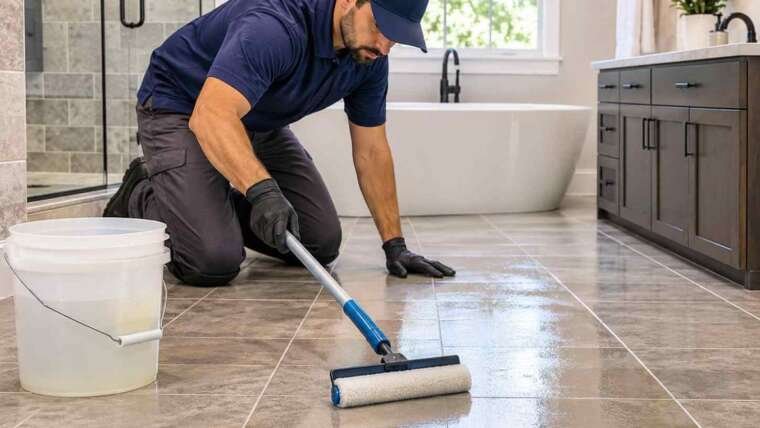
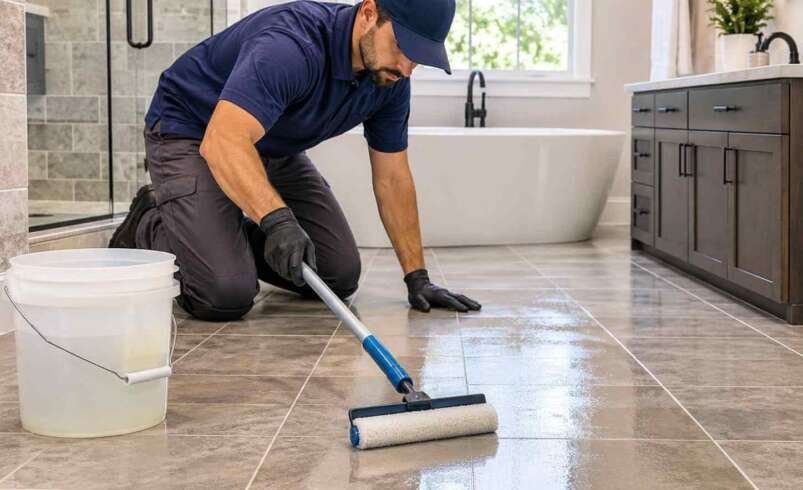
This is where Sealing Bathroom Floor Tiles in Huntsville, AL becomes a practical consideration for homeowners looking to maintain the appearance and condition of their bathroom flooring.
The process should begin with identifying the installed materials rather than assuming every surface needs the same treatment.
A suitable sealing approach considers:
-
Tile composition and porosity.
-
Grout type and existing condition.
-
Previous coatings or treatments.
-
Exposure to water and cleaning products.
-
Manufacturer recommendations.
-
Appropriate drying and curing requirements.
A penetrating sealer generally works by entering suitable porous materials and reducing their ability to absorb liquids. Some products are designed to provide additional surface protection, depending on the material and application.
The right choice depends on the actual flooring system.
Why Choosing the Correct Sealer Matters More Than Applying More Product
A common misconception is that applying additional sealer automatically creates better protection.
In reality, using an unsuitable product or applying excessive amounts can create problems.
Some sealers are designed specifically for cement-based grout. Others are formulated for natural stone or particular tile finishes.
Selecting the wrong product can result in unwanted residue, changes in appearance, or an ineffective application.
For homeowners researching bathroom maintenance, understanding the purpose of bathroom grout sealing is especially useful because grout joints often require a different treatment approach from the tile surface itself.
A properly selected product should match the material, intended application, and manufacturer’s instructions.
Penetrating Sealers and Surface Coatings
Two broad categories are commonly encountered:
Penetrating sealers: These products enter suitable porous materials and help reduce liquid absorption while generally preserving the natural appearance of the surface.
Topical sealers: These create a protective layer on the surface. Depending on the formulation, they may alter the finish and require different maintenance procedures.
Neither category is universally suitable for every bathroom floor.
The choice should depend on the tile and grout materials, the desired appearance, and the conditions in which the flooring is used.
What Huntsville Homeowners Should Consider Before Sealing
Bathroom maintenance decisions should account for the home’s actual conditions rather than relying on a one-size-fits-all approach.
In Huntsville, Alabama, homeowners should pay particular attention to indoor humidity, bathroom ventilation, and how frequently the floor remains wet after showers.
Warm, humid conditions can make moisture management especially important. Exhaust fans, adequate airflow, and prompt attention to standing water all contribute to a healthier bathroom environment.
Before arranging a sealing project, homeowners can perform a simple visual inspection.
Look for:
-
Grout that has become noticeably discolored.
-
Cracked or missing grout sections.
-
Areas that remain damp for unusually long periods.
-
White mineral deposits around joints.
-
Changes in the appearance of natural stone.
-
Loose or damaged tiles.
These observations can help identify whether the floor needs routine maintenance, grout repairs, further investigation, or a suitable protective treatment.
Importantly, damaged grout should generally be repaired before sealing. Covering deteriorated joints does not restore their original integrity.
Everyday Habits That Help Maintain Sealed Flooring
Professional treatment is only one part of long-term bathroom maintenance. Everyday habits also influence how well tiled surfaces retain their appearance.
A few practical measures can make a difference:
Remove standing water: Use a towel or appropriate floor squeegee to remove excess water from frequently wet areas.
Improve ventilation: Run the bathroom exhaust fan during showers and for an appropriate period afterward.
Choose compatible cleaners: Use products recommended for the installed tile, stone, and grout materials.
Avoid unnecessary abrasives: Rough cleaning tools and harsh chemicals may damage sensitive surfaces or existing finishes.
Inspect grout periodically: Small cracks and missing sections should be addressed before they develop into larger maintenance concerns.
Follow sealer instructions: Different products have different maintenance and reapplication requirements. Avoid assuming that every bathroom needs resealing on the same schedule.
These habits help homeowners approach floor care proactively instead of waiting until visible problems become difficult to manage.
A Better Bathroom Maintenance Strategy Starts Between the Tiles
Bathroom flooring is more than a collection of attractive tile pieces. It is a system of different materials that must work together under repeated exposure to moisture, cleaning products, and everyday use.
Grout joints deserve particular attention because their composition and condition can influence how the entire floor performs over time.
Understanding tile absorption, selecting compatible protective products, preparing surfaces correctly, and addressing existing damage are all important parts of responsible maintenance.
Rather than judging a bathroom floor entirely by its appearance, homeowners should also consider the condition of the materials beneath that polished surface. A little attention to the spaces between the tiles can make bathroom maintenance more effective and help preserve the flooring for years to come.