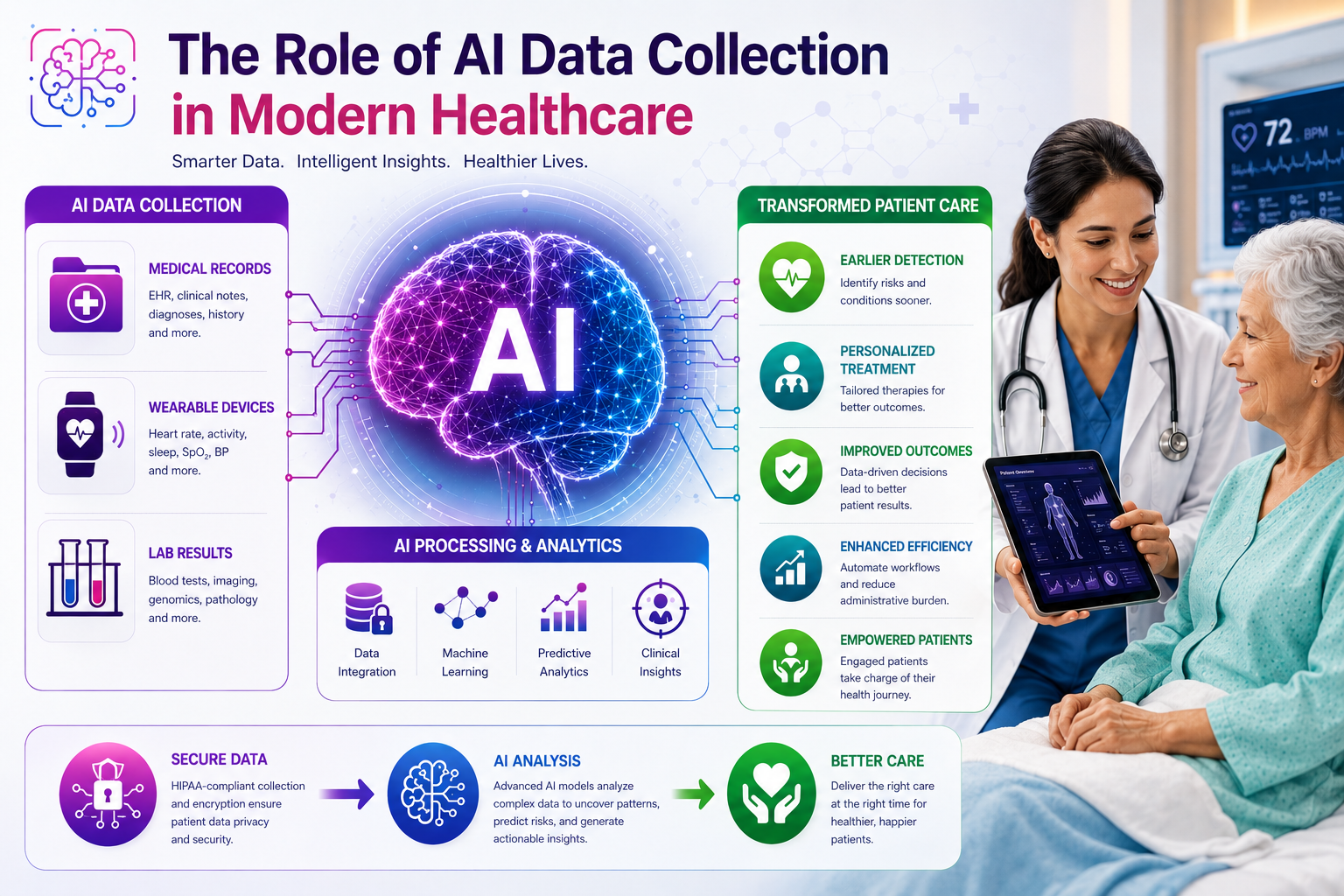


In today’s AI-driven economy, the success of machine learning models depends on one critical factor: high-quality data. Businesses across industries—from healthcare and finance to retail and autonomous vehicles—are investing heavily in AI solutions. However, even the most advanced algorithms cannot produce accurate results without clean, reliable, and well-labeled data.
This is where an AI Data Collection company plays a vital role. These companies specialize in gathering, validating, annotating, and managing datasets that power artificial intelligence applications. By implementing strict quality assurance processes, they ensure organizations receive data that is accurate, consistent, and ready for AI model training.
In this blog, we’ll explore how AI data collection companies maintain exceptional data quality and why choosing the right partner is essential for your AI success.
Why Data Quality Matters in AI
Artificial intelligence models learn patterns from the data they are trained on. Poor-quality data leads to inaccurate predictions, biased outcomes, and reduced model performance. In contrast, high-quality datasets improve model accuracy, minimize errors, and accelerate deployment.
A reliable AI Data Collection company understands that data quality directly impacts business outcomes. Whether collecting images, text, audio, video, or sensor data, every dataset must meet rigorous quality standards before it reaches AI developers.
Organizations that prioritize quality data gain several advantages:
- Higher AI model accuracy
- Reduced bias and inconsistencies
- Faster model training
- Better customer experiences
- Lower long-term development costs
Implementing Rigorous Data Collection Standards
One of the primary ways an AI Data Collection company ensures quality is by following standardized data collection protocols.
Every project begins with clearly defined objectives. Companies determine:
- Data sources
- Collection methods
- Target demographics
- Geographic diversity
- Environmental conditions
- Compliance requirements
For example, if an AI model is being trained for autonomous driving in the United States, the dataset must include diverse weather conditions, road types, traffic scenarios, and regional driving behaviors.
Standardized collection procedures eliminate inconsistencies and ensure every data point aligns with project requirements.
Multi-Level Quality Validation
Quality assurance doesn’t stop after data collection.
Leading AI data collection providers implement multiple validation stages to detect errors before datasets reach clients.
These quality checks often include:
- Automated validation using AI tools
- Manual review by trained quality analysts
- Random sampling inspections
- Duplicate detection
- Missing data verification
- Format consistency checks
By combining automation with human expertise, an AI Data Collection company significantly reduces inaccuracies and improves dataset reliability.
Human-in-the-Loop Verification
Although AI automation has advanced rapidly, human oversight remains essential.
Human reviewers verify:
- Image accuracy
- Audio clarity
- Speech transcription
- Text relevance
- Object labeling
- Annotation precision
For example, image annotation projects often require multiple reviewers to validate bounding boxes, segmentation masks, and object classifications.
This Human-in-the-Loop (HITL) approach minimizes annotation errors while improving consistency across large-scale datasets.
Advanced Data Annotation Processes
High-quality data is not just collected—it must also be accurately labeled.
Professional AI Data Collection companies employ experienced annotation specialists who work with advanced labeling tools.
Common annotation services include:
- Image annotation
- Video annotation
- Text annotation
- Audio transcription
- Semantic segmentation
- Named entity recognition (NER)
- OCR labeling
Quality teams continuously review annotations using inter-annotator agreement metrics to ensure multiple annotators produce consistent results.
This process significantly improves annotation accuracy while reducing bias.
Eliminating Bias Through Diverse Data Collection
AI systems are only as fair as the data they learn from.
One major responsibility of an AI Data Collection company is ensuring datasets represent diverse populations, environments, and scenarios.
This includes collecting data across:
- Different age groups
- Ethnic backgrounds
- Geographic regions
- Lighting conditions
- Weather conditions
- Languages
- Accents
- Device types
Diverse datasets help reduce algorithmic bias and improve AI performance across real-world applications.
For U.S.-based businesses, diversity is especially important when building customer-facing AI products that serve users from different cultural and demographic backgrounds.
Ensuring Regulatory Compliance and Data Security
Data quality also involves protecting sensitive information.
Leading AI data collection providers follow strict compliance standards such as:
- GDPR
- CCPA
- HIPAA (when applicable)
- SOC-compliant security practices
Security measures often include:
- Secure data storage
- Encryption
- Access controls
- Confidentiality agreements
- Regular security audits
By protecting customer data throughout the collection process, companies reduce legal risks while maintaining trust.
Continuous Quality Monitoring
Data quality is not a one-time process.
The best AI Data Collection companies continuously monitor datasets throughout the project lifecycle.
Performance metrics typically include:
- Annotation accuracy
- Reviewer agreement scores
- Error rates
- Data completeness
- Turnaround time
- Client feedback
Regular audits and continuous improvement initiatives help identify potential issues early and ensure consistent quality across large-scale projects.
This ongoing monitoring enables businesses to receive datasets that remain accurate even as project requirements evolve.
Choosing the Right AI Data Collection Company
Selecting the right AI data partner can significantly impact the success of your AI initiatives.
When evaluating an AI Data Collection company, consider factors such as:
- Industry expertise
- Scalable workforce
- Quality assurance processes
- Data security standards
- Annotation capabilities
- U.S. market experience
- Turnaround time
- Proven project portfolio
An experienced provider will not only deliver quality datasets but also help optimize your AI development pipeline through customized data solutions.
Why OneTechSolutions.ai Is Your Trusted AI Data Collection Partner
At OneTechSolutions.ai, we understand that exceptional AI starts with exceptional data. Our experienced teams leverage advanced collection methodologies, rigorous validation workflows, and human-in-the-loop quality assurance to deliver reliable datasets tailored to your business needs.
Whether you need image annotation, text labeling, speech datasets, video annotation, or custom AI training data, our scalable solutions are designed to support organizations across the United States.
We prioritize data accuracy, compliance, security, and diversity to help businesses build AI models that perform reliably in real-world environments.
Conclusion
As AI adoption continues to grow, data quality has become one of the most important factors influencing model performance. A trusted AI Data Collection company ensures every dataset is accurate, diverse, secure, and thoroughly validated before it reaches your development team.
By partnering with an experienced provider like OneTechSolutions.ai, businesses can reduce development risks, improve AI accuracy, and accelerate innovation with confidence.
If you’re looking for high-quality AI training data that drives measurable results, OneTechSolutions.ai is ready to help you build smarter, more reliable AI solutions.