

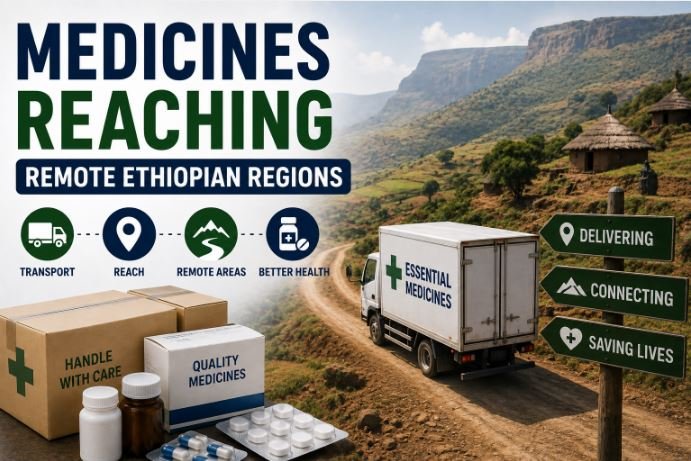

A pharmaceutical distributor in Addis has an order from a remote health center in Afar Region. The request is for 20,000 birr of essential medicines. Antibiotics. Antimalarials. Pain relievers.
The distributor calculates shipping cost. The health center is 450 kilometers away. The last 80 kilometers is rough dirt road. During rainy season, the road becomes impassable. No paved route alternative. The shipping cost ends up being 8,000 birr for 20,000 birr order.
The shipping is 40% of order value. Uneconomical for small order. But the health center needs medicines. Patients need treatment. The distributor arranges transport anyway. But the vehicle takes three days to reach. Medicines jostle in rough road. Temperature fluctuates. Medicine boxes get damaged.
By the time medicines arrive, some packaging is torn. Some medicines exposed. Quality compromised. Health center receives damaged medicines. Patient trust erodes.
This scenario repeats across Ethiopia. Remote regions need medicines. But getting medicines there is logistically complex and expensive. Transportation infrastructure is challenge. Medicine quality suffers during transport.
For pharmaceutical suppliers and distributors, understanding transportation networks to remote Ethiopia is critical for reliable medicine delivery.
Ethiopia’s Transportation Reality
Ethiopia’s transportation infrastructure presents specific pharmaceutical logistics challenges. Many remote areas are accessible only by rough roads. Some roads become impassable during rainy season. Limited paved routes reach remote regions. Remote regions sit far from distribution centers. Long transport times are common. Three to five days is not uncommon for remote delivery trips.
Limited availability of appropriate vehicles exists in Ethiopia. Not all trucks are suitable for pharmaceutical transport. Some vehicles are unsuitable for long-distance reliable delivery. High fuel costs particularly affect remote areas. Fuel is expensive. Transport cost becomes high as percentage of medicine value. Roads deteriorate over time. Potholes form. Washouts occur during rainy season. Infrastructure maintenance remains inconsistent across regions.
Few transport companies serve remote areas. Limited competition means pricing runs high. Service can be inconsistent. Most transport vehicles lack temperature control. Medicines get exposed to heat. Temperature-sensitive medicines face real risk. Some remote areas have security challenges. Transport becomes risky. Special precautions are needed.
Remote medicine transport is genuinely difficult in Ethiopia.
Road Network Realities
Understanding road network is foundation for logistics planning. Main highways connecting Addis-Adama-Hawassa are relatively good. The Addis-Dire Dawa highway is reasonable. Main routes remain manageable for transport.
Secondary roads to regional capitals are variable. Some are paved. Some are rough. Conditions vary seasonally throughout Ethiopia. Roads to remote areas are often rough. Many remain unpaved. Conditions deteriorate particularly poor during rainy season. Some routes become impassable.
Rainy season roads deteriorate significantly. Transport becomes difficult during these periods. Some routes become unavailable temporarily. Many remote areas have only one access route available. If that route becomes impassable, the community gets isolated. No alternative routes exist in these areas.
Government is investing in road infrastructure gradually. But progress remains slow. Many areas still maintain remote status without good connectivity. Road network reality is that many regions are poorly connected to distribution centers.
Transportation Cost Implications
Delivering to remote areas is expensive. Long distances mean high fuel consumption. Remote areas often have high fuel cost. Significant expense accumulates quickly.
Rough roads wear vehicles quickly. Maintenance costs run high. Vehicle depreciation accelerates in remote conditions. Long-distance drivers are expensive to employ. Multi-day trips require labor costs. Driver compensation is costly.
Vehicles get tied up for days on single run. Vehicle utilization stays low. Cost per unit delivered becomes high. Often vehicles return empty with no return cargo. Cost cannot be shared across directions. Low volumes go to remote areas. Cannot load full vehicle. Transport becomes inefficient by definition.
Transport companies build in safety margin for uncertainty. Cost reflects this risk and unpredictability. Total delivered cost to remote areas can be 30-40% of product cost itself.
Temperature Control During Transport
Temperature control is critical pharmaceutical requirement during transport.
Ambient temperature. Ethiopia hot. Transport vehicles heat up. Medicines exposed to high temperature.
Humidity exposure. During rainy season, humidity high. Moisture damages medicines. Packaging deteriorates.
No refrigeration. Most transport vehicles not refrigerated. Temperature-sensitive medicines at risk.
Passive cooling. Some vehicles use passive cooling. Ventilation. Water cooling. But not reliable.
Active cooling options. Refrigerated vehicles available but expensive. Cost prohibitive for small orders.
Ice packs approach. Some use ice packs. Requires regular replacement. Labor-intensive. Not always effective.
Packaging protection. Proper packaging helps. Insulated boxes. Shade cloths. Protection measures help but don’t eliminate risk.
Temperature management during remote transport is genuine challenge.
Logistics Strategy for Remote Delivery
Smart distributors have systematic approach to remote delivery.
Hub-and-spoke system. Regional hub in remote area. Distribution from hub to surrounding areas. Consolidates shipments. Improves efficiency.
Scheduled routes. Establish regular delivery routes. Predictable schedule. Customers plan for delivery. Efficiency improved.
Consolidation strategy. Combine orders from multiple facilities. Create full-load shipments. Reduces per-unit cost.
Bulk ordering. Encourage health facilities to order in bulk. Fewer shipments. Better efficiency. Better pricing.
Partnership with transporters. Work with transport companies regularly. Build relationships. Negotiate better rates. Consistency.
Inventory at facility. Help remote facilities maintain inventory. Stock rotations. Reduces frequent orders. Reduces transport frequency.
Communication. Establish clear communication about delivery schedules. Facilities know when to expect delivery. Coordination improves.
Systematic approach improves efficiency.
Technology Solutions
Technology can improve remote delivery efficiency.
GPS tracking. Real-time vehicle tracking. Know location. Know ETA. Transparency.
Mobile communication. Drivers report via mobile. No communication gaps. Problem solving faster.
Route optimization. Technology optimizes routes. Shortest routes. Fuel efficiency. Faster delivery.
Mobile payment. Healthcare facilities pay via mobile money. Reduces cash handling. Faster payment.
Inventory systems. Facilities track inventory digitally. Know stock levels. Order appropriately.
Technology adoption is gradually improving remote logistics.
The Supplier Relationship Angle
For Ethiopian distributors managing remote delivery, supplier support matters.
Suppliers providing protective packaging help medicines survive rough transport. Suppliers understanding remote distribution challenges can advise on approaches. Suppliers offering reasonable terms support remote market viability.
When Ethiopian pharmaceutical distributors are expanding into remote regions, working with exporters who understand remote delivery challenges becomes important. Suppliers with experience in remote market distribution. Suppliers providing robust packaging for transport protection. Suppliers flexible on order sizes and delivery terms. Resources highlighting reliable pharmaceutical exporters with Ethiopia remote region delivery experience and transportation-protective packaging support can help identify suppliers positioned to support remote market expansion.
Common Remote Delivery Problems
Remote delivery faces predictable challenges. Transport delays occur frequently. Long distances and road conditions mean deliveries are often late. Healthcare facilities become frustrated with unpredictable arrival times. Medicine damage happens during rough transport. Poor packaging contributes to damaged goods. Medicines arrive in compromised condition. Quality suffers.
Security loss occurs when en route theft happens. Valuable medicines get stolen regularly. Direct financial loss results. Medicines face exposure to heat during transport. Degradation occurs. Efficacy gets lost before arrival. Transport costs often exceed expectations. This squeezes margins. Profitability gets affected negatively.
Communication gaps occur because delivery schedules remain unclear. Healthcare facilities don’t know when to expect shipments. Coordination becomes difficult. Vehicle breakdowns happen regularly. Transport vehicles fail. Delays occur. Medicine quality becomes at risk during extended waiting periods. Frustration builds on all sides.
These problems are manageable with proper approach and planning.
Building Remote Distribution Capability
Distributors wanting to serve remote Ethiopia should approach strategically.
Market research. Understand demand in target region. Who has medicine needs. What medicines needed. What they can pay.
Transport partner selection. Work with reliable transport companies. Regular relationship. Good communication. Quality service.
Hub location. If establishing hub, select strategically. Accessible. Central. Good transport connections.
Healthcare facility relationships. Build relationships with remote health centers. Understand their needs. Support their work.
Logistics planning. Plan efficient routes. Regular schedules. Consolidated shipments. Cost management.
Inventory support. Help facilities manage inventory. Guidance. Support. Build loyalty.
Contingency planning. Plan for transport delays. Vehicle breakdown. Staff turnover. Resilience.
Systematic approach improves success.
Infrastructure Improvement Opportunity
Government infrastructure investment creates opportunities.
Road improvements. Government building new roads. Paving routes. Access improving. Transport becoming easier.
Transport companies. Private transport companies emerging. Competition increasing. Service improving. Costs declining.
Technology adoption. Mobile technology expanding. Communication improving. Coordination better.
Awareness growing. Healthcare system becoming more sophisticated. Understanding logistics needs. Budgeting accordingly.
Infrastructure improvement is gradual but positive.
Seasonal Planning
Remote distribution requires seasonal planning.
Rainy season strategy. During rainy season, roads difficult. Transport less frequent. Larger shipments before season. Facilities stockpile.
Dry season optimization. During dry season, transport easier. More frequent deliveries. Smaller shipments. Better inventory management.
Seasonal storage. Facilities need storage capacity. Storage during dry season. Usage during rainy season. Planning important.
Seasonal demand. Malaria season. Diarrheal disease season. Respiratory disease season. Anticipate needs. Plan supply accordingly.
Seasonal planning improves supply reliability.
Moving Forward
For Ethiopian pharmaceutical distributors wanting to serve remote regions:
Understand transportation reality. Remote areas genuinely remote. Distance significant. Roads rough. Transport expensive. Accept reality.
Develop strategy. Hub-and-spoke? Direct delivery? Consolidation approach? Choose strategy fit for market.
Select partners. Work with reliable transport companies. Build relationships. Negotiate fair terms.
Invest in packaging. Proper packaging protects medicines during rough transport. Medicine protection investment worthwhile.
Support facilities. Help remote health centers manage inventory. Build relationships. Support their work.
Manage costs. Volume and efficiency critical to profitability. Consolidation and planning reduce costs.
Plan seasonally. Anticipate seasonal challenges. Plan supply accordingly. Seasonal strategy important.
Build logistics capability. Treat logistics as core capability. Invest in systems. Build processes. Excellence in logistics competitive advantage.
Remote medicine distribution is opportunity for businesses committed to serving difficult-to-reach areas.
That’s where healthcare access is most needed.