

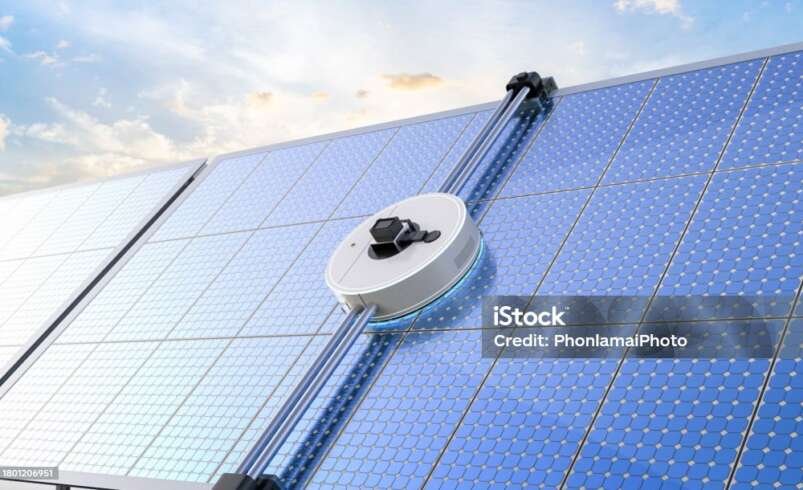

A solar panel cleaning robot is an automated technology designed to remove dust, dirt, sand, and other contaminants from photovoltaic panels with minimal manual intervention. As solar farms and commercial PV installations become larger, maintaining thousands of panels can be challenging and labor-intensive. Robotic cleaning technology offers a practical approach to automating routine solar panel maintenance while helping operators maintain cleaner module surfaces and more efficient maintenance processes.
Why Solar Panels Need Regular Cleaning
Solar panels are installed outdoors and are constantly exposed to environmental conditions. Dust, sand, pollen, leaves, bird droppings, and other particles can accumulate on the surface of photovoltaic modules.
This buildup is commonly referred to as soiling. When dirt covers the surface of a solar panel, it can reduce the amount of sunlight reaching the photovoltaic cells. The resulting impact on electricity generation depends on factors such as the amount of dust, local weather conditions, panel angle, and the duration of accumulation.
For a small residential installation, cleaning may be relatively simple. However, large commercial and utility-scale solar projects can contain thousands of panels, making frequent manual cleaning difficult and expensive.
This is where automated cleaning technology can provide an advantage.
What Is a Solar Panel Cleaning Robot?
A solar panel cleaning robot is a robotic machine specifically designed to move across photovoltaic modules and remove accumulated contaminants.
Depending on the design, a cleaning robot may use brushes, microfiber cleaning materials, air systems, or other mechanisms to clean the surface of solar panels.
The robot can be designed to follow predetermined paths across a solar array while minimizing the need for workers to manually clean each module.
Modern robotic cleaning systems can also incorporate sensors, motorized movement, control systems, and automated operating functions to improve the cleaning process.
How Does a Solar Panel Cleaning Robot Work?
Although different robotic systems use different technologies, the basic process generally involves several steps.
1. Positioning
The robot is placed on the solar panel array or positioned at the beginning of the cleaning route. Its structure is designed to work with the dimensions and configuration of the solar modules.
2. Automated Movement
Motors and drive mechanisms allow the robot to move along the panel surface. Depending on the system, movement can be controlled manually, remotely, or through automated programming.
3. Surface Cleaning
The cleaning mechanism removes dust and debris from the panel surface. Soft cleaning materials are generally preferred to reduce the possibility of scratching or damaging the module.
4. Navigation
Sensors and control systems can help the robot maintain its position and move along the required cleaning path.
5. Cleaning Cycle Completion
After completing a section or an entire row of panels, the robot can return to its starting position or continue according to its programmed cleaning sequence.
Benefits of Automated Solar Panel Cleaning
Reduced Manual Labor
One of the biggest advantages of robotic cleaning is the reduction in repetitive manual work. Large solar projects can require substantial manpower for routine panel cleaning.
Automation can help operators reduce the amount of manual intervention required for regular maintenance.
More Consistent Cleaning
Human cleaning processes can vary depending on the worker, equipment, weather, and site conditions. An automated system can follow a consistent cleaning process across multiple panels.
Improved Maintenance Efficiency
Robotic cleaning can make it easier to establish regular maintenance schedules. This can be particularly useful for large solar installations where cleaning thousands of panels manually can take considerable time.
Reduced Water Usage
Some solar panel cleaning robots can operate with little or no water, depending on their cleaning technology. This can be valuable in areas where water is limited or where conventional wet cleaning is inconvenient.
Improved Worker Safety
Solar panels are often installed on rooftops, elevated structures, and large solar farms. Repeated manual cleaning can expose workers to access and fall-related risks.
Automating some cleaning activities can reduce the need for workers to repeatedly access difficult areas.
Solar Panel Cleaning Robots for Large Solar Farms
Utility-scale solar farms can contain extensive arrays of photovoltaic modules spread across large areas. Keeping these panels clean is an important part of ongoing operations and maintenance.
Manual cleaning across a large solar farm can require significant labor, equipment, transportation, and water resources.
Robotic cleaning systems can help automate repetitive cleaning activities and make maintenance easier to scale.
However, the suitability of a particular robot depends on the panel layout, row spacing, panel orientation, terrain, environmental conditions, and type of contamination.
Technology Behind Solar Cleaning Robots
Solar cleaning robots combine several technologies to perform automated maintenance tasks.
Motorized Drive Systems
Electric motors provide the movement required for the robot to travel across photovoltaic modules.
Cleaning Mechanisms
The cleaning system may use rotating brushes, microfiber materials, air-based cleaning, or other mechanisms to remove accumulated particles.
Sensors
Sensors can help detect obstacles, maintain positioning, and support automated navigation.
Control Systems
Electronic control systems coordinate movement and cleaning functions. More advanced systems may allow operators to control or monitor the robot remotely.
Battery and Power Systems
Robots require a reliable source of power for movement and cleaning operations. Depending on the design, this can include rechargeable batteries or other power configurations.
Factors to Consider Before Choosing a Cleaning Robot
Not every solar panel cleaning robot is suitable for every installation. Before selecting a system, project owners should evaluate several factors.
Panel Configuration
Panel size, orientation, tilt, row spacing, and mounting configuration can affect whether a particular robot can operate effectively.
Type of Soiling
The type of contamination also matters. Fine dust and sand may require a different cleaning approach from leaves, bird droppings, or sticky deposits.
Installation Size
A robotic solution may provide greater value for large solar farms and commercial installations where manual cleaning becomes difficult to manage.
Water Availability
In dry regions, a low-water or water-free cleaning solution can be particularly useful.
Operating Conditions
Temperature, wind, dust levels, humidity, and other environmental conditions should be considered when selecting equipment for a solar installation.
Maintenance Requirements
Like any mechanical equipment, robotic cleaning systems require appropriate maintenance. Operators should consider replacement parts, battery maintenance, cleaning components, software, and technical support.
Can Robotic Cleaning Improve Solar Panel Performance?
Keeping solar panels free from excessive dirt can help reduce the effect of soiling on energy production.
However, the performance improvement achieved through cleaning is not identical for every solar installation. It depends on local environmental conditions and the amount of contamination present on the panels.
For this reason, solar operators should evaluate cleaning frequency based on actual site conditions rather than following the same schedule everywhere.
Monitoring energy production can also help identify whether soiling is affecting the performance of a solar array.
The Future of Solar Panel Cleaning Technology
Solar maintenance is becoming increasingly technology-driven. As solar installations grow in size, automation can play a larger role in inspection, cleaning, monitoring, and maintenance.
Future systems may combine robotic cleaning with advanced sensors, remote monitoring, artificial intelligence, machine vision, and automated scheduling.
For example, a smart maintenance system could potentially identify areas with higher levels of soiling and prioritize cleaning based on environmental and performance data.
This could move solar maintenance from routine manual cleaning toward more data-driven and automated asset management.
Choosing the Right Solar Cleaning Solution
The right cleaning method depends on the size and design of the solar installation.
For smaller systems, conventional cleaning methods may be sufficient. For large commercial or utility-scale projects, automated solutions can provide greater operational efficiency.
When evaluating robotic equipment, solar operators should consider cleaning performance, panel compatibility, navigation capabilities, power requirements, water consumption, maintenance needs, and total operating costs.
For businesses exploring automated cleaning technology, ALILY Energy’s solar panel cleaning robot is one example of a dedicated robotic solution designed for photovoltaic panel maintenance.
Conclusion
A solar panel cleaning robot represents an important development in solar maintenance technology. By automating repetitive cleaning activities, robotic systems can help reduce manual labor, improve maintenance consistency, and support efficient operation of large photovoltaic installations.
As the global solar industry continues to expand, technologies that improve the operation and maintenance of PV systems will become increasingly important. Robotic cleaning, combined with monitoring and intelligent automation, can help solar operators develop more efficient and scalable maintenance strategies.