

Choosing the correct surface material is an essential part of any architectural or interior design project. While factors such as color, texture, and appearance often receive significant attention, technical specifications like thickness play an equally important role in determining durability, performance, and installation suitability.
Solid surface sheets are widely used in residential, commercial, and industrial applications because they provide seamless designs, easy maintenance, and excellent customization possibilities. However, selecting the correct thickness requires an understanding of project requirements, usage conditions, and fabrication methods.
A reliable solid surface sheet factory produces materials with consistent specifications to meet different architectural demands. Buyers searching for high-quality solutions can explore various solid surface sheets designed for applications ranging from countertops and wall panels to commercial interiors.
Why Solid Surface Sheet Thickness Matters in Architectural Projects
The thickness of a solid surface sheet affects several important factors, including strength, stability, fabrication possibilities, and long-term performance. Selecting the wrong thickness can lead to installation challenges or reduced durability, especially in high-use environments.
A professional solid surface sheet manufacturer considers thickness requirements during production to ensure that each sheet meets industry expectations and application needs.
Thickness selection influences:
- Structural stability
- Load-bearing capacity
- Installation method
- Seam performance
- Fabrication flexibility
- Overall project lifespan
For architects, contractors, and fabricators, understanding thickness options helps ensure the chosen material performs effectively in its intended environment.
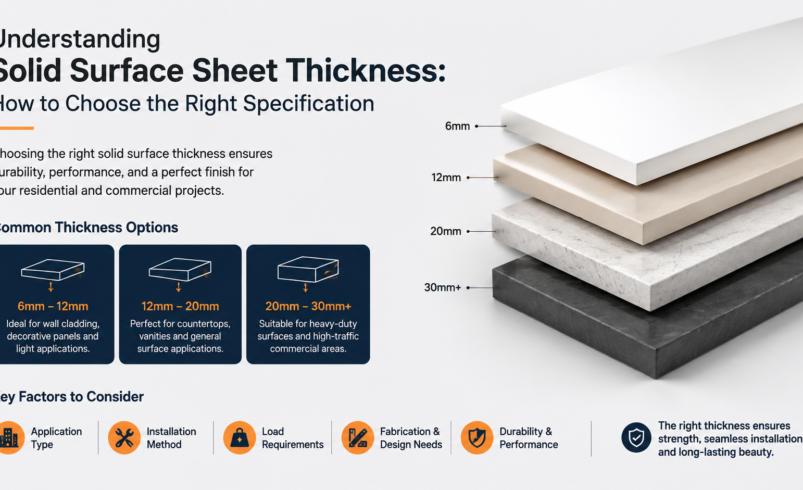
Common Solid Surface Thickness Options
Solid surface materials are available in different thickness specifications depending on the manufacturer and application. The most common options are designed to balance performance, appearance, and fabrication requirements.
Standard Thickness Options
Many solid surface sheets are manufactured in thicknesses suitable for everyday applications such as:
- Kitchen countertops
- Bathroom vanities
- Office surfaces
- Reception counters
- Wall applications
Standard thickness options provide a balance between durability and ease of installation.
Thicker Solid Surface Sheets
Thicker sheets are often selected for projects that require additional strength and structural support. These applications may include heavy-use commercial environments, large surfaces, and areas exposed to frequent impact.
Thicker materials can provide:
- Increased stability
- Better resistance to stress
- Enhanced durability
- Stronger visual appearance
Thin Solid Surface Panels
In some applications, thinner solid surface panels may be preferred because they reduce material weight and allow easier installation.
These options are commonly considered for decorative applications, vertical surfaces, and projects where structural demands are lower.
Factors to Consider When Choosing Solid Surface Thickness
Selecting the right thickness depends on multiple project-specific factors. Architects and contractors should evaluate the intended application before making a final decision.
1. Application Type
The purpose of the surface directly affects the required thickness.
For example:
- Kitchen countertops may require stronger specifications due to daily use.
- Bathroom vanities may require moderate thickness for durability and appearance.
- Wall cladding may use different thickness levels because it does not support heavy loads.
Understanding the application ensures better material performance.
2. Installation Method
The installation process also influences thickness selection. Some designs require additional material strength to support specific fabrication methods or installation systems.
Complex designs, curved surfaces, or integrated features may require careful thickness planning to achieve the desired result.
3. Project Scale
Large commercial projects often require consistent materials across multiple areas. In these situations, selecting the correct solid surface thickness helps maintain structural reliability and visual consistency.
Commercial environments such as:
- Hospitals
- Hotels
- Restaurants
- Airports
- Corporate buildings
often require carefully selected specifications because surfaces experience frequent use.
4. Fabrication Requirements
Solid surface materials are popular because they can be fabricated into custom shapes and seamless designs. However, fabrication requirements can influence the ideal thickness.
Projects involving:
- Custom edges
- Integrated sinks
- Curved designs
- Large surface areas
may require specific thickness considerations to achieve the desired outcome.
Acrylic Solid Surface Sheet Thickness and Performance
An acrylic solid surface sheet is known for its flexibility, durability, and fabrication advantages. Thickness selection is especially important when using acrylic-based materials because it affects how easily the material can be shaped and installed.
Acrylic solid surface products are commonly used where designers require:
- Seamless joints
- Smooth finishes
- Custom fabrication
- Easy repair options
- Consistent appearance
Choosing the correct thickness allows fabricators to maximize these benefits while maintaining structural performance.
Solid Surface Sheets vs Solid Surface Slabs: Understanding Thickness Differences
The terms solid surface sheets and solid surface slabs are sometimes used interchangeably, but they may represent different product formats depending on the supplier.
Solid surface sheets are generally used for fabrication projects requiring flexibility and customization. Solid surface slabs may refer to larger or specific formats used for architectural applications.
The appropriate option depends on:
- Project dimensions
- Installation requirements
- Design objectives
- Fabrication methods
Understanding these differences helps buyers make better material decisions.
Choosing Thickness for Commercial Solid Surface Applications
Commercial projects demand materials that can withstand frequent use while maintaining appearance and functionality. This is why selecting suitable commercial solid surface sheets is an important part of project planning.
Common commercial applications include:
- Healthcare countertops
- Reception areas
- Restaurant surfaces
- Retail displays
- Hospitality interiors
In these environments, the right thickness contributes to durability, easier maintenance, and long-term performance.
The Importance of Working With an Experienced Manufacturer
The quality of solid surface products depends not only on thickness but also on manufacturing expertise. A professional manufacturer maintains strict production controls to ensure consistency across different sheet specifications.
A reliable solid surface sheet factory focuses on:
- Accurate thickness control
- Quality raw materials
- Consistent production processes
- Surface finishing standards
- Custom manufacturing capabilities
Working with an experienced supplier helps project teams receive materials that match their technical and design requirements.
Manufacturers such as KKR Stone provide solid surface solutions for different residential and commercial applications while supporting customized project needs.
Future Trends in Solid Surface Thickness and Design
As architectural designs continue evolving, manufacturers are developing more flexible and innovative surface solutions. Designers increasingly demand materials that combine durability with creative possibilities.
Future trends include:
- More customized thickness options
- Advanced fabrication techniques
- Lightweight surface solutions
- Improved material performance
- Expanded architectural applications
These developments allow solid surface materials to remain a valuable option for modern construction and interior design.
Conclusion
Choosing the correct solid surface thickness is an important step in ensuring the success of architectural and commercial projects. The right specification improves durability, installation performance, and long-term value.
A trusted solid surface sheet factory provides consistent materials with reliable specifications, helping architects, contractors, and designers select solutions that meet their project requirements.
By considering application, fabrication needs, installation methods, and material quality, buyers can make informed decisions and achieve better results with solid surface materials.
FAQs
1. What is the ideal thickness for solid surface sheets?
The ideal thickness depends on the application, installation method, and project requirements. Countertops, wall panels, and commercial surfaces may require different specifications.
2. Does solid surface thickness affect durability?
Yes, thickness can influence structural stability, load capacity, and long-term performance, especially in high-use environments.
3. Are thicker solid surface sheets always better?
Not necessarily. The correct thickness depends on the specific application. Thicker materials may provide additional strength, but thinner options can be suitable for certain designs.
4. Can acrylic solid surface sheets be customized?
Yes, acrylic solid surface sheets can be fabricated into different shapes, sizes, colors, and designs depending on project requirements.
5. How do buyers choose the right solid surface manufacturer?
Buyers should evaluate manufacturing quality, thickness consistency, material options, customization capabilities, and experience with similar projects.