

Water damage does not always happen at a convenient time. A burst pipe late at night, an overflowing appliance early in the morning, or sudden storm flooding can leave a property with standing water when immediate assistance is needed. Acting quickly can help limit the amount of damage and prevent moisture from spreading into additional areas of the building.
When property owners search for 24/7 water extraction Alexandria VA, they are typically dealing with an urgent situation where standing water needs to be addressed as soon as possible. Water extraction is an important first step, but the complete restoration process may also involve moisture assessment, drying, cleaning, and repairs.
Water can quickly penetrate carpets, flooring, drywall, wood, and insulation. Even after visible water has been removed, moisture may remain trapped inside these materials. Proper extraction followed by thorough drying can help reduce the risk of additional property damage.
Why Water Emergencies Require Fast Action
Standing water can continue affecting a property as long as it remains in contact with building materials. Carpets can become saturated, wooden surfaces may swell, and drywall can absorb moisture.
If wet materials are left untreated, they may become more difficult to restore. Persistent moisture can also create conditions that support mold growth.
Quick extraction helps reduce the amount of water inside the property and gives the drying process a better starting point. The sooner the affected areas are assessed, the easier it can be to determine what needs to be restored or replaced.
Common Causes of Water Emergencies
Water emergencies can happen for many reasons. Burst pipes and plumbing failures are among the most common causes. A damaged water heater or broken supply line can also release a large amount of water into a property.
Appliances can create unexpected emergencies as well. Washing machines, dishwashers, and refrigerators can leak when hoses or internal components fail.
Severe weather is another major source of water damage. Heavy rainfall, flooding, roof damage, and drainage issues can allow water to enter homes and commercial properties.
How FloodSmartVA Can Help
FloodSmartVA provides restoration-focused support for properties affected by water damage. During an emergency, an assessment can help identify the source of the water and determine which areas have been affected.
Depending on the situation, the restoration process may include water extraction, moisture detection, structural drying, cleaning, mold-related remediation, damaged material removal, and repairs.
This broader approach is important because removing standing water does not automatically resolve all moisture-related problems. Water may have already moved underneath flooring, behind walls, or into other building materials.
What Happens During Water Extraction?
The extraction process typically involves several stages designed to remove water and prepare the property for drying.
1. Property Assessment
The affected areas are inspected to understand where the water originated and how far it has spread. The source and condition of the water can influence the appropriate cleanup procedures.
2. Standing Water Extraction
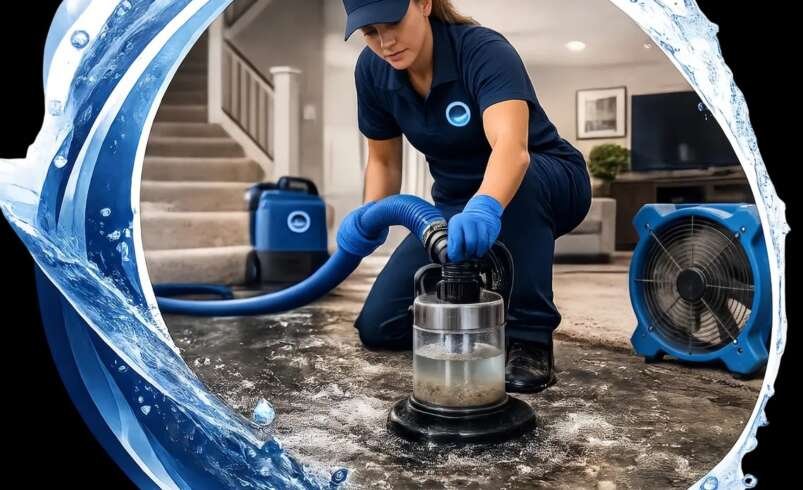
Specialized extraction equipment can be used to remove standing water from floors, carpets, and other affected surfaces. Removing excess water quickly can help limit continued exposure.
3. Moisture Detection
After visible water has been removed, affected materials may still contain moisture. Floors, walls, carpets, and other materials can be checked for areas requiring additional drying.
4. Structural Drying
Air movers and dehumidification equipment may be used to reduce remaining moisture. Proper drying is particularly important for porous materials that absorb water.
5. Cleaning and Restoration
Depending on the source and severity of the damage, affected areas may require cleaning, sanitization, material removal, or repairs.
Hidden Moisture Can Remain After Extraction
A property can appear dry while still containing significant moisture. Water may move beneath flooring, behind drywall, or into insulation.
For example, a burst pipe may create visible standing water in one room while moisture spreads underneath nearby flooring. A roof leak may leave a small stain on a ceiling while water remains inside the ceiling cavity.
If this hidden moisture is not detected and addressed, it can contribute to deterioration and mold growth. This is why extraction should be followed by moisture assessment and proper drying.
Mold Risk After Water Damage
Mold can become a secondary concern when water-damaged materials remain damp. Bathrooms, basements, kitchens, crawl spaces, and flooded rooms are particularly vulnerable.
Musty odors, visible mold, discoloration, and recurring dampness can indicate that moisture remains present.
Prompt water extraction can help reduce the conditions that support mold growth, but drying is equally important. If mold has already developed, additional remediation may be required.
What Should You Do During a Water Emergency?
Safety should come before cleanup. If possible and safe, stop the source of the water. For plumbing emergencies, this may involve shutting off the main water supply.
Avoid walking through standing water if electrical hazards may be present. Do not use electrical equipment in wet areas unless it is designed and safe for those conditions.
If it is safe, move valuable belongings away from the affected area. Taking photographs and videos of the damage can also help document the situation for property records or insurance purposes.
Is DIY Water Extraction Enough?
Small spills can often be managed with household equipment. Major water emergencies are different. Large quantities of water can spread quickly and become trapped inside materials that ordinary fans or household vacuums cannot properly dry.
DIY cleanup may also fail to identify hidden moisture. A floor can appear dry while the padding underneath remains saturated.
For significant flooding, multiple affected rooms, or water that has entered walls and flooring, professional extraction and drying equipment can provide a more thorough approach.
Choosing a 24/7 Water Extraction Provider
When dealing with an emergency, availability is important, but it should not be the only consideration. Property owners should also evaluate experience, equipment, response capability, and the range of restoration services available.
Ask whether the provider handles moisture assessment, structural drying, cleaning, mold remediation, and repairs in addition to water extraction.
A company capable of handling multiple stages of restoration can make the recovery process more coordinated and reduce the chance of hidden moisture being overlooked.
Preventing Future Water Emergencies
After the property has been restored, regular maintenance can help reduce the risk of another water emergency. Inspect pipes, water heaters, appliance connections, roofs, gutters, and drainage systems periodically.
Replace aging hoses and components before they fail, and repair small leaks as soon as they are discovered. Knowing where the main water shutoff is located can also help homeowners respond quickly during plumbing emergencies.
Conclusion
Water emergencies can cause significant property damage when standing water is left untreated. Prompt extraction, followed by moisture assessment, structural drying, cleaning, and necessary repairs, can help limit the impact and reduce the risk of secondary problems. Being prepared and responding quickly can make the restoration process more manageable when unexpected water damage occurs.