

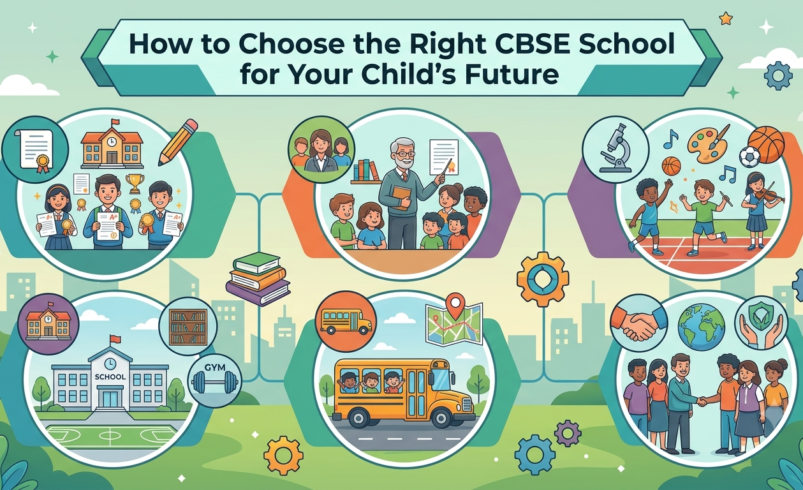

Choosing the right school is an important decision because a child spends a significant part of their growing years in the school environment. The right institution can support academic learning while also helping children develop confidence, communication skills, creativity, discipline, and social awareness. Parents should therefore consider several aspects before selecting a school for their child.
Parents searching for the best CBSE school in Jaipur should look beyond academic results and consider the school’s overall learning environment. Factors such as teaching quality, curriculum, infrastructure, student safety, extracurricular activities, and individual attention can all influence a child’s educational experience and development.
Understand the CBSE Curriculum
The Central Board of Secondary Education (CBSE) follows a structured curriculum that focuses on conceptual understanding and academic development. Parents should understand how a school implements the CBSE curriculum and whether its teaching methods encourage students to understand concepts rather than simply memorize information.
A good school should also encourage questioning, practical learning, problem-solving, and independent thinking. These skills can help students become better prepared for higher education and future challenges.
Check the Quality of Teachers
Teachers have a direct influence on how children understand subjects and develop an interest in learning. Parents should consider the qualifications, experience, communication style, and teaching approach of the faculty.
Teachers should be approachable and capable of supporting students with different learning abilities. Regular feedback and communication between teachers and parents can also help identify areas where a child may need additional support.
Evaluate School Infrastructure
A comfortable and well-equipped campus can contribute to effective learning. Parents should check classrooms, laboratories, libraries, computer facilities, sports areas, activity rooms, and other educational resources.
Basic facilities such as clean washrooms, drinking water, proper ventilation, and a hygienic campus are equally important. Parents may also visit the school personally to understand whether the environment feels safe, organized, and suitable for children.
Look at Extracurricular Activities
Education is not limited to classroom learning. Sports, music, art, dance, debates, public speaking, competitions, and other activities can help children explore their interests and develop confidence.
Extracurricular participation can also encourage teamwork, leadership, creativity, communication, and time-management skills. Parents should therefore consider whether the school provides sufficient opportunities for students to participate in activities beyond academics.
Consider Student Safety
Safety should be one of the highest priorities when choosing a school. Parents should learn about campus security, student supervision, transportation arrangements, emergency procedures, and other safety measures.
A positive environment should also promote emotional well-being. Students should feel respected and comfortable discussing academic or personal concerns with teachers and school authorities.
Location and Transportation
The school’s location can affect a child’s daily routine. A long commute may lead to tiredness and reduce the time available for homework, hobbies, family, and rest.
Parents should consider the distance from home, available transportation options, travel time, and school bus safety before making a decision.
Understand Fees and Additional Expenses
Parents should have a clear understanding of the school’s fee structure before admission. Apart from tuition fees, there may be additional expenses for transportation, books, uniforms, activities, examinations, or other services.
Comparing the overall cost with the facilities and educational opportunities provided can help parents make a practical decision that suits their budget.
Communication Between Parents and School
Strong communication between parents and teachers can support a child’s academic and personal development. Parents should check how the school shares information about attendance, academic performance, activities, and important announcements.
Regular parent-teacher meetings and accessible communication channels can help parents stay involved in their child’s education.
Conclusion
Choosing the right CBSE school requires careful consideration of many factors, including curriculum, teachers, infrastructure, safety, extracurricular activities, location, fees, and parent-school communication. Parents should compare available options and visit schools whenever possible before making a final decision. A best CBSE school in Rjasthan suraging confidence, creativity, discipline, and overall development.