

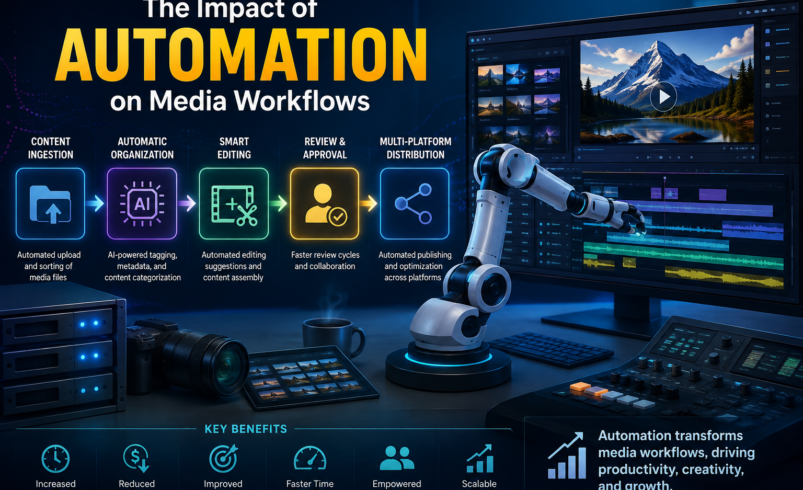

Media work has changed quickly as publishers, marketers, and content teams adopt automation. Tasks that once required hours of manual work can now be completed with software that organizes information, schedules content, checks data, and supports publishing.
For me, the biggest change is not that automation replaces every media job. Instead, it changes where people spend their time. Repetitive tasks can be handled by technology, while research, editing, creative decisions, and audience understanding still need human attention.
This is especially relevant when covering fast-moving industries such as vaping. A media team might need to organize information about products such as Mr Fog Aura, compare specifications, prepare social content, and monitor audience engagement. Automation can make those workflows easier to manage, but human review remains important when presenting product information.
Why Traditional Media Workflows Can Become Difficult
A traditional media workflow often involves several separate steps. Research may happen in one place, writing in another, images may be stored elsewhere, and publishing can require additional manual work.
When a team handles many stories or product-related topics at once, these small tasks can consume a significant amount of time.
Common problems include:
- Repeating the same administrative tasks
- Manually transferring information between platforms
- Missing publishing deadlines
- Difficulty tracking content status
- Inconsistent formatting
- Spending too much time on routine reporting
- Limited time for research and creative work
For example, a writer covering Mr Fog Aura 60K may need to collect product specifications, organize notes, create an article, prepare social media text, and schedule publication. Automation can assist with some of these steps.
The problem is not simply a lack of technology. The bigger issue is workflow complexity. When too many routine tasks are handled manually, mistakes become easier to make and productive time becomes harder to protect.
How Automation Changes the Media Process
Automation can connect different stages of media production. Instead of treating research, editing, publishing, and reporting as completely separate activities, teams can build workflows that move information from one stage to another.
For me, the most useful part of automation is its ability to handle predictable work. A system can schedule a post, organize files, generate routine reports, send notifications, or move approved content into a publishing queue.
That gives media professionals more time to focus on decisions that require judgment.
Automation in Content Planning
Content calendars are one area where automation can help. A team can schedule planned topics, assign deadlines, and receive reminders when a task needs attention.
A media site covering vaping products could use a structured workflow for topics involving Mr Fog Aura Vape Flavors. The system could track whether research, writing, editing, image preparation, and publishing have been completed.
Automation can also help identify gaps in a publishing schedule. However, automated planning should not determine every editorial decision. Human editors still need to consider relevance, accuracy, audience expectations, and applicable advertising or content rules.
Automation in Research and Data Management
Modern media teams often work with large amounts of information. Automation can organize data and make frequently used information easier to retrieve.
For product coverage, this might include:
- Product names and model numbers
- Manufacturer-provided specifications
- Published dates
- Content categories
- Approved images
- Editorial status
- Performance information
When working with information about Mr Fog Aura 60K, automation may help organize the available data before an article reaches an editor.
The important point is that automation should organize information rather than automatically establish facts. Product specifications can change, sources can contain errors, and information may be incomplete. Verification remains a human responsibility.
The Risks of Relying Too Much on Automation
Automation creates efficiency, but it also introduces new risks. If a system is configured incorrectly, an error can move through several stages of a workflow before anyone notices it.
That is particularly important for media organizations because published information can influence audience decisions.
An automated system might accidentally:
- Publish outdated information
- Repeat an incorrect specification
- Schedule content at the wrong time
- Duplicate an article
- Use an unsuitable image
- Produce repetitive content
- Remove important editorial context
For example, information about Mr Fog Aura should not simply be copied from an automated database and published without checking the original source. Product descriptions, specifications, availability, and regulatory considerations can require additional verification.
There is also a quality issue. If every article follows the same automated structure, readers may notice that content feels repetitive. Good media work needs a recognizable human perspective, clear explanations, and useful context.
Finding the Right Balance Between Technology and People
The future of media workflows is unlikely to be completely manual or completely automated. A practical approach combines both.
I see automation as a support system rather than a replacement for editorial responsibility. Technology can manage repetitive operations, while people can handle the decisions that require context and judgment.
A balanced workflow might look like this:
- Planning: Automation organizes calendars and deadlines.
- Research: Tools collect and sort information.
- Writing: A writer develops the main content and perspective.
- Verification: An editor checks important claims and sources.
- Production: Automation assists with formatting and scheduling.
- Publication: Approved content is distributed through selected channels.
- Analysis: Automated reports collect performance data.
- Improvement: Human editors use those findings to adjust future content.
This model can also make media work more transparent. When each stage has a defined responsibility, teams can identify where an error occurred and correct the process.
For content involving products such as Mr Fog Aura Vape Flavors, this distinction matters. Automated systems can help organize product-related information, but editorial teams should still verify claims and ensure that published content follows applicable platform, advertising, age-restriction, and legal requirements.
Automation also changes the skills that media professionals need. Basic technical understanding is becoming more useful because writers and editors increasingly interact with content management systems, analytics tools, artificial intelligence, scheduling platforms, and automated databases.
At the same time, traditional skills remain valuable. Clear writing, fact-checking, interviewing, source evaluation, editing, and audience understanding cannot simply be replaced by pressing an automation button.
The impact of automation on media workflows is therefore more complicated than simply saying that technology makes work faster. It changes the structure of the work itself.
I can use automation to reduce repetitive tasks, organize information, and improve consistency. But I still need human oversight to decide whether information is accurate, relevant, ethical, and useful.
As media organizations continue adopting automated systems, the strongest workflows will likely be those that give technology a clear role without removing human responsibility. That balance can help teams produce content more efficiently while protecting the accuracy and quality that readers expect.