
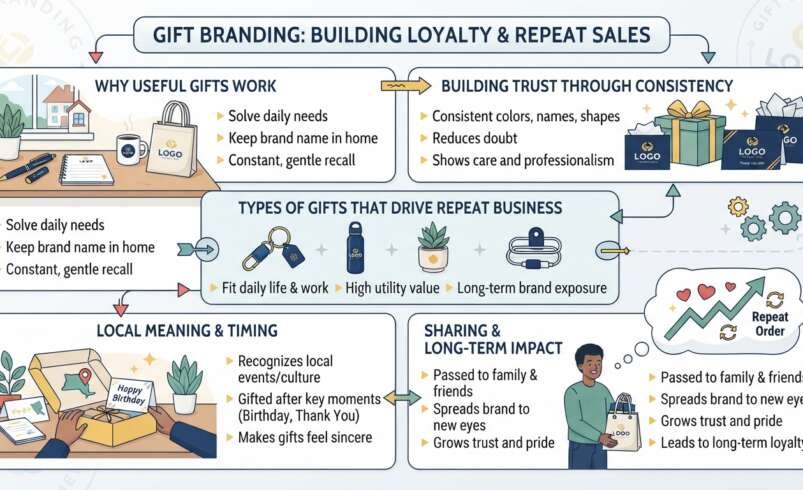

Gift branding turns small items into strong reminders for buyers after each sale is made. A useful gift can keep a business name alive in home life for longer. People often return when a brand gives value beyond the main product itself later again. Good design on a gift shows care planning and clear business purpose to buyers. Over time these simple acts can grow trust, repeat sales and long term loyalty.
Why do useful gifts make brands easier to remember?
People keep gifts longer when gifts solve a small daily need at home well. Each use brings the brand name back into mind without extra ads or sales talk. Many shops use custom present boxes with logos so buyers remember the brand after use. Memory grows through repeat use and brands gain value without price cuts or loud sales. That reminder can guide buyers back during next need even weeks after first order. Strong recall matters because many buying choices happen fast and depend on known names.
How does one clear look build buyer trust?
Buyers trust brands that use the same colors, names and shapes on each gift sent. A clear look reduces doubt and makes small shops seem careful, honest and real. One maker can guide this work and Luca Packaging shows steady design building strong memory. Trust rises when gift colors match store signs, bags cards and online shop pages. Buyers feel the brand looks serious and ready for repeat orders across many buying moments. Small details become proof that business cares about quality before and after each sale.
Why do names and colors build faster recall?
Names and colors help minds link good gift moments with one business over time. A bright sign or simple mark can turn one order into later visits easily. Many brands use Custom Gift Boxes for this reason because clear looks build memory. When buyers recall a brand fast they spend less time comparing choices during later visits. Simple brand marks work best when placed with care and kept the same each time. That steady look helps buyers feel safe and ready for another order soon again.
How can local meaning make gifts feel closer?
People value gifts more when brands know local days, school events and town habits. Local links make a gift feel made for real lives not random sales plans. A shop in the USA may add small signs from local life inside gift design. That small link can build pride and bring buyers back after first order again. Brand loyalty grows faster when buyers feel seen in local life, age and daily needs. Simple local signs can make gifts feel close even before the main product gets used.
What kinds of gifts bring buyers back again?
Useful gifts work better than show pieces because buyers keep using them after orders. A pen note pad key tag or cloth bag can last many weeks well. Each fresh use brings the brand name into view and builds easy recall later again. Buyers often return first to brands already near their mind during quick shopping choices later. Good gifts should fit daily life and match buyer age work and needs well. When gifts feel useful, loyalty grows from action not from empty brand promises alone later.
Why do shared gifts spread trust to others?
People often pass nice gifts to family friends, classmates or work mates after use. The brand name then reaches new eyes without paid ads or loud sales words fast. If a gift looks neat and useful, new people link brands with good value quickly. That first link matters because trust often starts before any direct order or visit begins. Shared gifts also make old buyers feel proud about choosing that business first earlier. Pride and recall together can transform one buyer into many future buyers over time.
How can good timing improve branded gift value?
Timing matters because gifts given after key moments feel earned and more sincere to buyers. A thank you gift after first order can shape strong early trust for buyers. A birthday school season or holiday gift can wake old buyers again for sales. Brands should match gift timing with real buyer events and buying patterns well always. Late gifts lose value because memory fades and joy from order becomes smaller fast. Good timing makes a simple item feel planned and worth remembering for buyers later.
Why do short gift messages matter so much?
Short words can guide feelings and make brand purpose clear during gift use daily. A line like thank you or made for you feels direct and easy always. Long lines often get ignored because busy buyers want quick meaning not extra reading. Good message words should match brand name color and gift purpose each time for recall. When message and gift fit together buyers remember both with less effort later on. That simple link can build loyalty without low prices or extra sales pressure later.
How do busy seasons change gift branding results?
Busy seasons bring many orders so brands must work harder to be remembered later. Simple gifts can separate one shop from many similar shops during crowded sales days. Buyers notice care even when they open gifts long after busy weeks end at home. Brand marks should remain clear because rush often causes weak design choices later on. Good planning before sales peaks keeps gifts ready and the brand looks unchanged during rush. When the look remains the same , loyalty can keep growing across many seasonal orders each year.
How can brands know gifts build loyalty?
Brands can track repeat orders after gift campaigns and compare buyer return rates monthly. A small code on gifts can show which buyers came back later to buy again. Shops can ask new buyers where they heard about the brand before purchase from others. If shared gifts work, answers often mention family friends, schools or local events first. Repeat use and repeat orders together show if loyalty is truly rising over time. Clear results help brands improve future gifts and avoid wasted spending later in campaigns.