

Custom patches have become an increasingly popular way for clothing brands to add identity, texture, detail, and personality to their products. From embroidered logos on jackets to woven labels on streetwear and leather patches on caps, a well-designed patch can transform a simple garment into a distinctive branded product.
For fashion startups, established clothing companies, streetwear labels, sportswear brands, and independent designers, custom patches provide a flexible way to incorporate branding without relying entirely on traditional printing.
In this guide, we explore the best custom patches for clothing brands, popular materials, backing options, placement ideas, design considerations, and how to choose the right patch for your apparel collection.
Why Clothing Brands Use Custom Patches
Brand recognition is one of the most important parts of building a successful clothing company.
Customers should be able to identify your products through consistent colours, logos, typography, materials, and design details.
Custom patches can become part of that visual identity.
They can be used on:
- Jackets
- Hoodies
- T-shirts
- Sweatshirts
- Caps
- Beanies
- Jeans
- Workwear
- Sportswear
- Bags
- Backpacks
- Varsity jackets
Unlike a standard printed logo, patches add physical texture and dimension to a garment.
This can make branding feel more integrated into the product itself.
Best Types of Custom Patches for Clothing Brands
There are several types of patches available, and each creates a different appearance.
Choosing the right one depends on your artwork, garment, brand identity, and intended use.
1. Embroidered Patches
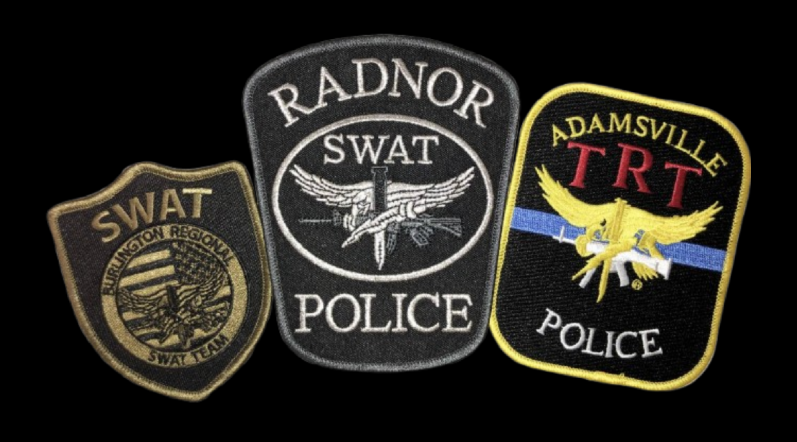
Custom embroidered patches are one of the most recognisable options for clothing.
Coloured threads are stitched onto a fabric base to create a textured design.
Embroidery works particularly well for:
- Brand logos
- Lettering
- Crests
- Symbols
- Club-style designs
- Vintage-inspired artwork
- Workwear branding
The raised thread gives embroidered patches a premium and traditional appearance.
For streetwear and lifestyle brands, embroidery can also create a strong handcrafted aesthetic.
2. Woven Patches
When a design contains small text, thin lines, or intricate details, woven patches can be an excellent alternative.
Woven patches use finer threads than traditional embroidery, allowing more detailed artwork to be reproduced.
Their surface is also flatter and smoother.
Woven patches are particularly suitable for:
- Detailed logos
- Small brand marks
- Fashion labels
- Typography
- Complex illustrations
- Premium garments
- Streetwear collections
They can provide a clean, contemporary appearance that works particularly well with modern fashion branding.
3. Chenille Patches
Chenille patches are immediately recognisable because of their soft, raised texture.
They are closely associated with varsity jackets, collegiate clothing, sportswear, and vintage American fashion.
Clothing brands can use chenille patches for:
- Initials
- Large letters
- Numbers
- Team-style logos
- Varsity artwork
- Oversized jacket designs
Chenille can be particularly effective for brands creating retro, collegiate, sports-inspired, or premium streetwear collections.
4. PVC Patches
PVC patches offer a completely different appearance from thread-based patches.
They are manufactured from flexible rubber-like PVC material and can provide a bold, modern finish.
PVC patches can work particularly well for:
- Outdoor clothing
- Technical apparel
- Sportswear
- Workwear
- Bags
- Jackets
- Tactical-inspired fashion
- Performance clothing
Their weather-resistant characteristics also make them useful for garments intended for demanding outdoor environments.
5. Leather Patches
Leather patches are an excellent option when a clothing brand wants a more refined or heritage-inspired appearance.
They are commonly seen on:
- Denim
- Jeans
- Caps
- Beanies
- Jackets
- Bags
- Workwear
- Premium apparel
A leather patch can feature a brand name, logo, symbol, or other simple artwork.
Leather-style branding works especially well for minimalist, outdoor, heritage, workwear, and premium fashion brands.
6. Sublimated Patches
Some artwork contains photographs, gradients, shadows, or many colours that cannot easily be recreated with traditional embroidery.
Sublimated patches can provide a solution.
They allow complex full-colour artwork to be reproduced with a smooth finish.
This makes them useful for:
- Detailed illustrations
- Colourful artwork
- Photographic designs
- Artist collaborations
- Limited-edition merchandise
- Complex fashion graphics
For clothing brands with highly detailed artwork, sublimation can provide more design freedom.
Custom Patches for Streetwear Brands
Streetwear is one of the strongest applications for custom patches.
Modern streetwear often combines embroidery, printing, woven labels, patches, appliqué, and other decoration methods within a single garment.
Patches can be positioned on hoodies, oversized jackets, cargo trousers, caps, beanies, bags, and denim.
Brands can also experiment with unusual shapes rather than relying exclusively on standard circles and rectangles.
A custom-shaped patch based on your logo can create a more distinctive appearance.
Custom Patches for Caps and Hats
Caps provide an excellent surface for patch branding.
Instead of embroidering a logo directly onto a cap, brands can create a separate patch and attach it to the front or side.
Popular options include:
- Embroidered patches
- Woven patches
- PVC patches
- Leather patches
The best choice depends on the style of the cap.
For example, a leather patch can complement a premium trucker cap, while a woven patch can suit a modern 5-panel cap.
PVC patches can work particularly well with outdoor and performance headwear.
Custom Patches for Hoodies
Hoodies provide several potential patch positions.
A small logo patch can be positioned on the chest, sleeve, pocket area, or near the hem.
Larger statement patches can also be placed across the back.
For a subtle premium look, brands can use tonal colours where the patch closely matches the garment.
For a stronger streetwear aesthetic, contrasting colours and oversized patches can create a more noticeable design.
Custom Patches for Jackets
Jackets offer some of the greatest opportunities for creative patch placement.
Depending on the style, patches can appear on:
- Left chest
- Right chest
- Sleeves
- Shoulders
- Back
- Pockets
- Collar areas
Varsity jackets are particularly suited to chenille patches, while denim jackets can work well with embroidered or woven patches.
Outdoor jackets may benefit from PVC patches where increased weather resistance is desirable.
Custom Patches for Denim
Patches and denim have a long history together.
Custom patches can be added to denim jackets, jeans, shorts, skirts, and accessories.
Clothing brands can use patches to create vintage-inspired designs, repair-style aesthetics, limited-edition collections, or distinctive branded products.
Leather patches can also be used around the waistband of jeans to create traditional denim branding.
Choosing the Right Patch Size
Patch size can significantly affect the finished garment.
A patch that is too large can overwhelm the clothing, while one that is too small may make the design difficult to recognise.
Before choosing a size, consider:
- Garment type
- Logo complexity
- Amount of text
- Patch position
- Viewing distance
- Overall clothing design
Small chest and cap patches normally require simplified artwork.
Large jacket patches allow considerably more design freedom.
The artwork should therefore be designed around the final patch dimensions rather than simply shrinking an existing logo.
Choosing Patch Colours
Colour selection is particularly important for fashion brands.
Your patch should complement both your brand identity and the garment.
High contrast creates maximum visibility.
For example, light-coloured embroidery on a black garment can create a strong visual impact.
Tonal branding creates a more understated effect.
A black patch with dark grey or black embroidery can provide subtle branding suitable for minimalist or premium apparel.
Brands can also create different patch colourways for different garments within the same collection.
Custom Patch Shapes
A patch does not need to be round or rectangular.
Custom shapes can follow the outline of your logo, mascot, lettering, symbol, or illustration.
Popular shapes include:
- Circles
- Squares
- Rectangles
- Shields
- Ovals
- Diamonds
- Crests
- Stars
- Logo-shaped patches
Custom shapes can make fashion branding more distinctive and allow the patch to become part of the garment design rather than simply appearing as an added label.
Choosing the Right Patch Backing
Backing determines how your patch attaches to clothing.
Sew-On Patches
Sew-on backing provides a permanent attachment and is an excellent choice for clothing manufacturers.
It works particularly well for jackets, uniforms, denim, hoodies, bags, and other garments.
Iron-On Patches
Iron-on patches include a heat-activated backing.
They can provide convenient application for suitable fabrics and are also popular with customers who want to customise their own clothing.
Velcro Patches
Velcro or hook-and-loop backing allows patches to be removed and replaced.
This is especially useful for tactical clothing, outdoor apparel, uniforms, bags, and products designed around interchangeable patches.
Adhesive Backing
Adhesive backing is generally better suited to temporary applications than permanent fashion garments.
The correct backing should always be selected according to the garment material and intended use.
Designing Patches for Your Clothing Brand
An attractive logo does not automatically become an attractive patch.
Patch manufacturing has its own design considerations.
When preparing artwork, consider the following:
Keep Text Readable
Very small text can become difficult to reproduce.
If your brand name contains fine typography, you may need to increase the lettering size or consider a woven patch.
Simplify Very Detailed Artwork
Small decorative elements that look good on a computer screen may disappear when converted into thread.
Removing unnecessary detail can often create a stronger finished patch.
Think About Contrast
Make sure important elements remain visible against both the patch background and garment.
Consider the Border
The border helps define the shape of the patch.
A contrasting border can make the design stand out, while a matching border can produce a cleaner and more subtle appearance.
Design for the Final Size
Always evaluate artwork at approximately the dimensions at which it will actually be manufactured.
Custom Patches for Clothing Startups
Patches can be particularly useful for startup fashion brands.
Instead of developing highly complicated garment manufacturing processes immediately, a startup can use custom patches to add distinctive branding to selected apparel.
This approach can be used for:
- First collections
- Sample garments
- Limited drops
- Promotional merchandise
- Influencer packages
- Pop-up events
- Brand launches
As the brand develops, the patch itself can become a recognisable design element.
Limited-Edition Patch Collections
Patches can also become products in their own right.
Fashion brands can create collectible patch sets or release limited-edition designs alongside clothing collections.
Customers can attach them to jackets, bags, hats, or other compatible products.
Brands can create seasonal collections, collaborations, anniversary designs, event-exclusive patches, and limited colourways.
This can provide another way to build engagement around a clothing collection.
Custom Patches for Merchandise
Patches are not limited to fashion companies.
Musicians, creators, sports clubs, events, businesses, artists, and communities can incorporate patches into merchandise ranges.
Because patches are relatively compact, they can also be combined with other merchandise such as caps, hoodies, T-shirts, bags, and jackets.
A strong patch design can function both as branding and as a standalone collectible item.
How to Order Custom Patches for Your Brand
Before requesting a quote, prepare the key details of your project.
These typically include:
- Your logo or artwork
- Preferred patch type
- Required size
- Quantity
- Colours
- Shape
- Backing type
- Intended garment
- Required delivery date
If you are unsure which patch type will reproduce your design best, discussing the intended application with the manufacturer can help determine the most appropriate construction.
Why Quality Matters for Fashion Brands
Every detail on a garment contributes to how customers perceive a brand.
A premium hoodie with a poorly produced patch can make the entire product appear less professional.
For clothing brands, it is therefore important to consider stitching, edge finishing, colour consistency, artwork clarity, backing, and overall construction.
The patch should feel like an intentional part of the garment rather than an afterthought.
Create Custom Clothing Patches with Custom Patch Makers UK
At Custom Patch Makers UK, we manufacture custom patches for clothing brands, businesses, sports teams, organisations, clubs, and individuals throughout the UK.
Our patch options include embroidered, woven, chenille, leather, PVC, sublimated, iron-on, Velcro, and custom-shaped patches.
Whether you are developing your first streetwear collection, adding branded patches to company apparel, producing custom caps, or preparing a large clothing collection, the right patch can help give your products a distinctive identity.
Send your logo, artwork, sketch, or design idea to begin creating patches tailored to your brand.