

A small team may start using AI long before anyone writes down the rules. One employee drafts customer replies, another summarizes meetings, and a third uploads a spreadsheet to try a new feature. A small team AI use policy gives these activities clear boundaries without turning every routine task into a lengthy approval process.
The best starting point is a short, usable document. Employees should be able to identify which tools they may use, which information they may share, what needs review, and whom to ask when a situation falls outside the examples. The policy should describe the team’s real work rather than repeat broad promises about responsible innovation.
List the activities already happening
Ask staff what they use AI for and what they would like to try. Keep the conversation focused on tasks: drafting social posts, summarizing public articles, preparing internal agendas, or organizing approved data. Include unofficial experiments so the policy reflects reality.
For each activity, identify the input, output, audience, and possible consequence of an error. A brainstorming list for an internal meeting has a different risk profile from a message promising a customer a refund. A summary of a public document differs from an upload containing employee records.
Do not begin by approving or rejecting “AI” as a single category. The meaningful questions concern a particular tool, task, data type, and action. Those details make the policy easier to explain and update.
Name the permitted tools and accounts
Provide a maintained list of approved services and account arrangements. Identify the person responsible for adding or removing entries. If employees may only use a workplace account for business tasks, state that clearly and explain how they obtain access.
Avoid assuming that every feature inside an approved product is automatically approved. A new connector, file upload option, or external sharing function may change how information moves. Tell staff when they need to check before enabling additional access.
Include a simple request route for new tools. Ask for the intended task, expected information, and reason an existing service is insufficient. A workable request process reduces the incentive to experiment with sensitive material outside the team’s known systems.
Organize tasks into practical groups
Use plain categories such as permitted, review required, and not permitted under this policy. Fill each category with examples that match the team. Permitted tasks might include brainstorming headlines from public information or improving the wording of a fictional example.
Review-required tasks could include external customer communications, factual marketing claims, or analysis that informs an important business decision. Name the reviewer and specify what they check. “Human review required” is incomplete if nobody knows whether that means checking tone, facts, commitments, or all three.
For tasks outside the team’s competence or approved controls, state that employees must use the established process instead. Do not imply that a short internal policy settles legal, employment, medical, or other specialized obligations. Obtain appropriate advice where those responsibilities apply.
Define information boundaries with examples
Tell employees which information may be entered and which must stay out. Use examples such as public product descriptions, approved templates, customer identifiers, passwords, private contracts, and staff records. The exact boundaries should reflect your actual arrangements and responsibilities.
Explain how to prepare a safe input for an ordinary task. To improve an email’s tone, an employee might remove names, account details, signatures, and unrelated quoted messages. They should preserve the facts necessary for the draft while avoiding unnecessary disclosure.
Do not describe removing names as a universal privacy solution. Context can still identify a person or reveal confidential business information. Give employees a contact for uncertain cases and an approved alternative when the task cannot be completed within the rules.
Assign responsibility for the final output
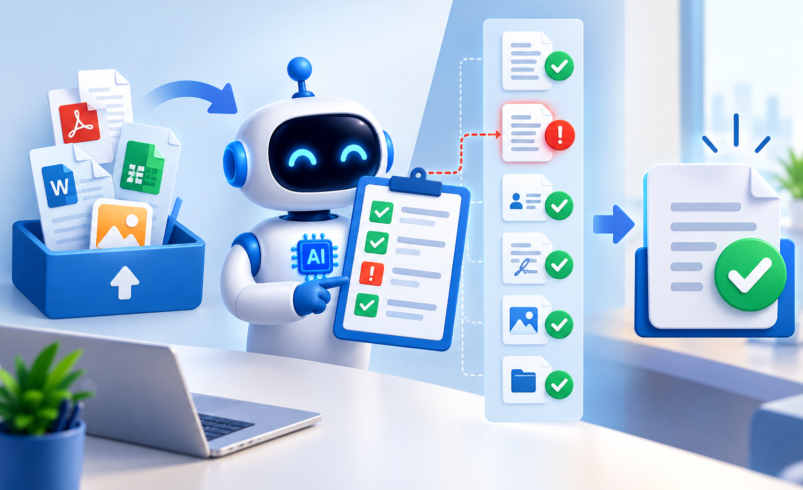
The person who uses an AI draft should not assume the tool owns its mistakes. Name who verifies factual claims, confirms figures, approves commitments, and authorizes publication. For a very small team, one person may fill several roles, but those roles should still be clear.
A practical rule might say: “Before sending an AI-assisted customer reply, the account owner checks the customer’s request, the applicable policy, and any promised action.” This identifies both the reviewer and the substance of the check.
Ideas about team workflows from Aiera.blog can inform internal experiments, but an adopted process should have a named owner and a clear place in the team’s policy before staff rely on it for recurring work.
Explain what to do when something goes wrong
Staff need a simple reporting route for accidental uploads, incorrect external messages, or unexpected tool actions. State whom to contact, what basic information to preserve, and when to stop the affected workflow. Avoid asking employees to investigate beyond their role.
Make the first response practical rather than punitive. People are more likely to report quickly when the process helps contain the issue. The responsible person can then follow the organization’s incident procedures and involve specialists when needed.
Record lessons that change the policy. If employees repeatedly misunderstand one boundary, improve the wording or training example. A rule that looks clear to its author may still fail during a rushed working day.
Keep a short policy and useful examples
The main document can cover purpose, approved tools, permitted tasks, information boundaries, review, reporting, and ownership. Put detailed examples in a separate page that is easier to update. Avoid filling the policy with product marketing language or technical terms employees do not use.
NIST’s AI Risk Management Framework provides a voluntary framework for managing AI risks. A small business can use such resources to inform its thinking while keeping its employee-facing instructions concrete and proportionate.
Test the draft with two realistic scenarios. Ask an employee whether they can upload a customer complaint for rewriting and whether they can use AI to draft a public event announcement. If the policy does not produce a clear answer or escalation route, revise it.
Set a review date and an owner
Name the person responsible for maintaining the policy and record its effective date. Review it when tools, data access, or business activities change, as well as at a planned interval. Remove obsolete examples so employees do not have to guess which version applies.
A useful policy is one people can apply while working. Start with real tasks, define boundaries in plain language, and make review responsibilities visible. That gives the team room to use AI productively while keeping important decisions, information, and external commitments under clear human ownership.