

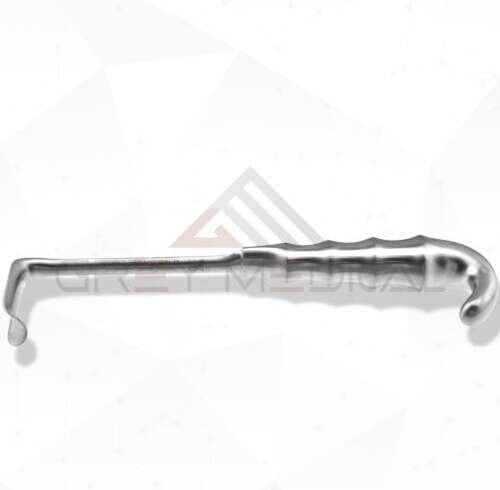

A retractor richardson is a commonly used surgical instrument designed to hold back tissue, muscle, or organs to provide better visibility and access to the surgical site. Surgeons rely on retractors during many procedures because they help maintain a clear working area while allowing the surgical team to perform tasks with greater precision. Moreover, its practical design and sturdy construction make it a valuable addition to surgical instrument sets used in hospitals, operating rooms, and medical facilities.
In modern surgery, retractor richardson functionality and quality are essential for supporting efficient procedures. Therefore, choosing the right retractor can help surgeons maintain exposure of the operative field and support the workflow during different surgical interventions. The Richardson retractor is particularly valued for its blade design, comfortable handling, and versatility in surgical environments.
Understanding the Richardson Retractor
The Richardson retractor is a handheld surgical instrument that features a handle and a broad, curved or angled blade. Surgeons and assistants use it to retract soft tissues and provide access to deeper surgical areas, depending on the blade size and procedure. Its blade design allows professionals to hold tissues away from the operative field while maintaining exposure.
Furthermore, Richardson retractors are available in different sizes to accommodate varying anatomical structures and surgical requirements. Smaller versions may suit relatively limited surgical areas, whereas larger versions can provide greater retraction in deeper operative fields. Consequently, medical professionals can choose a design that matches the specific needs of the procedure.
Common Applications of Richardson Retractors
A retractor richardson is used in various surgical settings where practitioners need to maintain access to an operative site. Its broad blade can help retract soft tissue, muscle, and other structures during selected procedures. For example, surgeons may use Richardson retractors in abdominal surgery and other procedures requiring tissue exposure.
Additionally, the instrument can help surgical assistants maintain exposure while the surgeon performs the necessary operative steps. By holding tissues away from the working area, the retractor supports visibility and access. However, healthcare professionals must use appropriate retraction techniques to avoid unnecessary pressure on surrounding tissues.
The instrument’s versatility makes it useful in surgical environments where reliable handheld retraction is required. Its straightforward design also allows surgical teams to incorporate it into different instrument sets according to their clinical needs.
Design Features and Construction
Richardson retractors feature a sturdy handle and a blade designed to support tissue retraction. The blade typically has a curved or angled profile, which helps practitioners position the instrument according to the surgical site. Moreover, its smooth edges and carefully finished surface support appropriate handling when used according to professional technique.
Material quality is another important consideration. Manufacturers commonly produce surgical retractors from stainless steel because it offers durability, corrosion resistance, and compatibility with appropriate sterilization procedures. In addition, a well-balanced handle can help the surgical assistant maintain a stable grip during procedures.
A quality retractor richardson should combine practical dimensions, dependable construction, and a functional blade shape. Therefore, medical professionals and purchasing teams should consider the instrument’s size, finish, material, and intended application when selecting surgical retractors.
Selecting the Right Richardson Retractor
Selecting a suitable Richardson retractor requires consideration of the procedure, anatomical area, and depth of the operative field. First, healthcare professionals should evaluate the blade dimensions to determine whether the instrument offers appropriate exposure. Next, they should assess handle comfort, instrument balance, and material quality.
Furthermore, surgical instruments require regular inspection and proper maintenance. Healthcare facilities should follow the manufacturer’s cleaning, sterilization, and storage guidelines to maintain instrument condition. If a retractor shows signs of damage, corrosion, or compromised functionality, professionals should evaluate it before further use.
By selecting instruments that meet their clinical requirements, surgical teams can organize their instrument sets more effectively and support consistent procedural workflows.
Grey Medical® and Surgical Instrument Quality
Grey Medical® is a privately owned medical technology company dedicated to innovation and excellence in the craft of surgical instrument. The company focuses on supplying surgical instruments designed to meet the requirements of healthcare professionals, hospitals, clinics, and medical distributors.
Quality craftsmanship, functional design, and reliable construction are important considerations when choosing surgical retractor. Similarly, a dependable retractor richardson should offer suitable dimensions, a practical blade design, and durable construction for its intended application.
Grey Medical® recognizes the importance of surgical instrument quality in modern healthcare environments. Through attention to instrument design and craftsmanship, the company aims to support professionals seeking functional and reliable surgical tools for their practices and facilities.
Conclusion
A retractor richardson is an essential handheld surgical instrument that helps maintain tissue exposure and provide access to the operative field during various procedures. Its broad blade, practical handle design, and availability in different sizes make it a useful tool in many surgical instrument collections.
Ultimately, choosing the appropriate Richardson retractor involves evaluating blade dimensions, construction quality, material, and intended surgical application. With suitable instrument selection, proper handling, and consistent maintenance, surgical teams can support effective workflows and meet the demands of modern surgical practice.