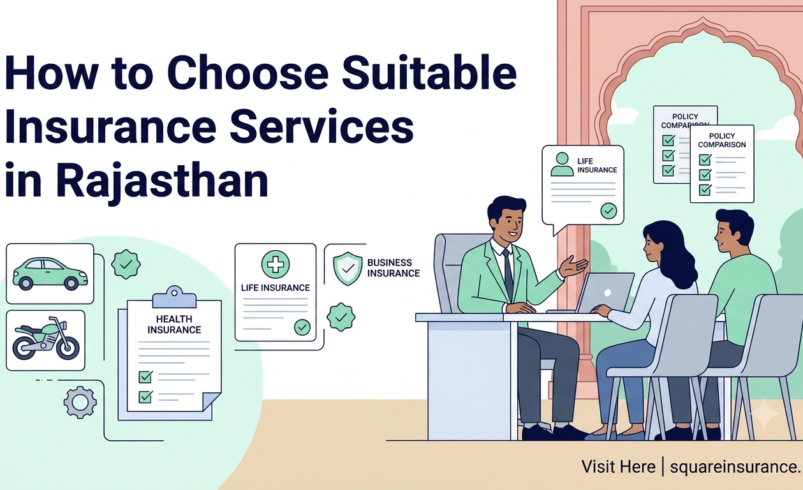

Choosing suitable insurance services is an important step towards protecting your finances, family, vehicle, and business against unexpected expenses. Insurance in Rajasthan covers a range of options to meet different needs, depending on location, profession, family responsibilities, lifestyle, and financial goals. While some individuals need car or bike insurance, others may prioritise health insurance, term insurance, or coverage for their businesses.
With several insurance products and coverage options available, selecting the right policy can feel complicated. Understanding your requirements, comparing available plans, and reviewing policy conditions can help you make a more informed decision. Whether you are purchasing insurance for the first time or reviewing an existing policy, knowing what to evaluate can make choosing suitable insurance services in Rajasthan easier.
1. Identify Your Insurance Requirements
The first step is to determine what you want to protect. Buying a policy without understanding your actual needs may result in inadequate coverage or unnecessary expenses.
Start by considering your personal circumstances, financial responsibilities, and potential risks. For example, a family with dependent children may prioritise health and life insurance, while a vehicle owner needs appropriate motor insurance.
Your requirements may include:
- Health insurance: Helps cover eligible medical expenses according to the policy terms.
- Life and term insurance: Provides financial protection for dependants in the event of the insured person’s death, subject to policy conditions.
- Car insurance: Covers specified vehicle-related risks under the selected policy.
- Bike insurance: Provides protection for eligible two-wheeler-related risks.
- Business insurance: Helps businesses manage specified financial risks, depending on the coverage selected.
Make a list of your immediate and long-term priorities before comparing insurance services. This approach helps narrow down your choices and focus on policies that address relevant risks.
2. Understand the Coverage Offered
The price of an insurance policy should not be the only factor influencing your decision. Two plans with similar premiums may provide different benefits, exclusions, limits, and claim conditions.
Read the policy wording carefully to understand what is covered and what is not. Pay attention to deductibles, waiting periods, sub-limits, coverage limits, and conditions that may affect a claim.
For instance, comprehensive motor insurance generally provides broader protection for the insured vehicle than third-party-only insurance. However, the exact coverage depends on the policy terms and selected add-ons.
Similarly, when evaluating health insurance, review the sum insured, hospitalisation benefits, room-rent limits, waiting periods, and applicable exclusions.
The most suitable insurance policy is one that provides appropriate protection for your circumstances, rather than simply offering the lowest premium.
3. Compare Insurance Plans Before Making a Decision
Comparing multiple insurance plans helps you understand the differences between available options. Instead of selecting the first policy you find, evaluate the benefits, limitations, costs, and service features of different plans.
During the comparison process, consider:
- Premium payable and renewal costs.
- Coverage amount and included benefits.
- Exclusions and policy-specific restrictions.
- Deductibles, co-payments, and other out-of-pocket expenses.
- Claim procedures and required documentation.
- Available add-ons and optional benefits.
- Renewal conditions and long-term affordability.
For example, a vehicle owner in Jaipur may compare motor insurance policies based on the insured declared value, own-damage coverage, third-party protection, and repair-related benefits.
A family in Udaipur may focus on health insurance plans by comparing hospitalisation coverage, waiting periods, and access to suitable hospitals.
Comparing policies according to your priorities helps you identify meaningful differences instead of making decisions based only on advertising or premium amounts.
4. Evaluate the Insurance Provider’s Reliability
The reliability of an insurance provider can influence your experience throughout the policy period. Before purchasing insurance, check whether the insurer is authorised to offer the relevant product and review its service information.
You can assess an insurer by considering factors such as:
- Claim settlement information and the methodology used to calculate it.
- Availability of customer support.
- Clarity of policy documents and communication.
- Ease of policy servicing and renewal.
- Complaint-handling processes.
- Accessibility of claim-related information.
Claim settlement figures should be interpreted carefully because they may relate to different periods, product categories, or calculation methods. A single percentage does not guarantee that an individual claim will be approved.
It is also useful to understand how claims are assessed, what documents may be required, and which circumstances could affect the outcome.
Selecting an insurer after reviewing these factors can help you make a more informed choice.
5. Consider Local Insurance Requirements in Rajasthan
Insurance requirements may vary according to the policyholder’s circumstances and the risks associated with their location or activities. Rajasthan includes urban centres, smaller towns, rural areas, and industrial locations, each with different personal and commercial needs.
For vehicle owners in Jaipur, Jodhpur, Kota, Ajmer, Udaipur, or Bikaner, important considerations may include regular travel, vehicle usage, repair expenses, and the type of motor insurance required.
People living in areas with limited access to healthcare facilities may also want to assess health insurance options carefully, including hospital access, emergency benefits, and applicable network arrangements.
Business owners should consider the risks associated with their operations, property, employees, equipment, and customer interactions before selecting relevant business insurance.
Local requirements should be assessed alongside policy terms rather than treated as a substitute for reviewing coverage. The right choice depends on the risks you face and the protection available under the policy.
6. Check the Total Cost of Insurance
Affordability matters, but the cheapest policy may not always provide suitable protection. Consider both the premium and the expenses you might have to pay when making a claim.
For health insurance, review co-payments, deductibles, sub-limits, and exclusions that could increase your out-of-pocket expenses. For motor insurance, consider the compulsory deductible, voluntary deductible if applicable, add-on costs, and potential repair expenses that are not covered.
You should also evaluate whether the premium fits your budget over the long term. A policy that becomes difficult to renew may not provide consistent protection.
Before purchasing, ask yourself three questions:
- Can I comfortably afford the premium?
- Does the policy offer adequate protection for my needs?
- Can I manage the expenses that may remain outside the coverage?
These questions can help you balance affordability with meaningful financial protection.
7. Understand the Role of an Insurance Broker
An insurance broker can help customers understand insurance options and compare policies from different insurers, depending on the broker’s authorised arrangements and available products.
This support can be useful when you are unsure which benefits matter most or how policy conditions differ. A broker may help explain premiums, coverage limits, exclusions, optional benefits, and documentation requirements.
Before choosing an insurance broker in Rajasthan, review the broker’s regulatory authorisation, range of available insurance products, service process, and approach to explaining policy terms.
You should also clarify the support available during policy servicing, renewal, and claims. Although a broker can help guide you through the process, the insurer makes claim decisions according to the policy terms and applicable rules.
Working with a reliable broker can make insurance comparisons easier, particularly when you are considering several policies with different benefits and conditions.
8. Review the Policy Before Purchasing
Before completing your purchase, carefully examine the policy details. Small differences in wording can affect your understanding of the protection provided.
Check the following information:
- Name and details of the insured person or business.
- Correct vehicle or property details, where applicable.
- Policy period and renewal date.
- Sum insured or coverage limits.
- Premium amount and applicable taxes.
- Exclusions, deductibles, and waiting periods.
- Optional covers and additional benefits.
- Claim notification requirements and documentation.
Keep a copy of the policy document and understand how to access it when needed. Set a reminder before the renewal date so that you have enough time to review your requirements and compare available options.
If any information is unclear, seek an explanation before purchasing. Reviewing the final policy helps reduce misunderstandings and supports more informed decisions.
Conclusion
Choosing suitable insurance services in Rajasthan involves understanding your needs, comparing coverage options, evaluating insurers, and selecting a policy that balances protection with affordability. Whether you require health, life, car, bike, or business insurance, reviewing policy terms and claim conditions can help you avoid unsuitable choices.
Square Insurance Brokers Private Limited helps individuals and businesses explore insurance options across multiple categories. With a focus on comparing suitable plans and simplifying insurance decisions, Square Insurance aims to make the process more convenient and transparent. Taking time to assess your requirements and review available policies can help you select insurance coverage that supports your financial priorities.
Frequently Asked Question (FAQs)
Q1. How can I choose suitable insurance services in Rajasthan?
Identify your insurance needs, compare available policies, review coverage and exclusions, evaluate insurers, and select a plan that fits your budget.
Q2. Which types of insurance should Rajasthan residents consider?
Depending on their circumstances, residents may consider health, life, term, car, bike, and business insurance to address different financial risks.
Q3. Why should I compare insurance policies before buying?
Comparing policies helps you evaluate premiums, benefits, exclusions, coverage limits, and claim conditions before making a decision.
Q4. How can I check whether an insurance provider is reliable?
Review its authorisation, claim settlement information, customer service processes, complaint-handling arrangements, and policy documentation.
Q5. Can an insurance broker help me select a suitable policy?
Yes. An authorised insurance broker can help you compare available policies, understand coverage differences, and navigate relevant insurance processes.
Q6. Is the cheapest insurance policy always the best option?
No. A low premium may come with limited coverage or higher out-of-pocket expenses. Compare the overall benefits and limitations before choosing.
Q7. When should I review my insurance policy?
Review your policy before renewal and whenever your financial responsibilities, family circumstances, vehicle usage, or business requirements change.
Compare suitable insurance options and manage your policies conveniently with Square Insurance POS Apps.