

What Is the EnerSys PC535 Designed to Provide?
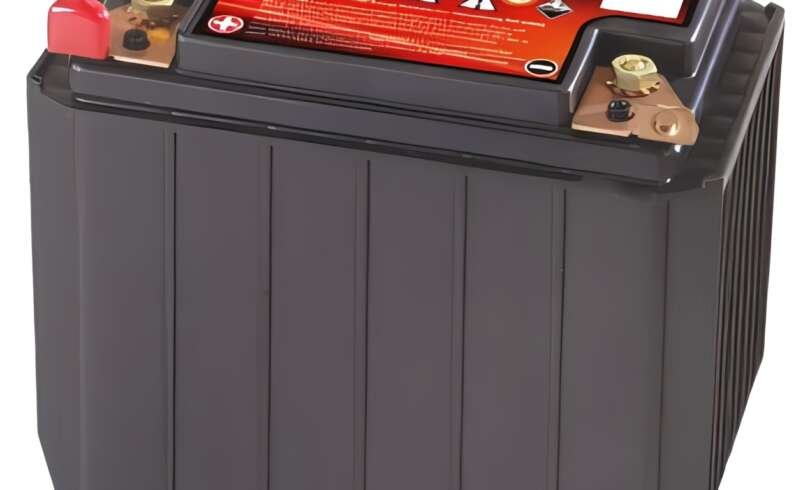
The EnerSys Lead Acid Battery is a compact rechargeable power source engineered for applications requiring dependable starting current and useful cycling capability. Manufacturer part number PC535 operates at 12V and provides a nominal capacity of approximately 14Ah.
The battery is associated with the ODYSSEY Extreme range and uses Absorbed Glass Mat technology with thin plate pure lead construction. This internal design supports strong current delivery, low maintenance requirements and resistance to vibration in compatible powersport, vehicle and auxiliary power installations.
How Is the PC535 Different From a Conventional Battery?
Traditional flooded lead acid batteries contain free liquid electrolyte around their internal plates. The PC535 uses glass mat separators to absorb and retain the electrolyte, creating a valve-regulated AGM construction.
This arrangement eliminates the need for routine water replacement during normal use. It also supports a compact, non-spillable design when the battery is installed and operated according to the manufacturer’s guidance.
Different Lead Acid Batteries vary in plate technology, capacity, terminal layout, discharge behaviour and charging requirements. AGM, gel and flooded products should not be treated as automatically interchangeable.
What Do the 14Ah and 535A Ratings Mean?
The approximate 14Ah capacity describes the amount of charge the battery can deliver over a specified discharge period. It helps users estimate how long a connected electrical load may operate before the battery requires recharging.
The 535A pulse hot cranking rating describes a different type of performance. It indicates the battery’s ability to provide a high current for a five-second starting event under defined conditions. The PC535 also carries a cold cranking rating of approximately 200A.
Capacity is therefore associated with stored energy, while cranking ratings indicate short-duration starting capability. Both values should be considered when matching the battery to an application.
Why Does Thin Plate Pure Lead Construction Matter?
Thin plate pure lead technology uses multiple closely arranged plates to create a large active surface area within the battery case. More plate surface can reduce internal resistance and support rapid current delivery when a starter motor demands power.
The design also provides useful charge acceptance, allowing the battery to recover efficiently when connected to an appropriate charging source. However, fast charge acceptance does not mean that any charger can be used.
The charging system must regulate voltage and current correctly. Repeated undercharging may reduce available capacity, while excessive charging voltage can overheat the battery, activate its pressure valves and shorten its working life.
Which Charger Should Be Used?
The PC535 requires a charger compatible with 12V AGM lead acid chemistry. Suitable Battery Chargers should provide a controlled charging profile that remains within the latest voltage, current and temperature limits specified for the battery.
A charger designed for a different chemistry may fail to restore full capacity or may apply an unsuitable voltage. Manual charging equipment also requires careful monitoring because it may not reduce or stop its output automatically.
The battery should be recharged promptly following substantial discharge. Remaining partially charged for extended periods can encourage sulphation and gradually reduce the active plate area.
Why Do Charging Leads Affect Performance?
A correctly selected charger can still perform poorly if its cables and connections create excessive resistance. Compatible Battery Charger Leads must support the required current, connector type and cable length.
Undersized, damaged or loosely connected leads can create voltage drop and heat. This may cause slow charging, incomplete charge recovery or unstable charger operation.
Crocodile clips can be convenient for temporary charging, while ring-terminal connections may suit approved permanent maintenance arrangements. In every case, polarity must be checked before energising the charger.
How Should Battery Connections Be Designed?
Battery cables transfer current between the PC535, starter, charging source and connected equipment. Their conductor size should be selected for the expected current and cable length because excessive resistance can reduce cranking voltage.
Compatible Battery Connectors should provide secure mechanical contact and an appropriate electrical current rating. Loose or contaminated connections may generate heat, increase voltage loss and damage the terminal surface.
The positive and negative cables must follow the equipment manufacturer’s routing and polarity requirements. Cable insulation should also be protected from vibration, abrasion, sharp edges and hot components.
Why Is Circuit Protection Important?
A lead acid battery can deliver a very high current into a short circuit. Suitable protective devices should therefore be installed according to the electrical design and equipment manufacturer’s requirements.
In vehicle-based systems, correctly selected Car Fuses can disconnect protected circuits when current exceeds the permitted level. The fuse type and rating must match the connected conductor and load.
A fuse should normally be positioned close to the battery’s positive supply point, subject to the approved system design. Oversized fuses may not protect the cable effectively, while undersized models can interrupt normal operation.
Which Applications May Use the PC535?
The compact size and high cranking output make the PC535 relevant to compatible motorcycles, all-terrain vehicles, personal watercraft, racing vehicles and specialist starting systems. It may also power selected auxiliary equipment when the expected load remains within its capacity.
The battery measures approximately 170 mm long, 99 mm wide and 158 mm high and weighs around 5.4 kg. These measurements should be checked against the available tray, hold-down mechanism and cable routing before purchase.
Electrical compatibility is equally important. A battery that fits physically may still be unsuitable if the system requires greater capacity, a different terminal arrangement or another cranking rating.
How Does Temperature Affect Battery Output?
Battery performance changes with temperature. Cold conditions slow the internal chemical reaction and reduce the current available for engine starting. This is why cold cranking capability matters in applications exposed to low ambient temperatures.
High temperatures may improve short-term chemical activity but accelerate internal ageing. Installation near an engine, exhaust system or another heat source can therefore reduce service life if the permitted temperature range is exceeded.
The battery compartment should provide the ventilation, clearance and thermal protection specified by the equipment manufacturer. Insulation should not trap damaging heat around the casing.
How Can the Battery’s Condition Be Evaluated?
Resting voltage can provide an initial indication of charge state, but it does not reveal the complete condition of the battery. Internal degradation may allow a battery to display normal voltage while failing under a starting load.
Compatible Battery Testers can assess cranking performance, conductance or load response, depending on the instrument. The tester should be configured for AGM chemistry and the PC535’s published rating.
Testing should normally begin with a fully charged battery. Measurements taken immediately after charging may also require an appropriate resting period or surface-charge removal procedure.
What Maintenance Does the PC535 Require?
Although the AGM construction does not require water topping, periodic inspection remains important. Users should look for loose terminals, damaged cables, swelling, cracks, corrosion and evidence of overheating.
The casing should remain clean and dry because conductive contamination can create unwanted current paths between the terminals. The battery must also remain firmly secured so that movement does not strain the case or electrical connections.
When equipment will remain unused, parasitic loads should be identified and the battery’s state of charge monitored. An approved maintenance charger may help prevent gradual discharge during seasonal storage.
Is the EnerSys PC535 Suitable for Compact Power Systems?
The EnerSys PC535 Lead Acid Battery offers a useful combination of 12V operation, approximately 14Ah capacity and high short-duration cranking performance. Its AGM thin plate pure lead design supports starting and cycling demands in compact, vibration-prone applications.
Successful operation depends on complete system compatibility. Correct charging, appropriately sized cables, secure connectors, suitable circuit protection and regular testing all contribute to reliable performance. When these requirements are properly addressed, the PC535 can provide dependable starting power and energy storage across a range of professional and powersport installations.