

A search for best interior designers in Agra will turn up a mix of local studios, contractors who added design services, and firms based elsewhere that take on projects across nearby cities. None of these is automatically the right choice, but each comes with a different set of trade-offs, and most of what you read online won’t spell those out. The honest way to compare them is to ask what actually changes when the team running your project isn’t based in the same city as your home.
Why “Best” Is Hard to Judge From a City-Wide Search
Rankings for any city tend to reward whoever has the most reviews, the most active social presence, or the best-photographed portfolio, not necessarily the studio best suited to your specific home. This matters more in a city like Agra, where older construction, heritage-adjacent zoning in parts of the city, and narrower lanes in some neighbourhoods can shape a project as much as the studio’s design sense does. A ranking built from reviews and photographs cannot tell you whether a firm has actually handled a home like yours in your part of the city. Treat any list as a starting point for names, not a final answer.
What Distance Actually Changes
Whether a studio sits five minutes from your home or coordinates the project from another city changes logistics more than it changes design quality. A local team can visit unannounced, respond to a site issue within the hour, and know the city’s material suppliers and skilled labour directly. A studio coordinating from outside relies more heavily on scheduled site visits, dated photo updates, and a site supervisor who may be locally hired rather than part of the core design team. Neither model is inherently better. What matters is whether the studio is transparent about which model it’s offering you, and builds the right supervision routine into the contract either way.
What to Ask Any Firm, Local or Outstation
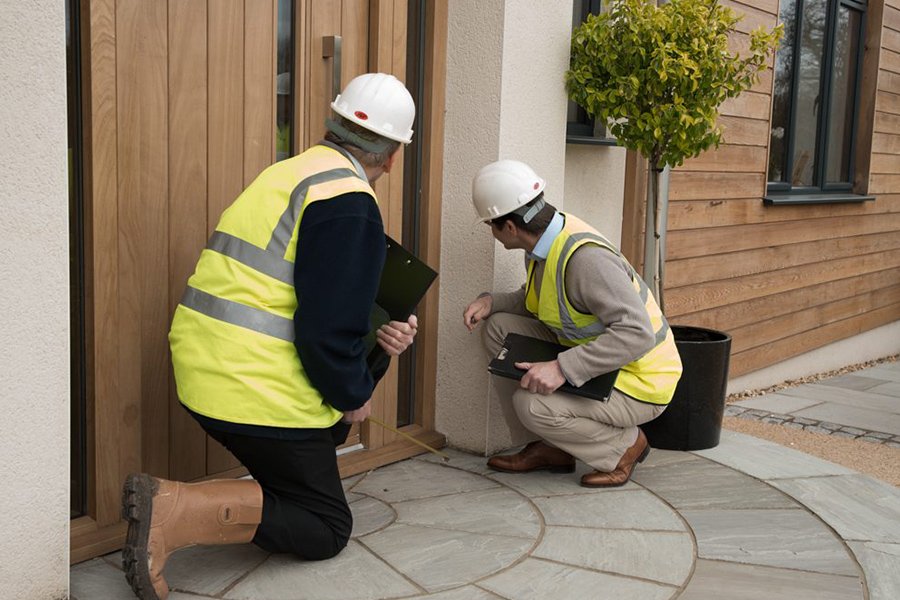
Whichever type of studio you’re considering, the questions worth asking stay the same. Ask for a proper site survey with measurements and notes on existing electrical and plumbing conditions, not a quote given over the phone from a floor plan. Ask for a trade-wise quotation that lists civil work, electrical, false ceiling, carpentry, painting and lighting separately, with exclusions stated as clearly as inclusions. Ask who supervises the site day to day, how often you’ll receive updates, and how delays are communicated. A studio that answers these clearly, regardless of where its office sits, is showing you more than any portfolio can. Also ask directly how any building-specific rules in your part of Agra — older wiring, narrower access lanes, or restrictions in heritage-adjacent areas — are accounted for in the schedule.
Furniture and Site Work When the Core Team Isn’t Local
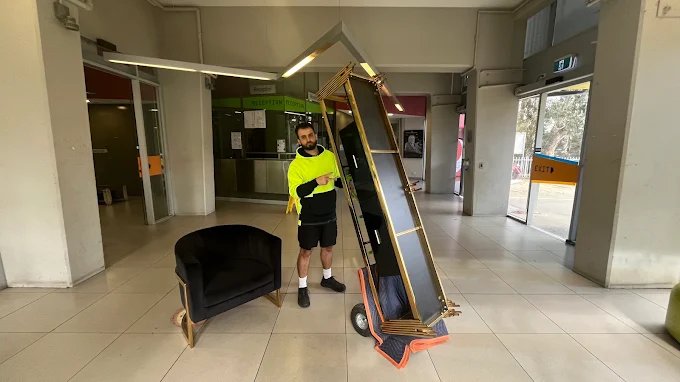
This is where the difference between models shows up most concretely. Where a studio runs in-house manufacturing, furniture is produced to your measured dimensions at a facility the studio controls, then transported and installed on site, which keeps quality consistent even when the design team isn’t present every day. This also makes custom furniture realistic for the kind of awkward spaces — a shallow recess, a wall broken by a column — that standard sizes rarely solve. Ask specifically how quality is checked once a piece leaves the workshop and arrives at your home, since that handoff point is where problems are hardest to catch after the fact if nobody local is inspecting it.
What Keeping Design and Execution Together Solves at a Distance
A gap between the person who designs and the person who builds is a problem in any city, but it’s easier to paper over locally, where you can walk to the site and sort out a misunderstanding in person. When the design team is elsewhere, that gap is harder to close after the fact. Studios that keep design and execution under one team reduce this risk, because the person who detailed a wardrobe or a ceiling plan is the one accountable for how it’s actually built, whether they visit weekly or coordinate through a site supervisor. Ask specifically who signs off on-site work when the lead designer isn’t physically present, and how often that person actually visits.
Where a Gurgaon-Based Studio Fits Into an Agra Search
The Interia is based in Gurgaon and works primarily across the wider NCR, with design, in-house manufacturing and site coordination kept under one team. For a home in Agra, that means an outstation coordination model rather than a local office on your street, and it’s worth being direct about that rather than implying otherwise. Whether that model suits your project depends on how comfortable you are with scheduled visits and written updates versus a team based a short drive from your door. Whichever studio you shortlist for home interiors in Agra, ask for the same written scope, site-visit routine and material specification you’d expect from any firm — local or not — before signing anything.