

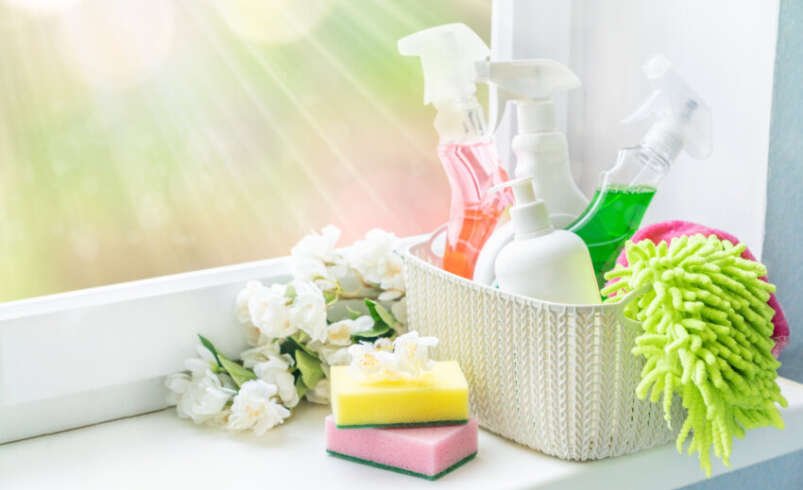

Most people don’t think twice about reaching for bleach, ammonia-based glass cleaner, or vinegar to tackle household messes, but each of these products is a chemical formulation designed to trigger specific reactions. Understanding the chemistry at play not only explains why these products work nep, but also why mixing them carelessly can be dangerous.
Acids, Bases, and Cleaning Power
Many cleaning products rely on the chemistry of acids and bases. Vinegar, an acid, dissolves mineral deposits and breaks down grime through a chemical reaction with alkaline buildup like limescale. Ammonia and many glass cleaners, by contrast, are bases that work by breaking down grease and oily residues. The effectiveness of these products comes directly from how their molecular properties interact with the substances they’re meant to remove.
Oxidation in Disinfecting
Bleach works through oxidation, a reaction where chlorine compounds break down the molecular structures of bacteria, viruses, and stains. This same oxidizing power that makes bleach effective at disinfecting and whitening is also what makes it reactive, and potentially hazardous, when combined with other chemicals.
Why Mixing Is Risky
Combining bleach and ammonia, for example, triggers a reaction that produces toxic chloramine gas, capable of causing respiratory damage even in small concentrations. Similarly, mixing bleach with certain acids can release chlorine gas. These reactions happen because the chemicals involved are reactive by design, and combining them creates new, often hazardous, compounds rather than simply combining their cleaning effects.
Everyday Chemistry, Real Consequences
The chemistry behind household cleaning is a practical reminder that chemical reactions aren’t confined to laboratories. Every time these products are used, acids, bases, and oxidizers are doing real molecular work, and understanding that science is what allows people to use these tools effectively, and safely, in their own homes.