

The word “luxury” appears on nearly every high-end studio’s website, which means it has stopped doing much work as a filter. What separates a genuine claim from a marketing one isn’t the word itself — it’s whether the firm can back it with something you can actually check. Anyone evaluating luxury interior designers in India is better served asking for proof in five specific categories than trusting the adjective on its own.
Visual Proof: What a Photograph Can and Can’t Confirm
A striking photograph confirms that a space photographed well on the day the photographer visited. It doesn’t confirm the stone slab was seated correctly, that the veneer will hold its finish after two years of sunlight, or that the drawers still close evenly six months later. Photography is the easiest kind of proof to produce and the least reliable to judge a firm by, precisely because a skilled photographer can flatter an average finish. Ask to see photographs alongside a walk-through of a project a year or more after handover, not only images taken at the moment of completion.
Written Proof: The Specification Behind the Word
A firm claiming premium materials should be able to name them: the exact board grade, the laminate brand, the hardware line, the stone source. This is the easiest category to demand and the one most claims fail to survive. A material claim you cannot verify against a written specification sheet is not yet a fact — it’s still marketing language. The same applies to timelines and inclusions: a written schedule with stated assumptions, and a quotation that lists every trade separately with exclusions as plain as inclusions, are both forms of written proof that a verbal pitch is not.
Physical Proof: What a Site Visit Reveals That a Portfolio Cannot
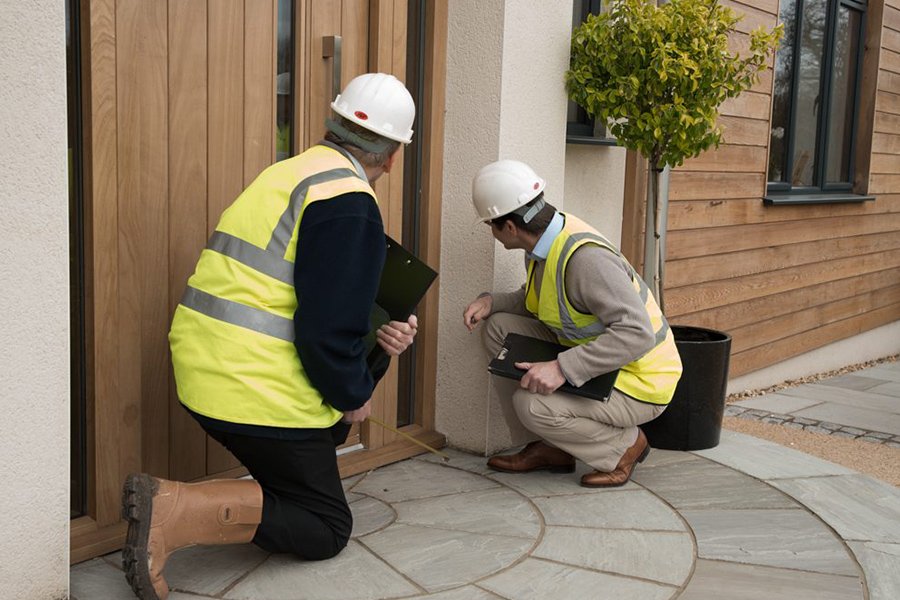
Visiting a project currently under construction shows things no finished photograph can: how materials are stored, whether the work area is clean, whether workers on site can point to the current drawing without confusion. It also lets you inspect joints, edges and finishes on furniture directly, rather than trusting a render. Where in-house manufacturing is part of a firm’s actual process, a workshop visit is a legitimate request, and a firm confident in its own production should have no hesitation offering one. A firm willing to show you a site mid-construction is offering proof a completed portfolio cannot provide. This is also where custom furniture claims get tested — an ill-fitting panel or an uneven seam shows up here long before it would in a photograph.
Process Proof: How a Firm Behaves Across Multiple Meetings
A single well-rehearsed pitch is easy to deliver. What’s harder to fake is consistency across a site survey, a written proposal and a contract negotiation — three separate moments where a firm’s actual process either holds together or starts to show gaps. Ask the same specific questions at each stage and see whether the answers stay consistent. When design and execution genuinely sit with one team, this consistency tends to show up naturally, because the same people are answerable throughout, rather than a design team handing off to a site team partway through the conversation. Treat consistency across several meetings as a more reliable signal than confidence in any single one.
Accountability Proof: Who Answers When Something Goes Wrong
The final category is the hardest to check before signing, but the most important once work begins: who is named, in writing, as responsible for the site day to day, and what happens when a snag is found at handover. Sound project management means a named coordinator, a documented process for logging issues, and a stated timeframe for closing them — not a verbal reassurance that “we’ll take care of it.” Ask for the coordinator’s name and the handover snag process in writing before any payment is made, not after a problem has already appeared.
What This Looks Like in Practice
None of these five categories require special expertise to check — they require asking for something specific and noticing whether the firm can produce it without hesitation. The Interia works from Gurgaon and serves the wider NCR, with design, in-house manufacturing and site coordination kept under one team, offered here as an example of what checkable proof looks like rather than a claim to rank nationally. Whichever firm you’re evaluating anywhere in India, ask for proof in each of these five categories before weighing the word “luxury” at all. A claim you can verify is worth far more than a word that sounds impressive on a homepage.