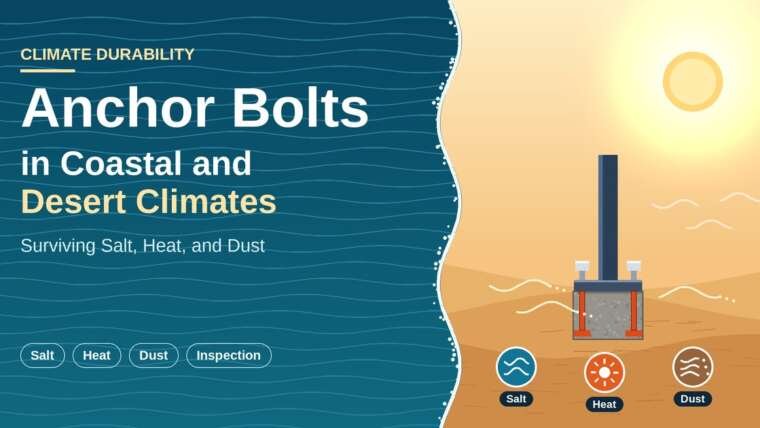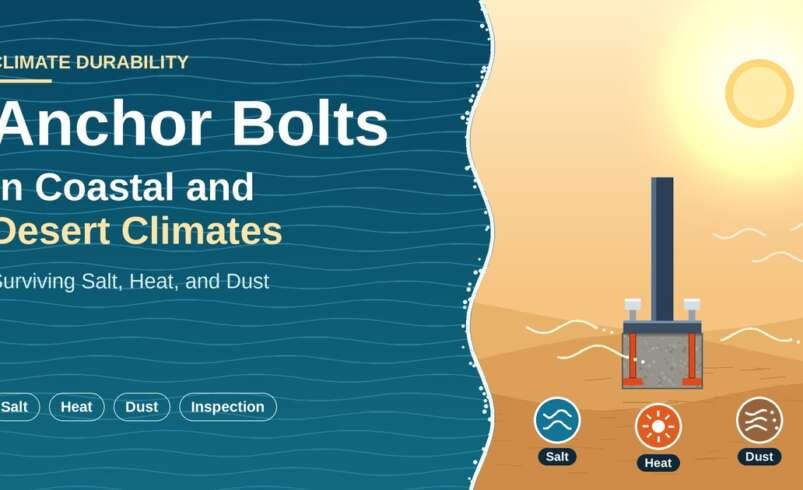

Anchor Bolts are designed on paper for loads, but they spend their lives in weather. On a coastline, the weather is salt-laden air and constant moisture. In a desert, it is blazing sun, huge temperature swings, and blowing dust. Along much of the Gulf, a site can face both at once. This guide explains how each climate attacks Anchor Bolts, how to choose protection, and how to install and maintain them so they last as long as the structures they hold.
Two Climates, Two Different Attackers
| Factor | Coastal | Desert |
|---|---|---|
| Main threat | Chloride-driven corrosion | Heat, thermal cycling, abrasion |
| Moisture | High humidity, spray, condensation | Low humidity, rare heavy rain or flash floods |
| Salts | Airborne and splashed seawater | Salts in soil, dust, and groundwater |
| Temperature | Moderate swings | Large daily swings, very hot surfaces |
| Construction issues | Wet conditions, salt on materials | Hot-weather concreting, dust in holes |
| Typical failure story | Hidden rust under the plate | Cracked grout, loosened joints, degraded sealants |
Knowing which attacker dominates tells you where to spend your protection budget.
What the Coast Does to Anchor Bolts
Salt is the central problem. Chlorides settle on every exposed surface, dissolve in morning dew or spray, and work their way into the narrow gaps around the base. Several mechanisms combine:
- Chloride attack. Chlorides can break down the thin protective film that sound concrete gives embedded steel, so rust starts earlier than in inland conditions.
- Wet and dry cycles. Repeated wetting and drying concentrates salts at the surface, which accelerates corrosion.
- Constant humidity. Plates, nuts, and washers stay damp for long periods, and crevices hold water.
- Salt fog and spray. Facilities near the water, such as ports, jetties, and desalination plants, receive heavy salt loads.
- Galvanic effects. Different metals in wet, salty contact can corrode one another.
As with any Anchor Bolts, the weak spot is where the rod leaves the concrete, hidden under the plate and grout.
What the Desert Does to Anchor Bolts
Deserts look dry, so corrosion seems like a minor concern, but they bring their own problems:
- Extreme heat. Steel in direct sun can become far hotter than the surrounding air. Hot surfaces affect coatings, adhesives, sealants, and grout curing.
- Thermal cycling. Large temperature swings between day and night expand and contract plates, rods, and equipment daily, which can loosen nuts and stress grout.
- UV exposure. Sunlight degrades paints, sealants, and plastic caps.
- Dust and sand. Blowing sand abrades coatings and clogs threads, and dust packs into drilled holes, which weakens adhesive anchors.
- Salty soils. Low-lying desert and coastal flats, often called sabkha, hold salts and moisture in the ground, so buried concrete and steel can be attacked from below.
- Sudden rain. Rare storms can flood foundations, and water trapped under plates may stay for days in hot, humid after-weather.
When Coast and Desert Meet
Many Gulf sites combine both: sea air, hot days, salty ground, and dust. The result is some of the toughest conditions for Anchor Bolts anywhere. Concrete here often needs dense, low-permeability mixes, generous cover, and attention to sulfate and chloride exposure. Specifying agencies and owners frequently have their own durability requirements, so project documents should take priority over general guidance.
Choosing Materials and Coatings
There is no single best choice, because the right answer depends on exposure, service life, and budget. A rough guide:
| Condition | Common approach | Points to watch |
|---|---|---|
| Inland desert, dry | Hot-dip galvanized rods with matched nuts | UV and abrasion on top coats and sealants |
| Coastal, moderate exposure | Hot-dip galvanizing, sometimes with a paint system over it | Nut fit on galvanized threads |
| Splash zones and severe marine | Heavier galvanizing, duplex systems, or stainless steel | Galvanic effects, cost, strength limits of stainless grades |
| Salty ground or sabkha | Protected embedded portions, quality concrete, drainage | Soil testing, sulfates and chlorides |
| High-strength rods | Engineer-chosen coating and process | Hydrogen embrittlement risk with galvanizing |
Hot-dip galvanizing is usually specified to a fastener standard such as ASTM F2329. Nuts for galvanized rods are normally tapped oversize, so confirm the fit before the pour. ASTM F1554 is widely used for anchor rods, and the grade should follow the design.
Installing in Hot, Dusty, and Humid Conditions
Good protection can be undone on site. A few climate-specific habits help:
- Plan hot-weather concreting. High temperatures speed setting and increase cracking risk. Guidance such as ACI 305R covers cooling materials, scheduling pours for cooler hours, and curing properly.
- Protect threads. Tape, cap, or grease them before the pour, since dust and concrete splatter damage threads.
- Mind temperature limits on grout and adhesives. Both have manufacturer limits for placement and cure, and hot or cold substrates can change performance.
- Keep holes clean. For post-installed anchors, blow, brush, and blow again as instructed, because dust left in a drilled hole is a well-known cause of weak adhesive anchors.
- Allow for thermal movement. Long plates and equipment expand, so use slotted holes, sleeves, or sliding supports where the design calls for movement.
- Handle coatings carefully. Repair scrapes and cuts to galvanizing using an approved zinc-rich product, following a standard such as ASTM A780.
- Survey after the pour, with the same rigid template and tolerance checks used anywhere else.
Details That Make a Difference
Small details often decide how long protection lasts:
- Drainage. Slope the grout and pier top away from the rods so water, spray, and washdown do not pool at the plate.
- Full grouting. Voids under the plate trap moisture and salt, and they also cause uneven bearing.
- Caps and seals. Use protective caps and sealants suited to UV and heat, and plan to inspect and renew them.
- Isolation. Separate dissimilar metals in wet locations, using suitable washers or coatings.
- Dust control. Keep nuts and threads accessible and clean, since packed sand makes tightening and inspection harder.
Keeping Anchor Bolts Healthy Over Time
Climate sets the inspection rhythm. A practical plan includes:
- A regular visual check of the base, looking for rust stains, cracked grout, loose nuts, and failed sealants
- Extra inspections after storms, sandstorms, floods, and spills
- Cleaning salt and dust from plates and threads, followed by recoating where needed
- Re-tightening or verifying preload on vibrating equipment
- Photographs and records, so trends are visible from year to year
- A review of the anchors whenever equipment or loads change
For coastal sites, inspect more often and focus on rust staining and nut condition. For desert sites, watch for cracked grout, aged sealants, and loosening after many thermal cycles. The engineer of record or the owner’s plan should set the actual schedule.
Sourcing Rods That Fit the Climate
Protection only works if the product matches the paperwork. Ask for mill test certificates, grade markings, and coating reports, and check that galvanizing results meet the specified standard. Suppliers differ in what they make, test, and document, so compare them on certification and traceability as well as price. A buyer in the Gulf, where coast and desert overlap, might add Petrofast Middle East FZC, an Abu Dhabi-based manufacturer whose catalog lists stud anchors, to a shortlist and then request those documents. Whoever you choose, reject any delivery of Anchor Bolts that does not match its paperwork, and send substitutions to the engineer for written approval.
Quick Climate Checklist
- Exposure classified: marine, desert, salty ground, or a mix
- Coating or material matched to the exposure, with its extent shown
- Nuts and washers matched to the rod and coating
- Hot-weather concreting and curing plan in place
- Grout and adhesive temperature limits checked
- Threads protected and holes cleaned of dust
- Drainage, grouting, and sealing detailed
- Thermal movement allowed where equipment heats and cools
- Certificates verified on delivery
- Inspection schedule set, with extra checks after severe weather
Conclusion: Build for the Weather
Coastal air and desert heat attack Anchor Bolts in different ways, but both reward the same habits: choose protection for the real exposure, install with care, detail the base to shed water and allow movement, and keep checking it. Do that, and the connection can stay sound for decades in conditions that wear out less careful details in a few years. Final specifications and acceptance always belong with the engineer of record and the governing code.