

Skirting boards are an important finishing element in Australian homes, apartments, offices and commercial properties. They cover the junction between walls and flooring, but even professionally installed skirting can leave small visible gaps, uneven edges or fine cracks where it meets the wall. These imperfections can become particularly noticeable after painting, making an otherwise well-finished room look incomplete. Caulking skirting is an effective way to create a neat transition between the skirting and wall while improving the overall appearance of an interior space. Properly applied sealant can also help reduce the appearance of minor gaps and prevent dust from accumulating in difficult-to-clean joints.
For Australian properties, the right preparation and sealant selection are important because internal surfaces can experience movement caused by temperature changes, building settlement, humidity and normal use. A clean bead of suitable, paintable sealant can help create a smooth line that blends the skirting into the wall. However, achieving a professional result involves more than simply running a bead along the joint. The surfaces need to be clean and dry; old failed material should be removed; larger gaps may require additional preparation; and the sealant needs sufficient time to cure before painting. This guide explains how to approach caulking skirting Sydney projects and why professional internal caulking services can be valuable when a consistent, durable finish is required.
What Is Caulking Skirting?
Caulking skirting refers to sealing the joint between a skirting board and the adjacent wall or other interior surface. Skirting boards may be manufactured from timber, MDF, composite materials or other products, while the adjoining wall may be plasterboard, masonry or another substrate. Because these materials can have slightly different movement characteristics, small gaps can develop at the junction.
Applying an appropriate, flexible, paintable interior sealant helps fill minor gaps and creates a visually continuous line. It is particularly useful during new construction, renovations, repainting projects and property maintenance.
The objective is not simply to hide a gap. A properly finished joint should look straight and consistent while allowing for the minor movement expected from an internal building junction. This is why product selection, surface preparation and application technique all influence the finished result.
Why Should Skirting Boards Be Caulked?
One of the main reasons to caulk skirting boards is appearance. Small gaps between the wall and skirting can create visible shadow lines and make freshly painted rooms appear unfinished. A carefully smoothed bead provides a cleaner transition and can make the entire room look more polished.
Caulking can also help keep dust and debris from collecting in small gaps. In areas where skirting meets uneven walls, sealing minor openings can make routine cleaning easier.
Another consideration is draught control. Gaps around skirting and other internal junctions can contribute to unwanted air movement. Sealing appropriate gaps can therefore be part of a broader approach to improving the airtightness of a property. However, internal gaps should not be sealed indiscriminately where ventilation or other building requirements depend on them.
For renovation projects, caulking is also an important part of surface preparation. A smooth joint can provide a much better foundation for subsequent painting and finishing.
Where Is Skirting Caulking Commonly Used?
Skirting caulking is suitable for many interior environments across Australia. It can be used in residential houses, apartments, offices, retail interiors, commercial buildings and other finished spaces where skirting boards are installed.
Common locations include living rooms, bedrooms, hallways, home offices and other dry internal areas. It may also be used around internal door frames, architraves and similar trim junctions when the appropriate product is selected.
In Sydney properties, caulking skirting Sydney work may form part of a broader renovation, new-build finishing process or maintenance programme. Apartment buildings and commercial properties can have extensive areas of skirting, making consistency particularly important when multiple rooms or levels are being completed.
Choosing the Right Sealant for Skirting Boards
Choosing the correct sealant is one of the most important parts of the job. Interior skirting joints generally require a product designed for low-movement interior finishing and, where the surface will be painted, a paintable formulation.
Paintable acrylic-based gap sealants are commonly used for interior skirting, architraves and similar trim applications. They are designed to accommodate minor movement and can generally be painted once sufficiently cured.
Standard silicone should not automatically be used simply because it is flexible. Many silicone products are not designed to be painted, which can create problems when the objective is to paint the skirting and wall together. Silicone is more appropriate for applications where its specific properties, such as water resistance, are required and where the finished joint does not need to accept conventional paint.
The product should always be selected according to the substrate, joint movement, environmental conditions and manufacturer’s technical requirements.
Preparing Skirting Boards Before Caulking
Good preparation is one of the biggest differences between an average caulking job and a professional-looking finish.
Start by inspecting the complete joint. Look for loose or cracked old sealant, flaking paint, dust, dirt and areas where the skirting has moved away from the wall. Existing failed material should generally be removed carefully before new sealant is applied.
The surfaces should be clean and dry. Dust, grease and loose material can interfere with adhesion and may result in premature failure. Light sanding of suitable painted surfaces can also help prepare the area. Australian guidance for sealing internal gaps similarly emphasises clean, dry surfaces before application.
If the gap is unusually large, simply filling it with a thin bead of caulk may not produce a durable or attractive result. Larger gaps may require additional filling, adjustment of the skirting or another appropriate repair before the finishing sealant is applied.
How to Apply Caulking to Skirting Boards
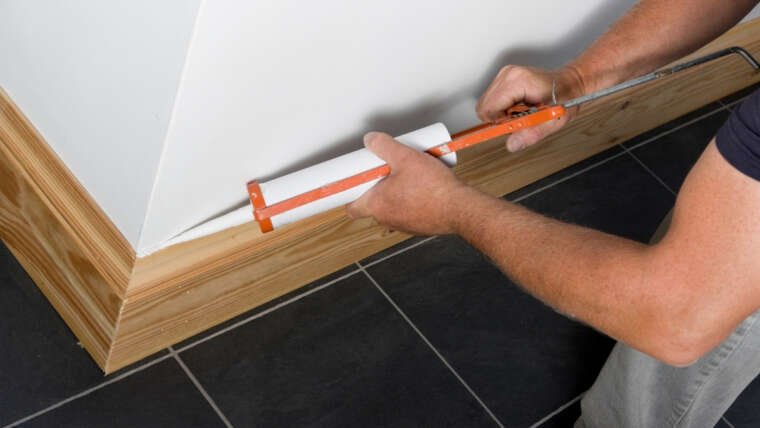
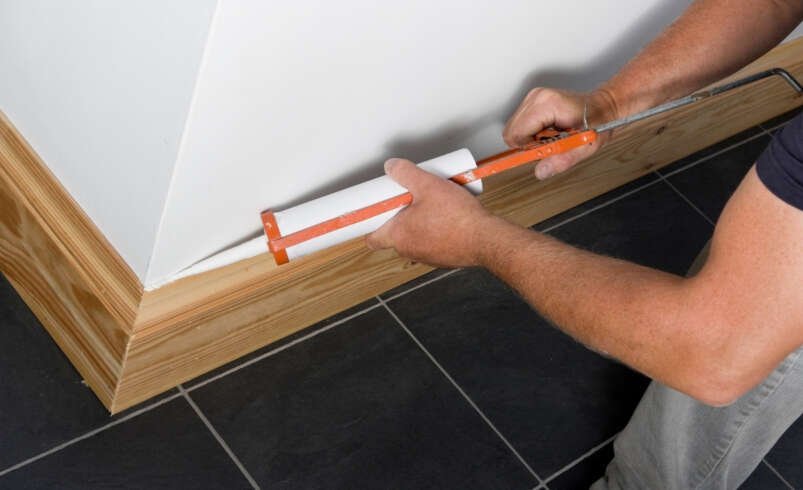
Once the surface has been prepared, load the selected cartridge into a suitable caulking gun. Cut the nozzle carefully at an angle, keeping the opening relatively small so the amount of material can be controlled.
Position the nozzle consistently along the joint and apply steady pressure to the gun. The objective is to create a continuous bead rather than a series of separate sections. Moving at a consistent speed helps maintain a relatively even amount of sealant.
Avoid applying excessive material. A large bead can be difficult to smooth and may create unnecessary messes around the skirting. A controlled application is generally easier to finish and produces a cleaner appearance.
For longer walls, work methodically and maintain a consistent application technique. Keeping the bead uniform is particularly important where the skirting is highly visible or where multiple rooms need to have the same finish.
Smoothing the Sealant for a Professional Finish
Smoothing is where the appearance of the finished joint is largely determined. Once the sealant has been applied, it should be tooled or smoothed according to the product instructions before it begins to skin.
A suitable smoothing tool can help produce a consistent profile. For some compatible interior products, a damp finger or appropriate tool may also be used. Excess material should be removed carefully, and surrounding surfaces should be cleaned before the sealant cures.
The aim is to create a neat, continuous line without ridges, lumps or visible starts and stops. Corners and joins between skirting sections deserve particular attention because imperfections in these locations can become obvious after painting.
A professional finish should look deliberate rather than heavily filled. The sealant should sit neatly within the joint and transition smoothly onto the adjoining surfaces.
Caulking Before or After Painting?
For most paintable interior skirting applications, caulking is completed as part of the preparation process before the final paint coats are applied. This allows the cured sealant and surrounding surfaces to be painted together, helping create a continuous finish.
However, the exact sequence depends on the project and the products being used. Some surfaces may require priming or other preparation before sealing. The sealant also needs to reach the appropriate curing stage before painting.
Painting too early can affect the appearance and performance of the joint. Always follow the specific product instructions for drying, curing and paint application rather than relying on a generic drying time. Different formulations and environmental conditions can significantly affect the process.
Common Skirting Caulking Mistakes
One common mistake is applying sealant over dust, loose paint or old failed material. Even a high-quality sealant may perform poorly when the underlying surface has not been properly prepared.
Another mistake is using the wrong product. A sealant designed for wet areas, external joints or high-movement applications may not be the best choice for a paintable internal skirting joint. Product compatibility should always be considered.
Applying an excessively thick bead is another frequent problem. Large amounts of material can be difficult to smooth and may shrink or cure differently from a correctly sized joint.
Rushing the finishing process can also produce poor results. If the sealant begins to skin before it is properly tooled, smoothing becomes more difficult. Similarly, painting before the sealant has reached the required cure stage can affect the final finish.
Finally, attempting to use caulking to compensate for a major construction or installation defect is not always appropriate. If the skirting is loose, badly misaligned or separated by a substantial gap, the underlying issue should be addressed first.
Caulking Skirting in Sydney Homes and Buildings
Sydney properties include a wide variety of construction types, from older homes and renovated interiors to modern apartments and commercial buildings. Each property can present different substrate conditions and finishing requirements.
In older properties, walls and floors may not be perfectly straight, which can make skirting joints more challenging to finish. Renovation work can also reveal old sealant, damaged paint or uneven surfaces that require additional preparation.
New construction may involve large quantities of skirting installed across multiple rooms. In these situations, consistency becomes particularly important. Every joint should have a similar profile and finish so that the completed property looks uniform.
For these reasons, Caulking Skirting Sydney work should be approached with attention to both the technical requirements and the appearance expected from the finished interior.
When to Consider Professional Internal Caulking Services
Small interior sealing jobs may appear straightforward, but achieving consistent results across an entire property can be time-consuming. Professional application can be particularly useful when there are extensive skirting runs, numerous rooms, difficult corners, previous failed caulking or strict finishing requirements.
Professional internal caulking services can also be valuable during new construction and renovation projects where several internal junctions need to be completed to the same standard. The work may involve skirting, architraves, internal frames and other areas requiring carefully controlled sealant application.
Another advantage is the ability to identify problems before they are sealed. If a gap is caused by loose skirting, movement, damaged surfaces or an unsuitable substrate, applying new sealant without addressing the underlying issue may only provide a temporary cosmetic solution.
How to Maintain Caulked Skirting Boards
Once the work has been completed and the sealant has fully cured, routine inspection can help identify problems early. Look for cracking, separation, discolouration or sections where the sealant has pulled away from the wall or skirting.
Cleaning should be performed using methods appropriate for the painted surfaces and sealant. Avoid aggressive scraping or harsh cleaning techniques that could damage the finished joint.
If cracking repeatedly appears in the same location, the problem may not simply be old sealant. Excessive movement, moisture, substrate movement or an underlying installation issue may need to be investigated.
Early remedial work is generally preferable to allowing a failed joint to remain untreated for an extended period.
Professional Finish Starts With Proper Preparation
A clean skirting joint can have a surprisingly significant effect on the appearance of an interior. The difference between visible gaps and a smooth, continuous transition is particularly noticeable after fresh painting or renovation.
Successful Caulking Skirting depends on several factors working together: suitable sealant selection, proper surface preparation, controlled application, careful smoothing and adequate curing time. No single step can compensate for poor preparation or an unsuitable product.
For Australian homes and commercial interiors, the approach should also consider the property’s construction, substrate, environmental conditions and the expected level of finish. Where the work covers a large area or requires a consistently professional result, experienced contractors can help reduce rework and achieve a more uniform appearance.
Conclusion
Skirting boards provide an important finishing detail, but small gaps between skirting and walls can reduce the visual quality of an otherwise well-presented interior. Correctly performed caulking skirting helps create a clean transition, supports a professionally painted finish and can help address minor gaps around internal trim. For Sydney properties, careful preparation and appropriate materials are particularly important when completing larger renovation, residential or commercial projects.
Whether you are preparing a new interior, renovating an existing property or addressing deteriorated joints, selecting the right approach can make a substantial difference to the final result. If you require professional assistance with skirting or other interior sealing work, explore Internal Caulking Services from The Australian Caulking Company for professional caulking solutions across Australia.