
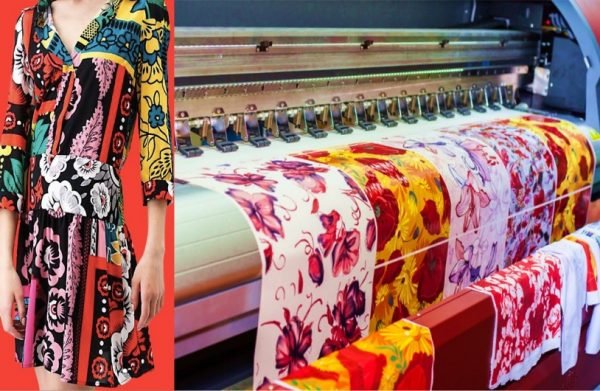

Digital printing on fabric is a modern textile printing method that uses digital artwork and specialized inkjet printers to place designs directly onto fabric. Unlike traditional screen printing, which requires separate screens for different colors, digital printing can reproduce detailed artwork, photographs, gradients, and complex patterns directly from a digital file.
The growth of digital printing on fabric has changed how textile manufacturers, fashion brands, interior designers, and small businesses produce printed materials. It supports shorter production runs, faster design changes, and detailed customization without requiring expensive screen preparation for every new design.
What Is Digital Printing on Fabric?
Digital fabric works in a similar basic way to an inkjet printer, but the equipment, inks, and fabric preparation are specifically designed for textiles. A digital file is sent to the printer, which deposits tiny droplets of ink onto the fabric according to the colors and patterns in the artwork.
The process can be used on materials such as cotton, polyester, silk, linen, viscose, and blended fabrics. However, the appropriate ink technology depends heavily on the fiber type.
For example, reactive dyes are commonly used for cellulose-based fabrics such as cotton, while disperse dyes are suitable for polyester. Pigment inks can be used on a wider range of textiles and generally require less post-printing processing.
How Does Digital Fabric Printing Work?
1. Design Preparation
The process begins with artwork created or prepared using graphic design software. The file should have suitable resolution, correct color settings, and the required dimensions.
For repeating textile patterns, designers create a repeat unit that can be reproduced across the fabric without visible breaks. Proper file preparation is important because printing cannot correct poor-quality artwork automatically.
2. Fabric Preparation
The fabric must be clean, smooth, and suitable for the selected ink. Some printing methods require pretreatment to help the ink bond correctly with the fibers.
Pretreatment can influence color strength, sharpness, and wash durability. Fabric that contains dust, oils, or other contaminants may produce uneven results.
3. Printing
The prepared fabric passes through a digital textile printer. Print heads place controlled amounts of ink onto specific areas of the material.
Because the printer works directly from a digital file, changing the design does not normally require the preparation of new screens. This makes the technology particularly useful for customized products and small production quantities.
4. Drying and Fixation
After printing, many fabrics require additional treatment to make the colors durable. Depending on the ink system, this may involve steaming, heat treatment, or curing.
Reactive dye printing, for example, generally requires steaming and washing to remove unfixed dye and improve color fastness. Pigment printing commonly relies on heat curing to bind the pigment to the textile surface.
5. Finishing
The final fabric may be washed, dried, pressed, coated, or otherwise finished according to its intended use. Quality inspection is then performed to check color consistency, registration, defects, and overall appearance.
Main Types of Digital Textile Printing
Reactive Printing
Reactive printing is widely used for natural and cellulose-based fibers, particularly cotton. The dye chemically bonds with the fiber, which can provide strong color performance and good wash fastness when the fabric is properly processed.
It is commonly used for clothing, home textiles, scarves, and other products made from cotton or similar fibers.
Pigment Printing
Pigment printing places colored particles on the fabric surface and uses a binder to hold them in place. It can work with many fabric types and may require fewer wet-processing stages than some dye-based methods.
This makes pigment printing useful for certain commercial applications where simplified processing is valuable.
Disperse Printing
Disperse dyes are primarily associated with synthetic fibers such as polyester. The dye is transferred into the fiber through heat, producing prints that are commonly used for sportswear, flags, furnishings, and fashion fabrics.
Acid Printing
Acid dyes are suitable for fibers such as silk, wool, and some polyamides. They can produce bright, detailed results and are often used for luxury textiles, scarves, and specialty fabrics.
Benefits of Digital Printing on Fabric
Detailed and Photorealistic Designs
Digital printing can reproduce fine lines, subtle gradients, and complex images without the limitations associated with manually prepared screens. This makes it suitable for photographic designs and intricate artwork.
Lower Setup Requirements
Traditional screen printing requires screens, color separation, and setup for each design. Digital printing reduces much of this preparation, which can make small and customized orders more practical.
Short Production Runs
Manufacturers can economically produce smaller quantities because the same type of digital setup can be used for one design or a larger batch. This is useful for independent designers, sample development, and limited collections.
Easy Customization
A digital file can be modified relatively quickly. Businesses can create personalized names, graphics, colors, or patterns without rebuilding a complete set of printing screens.
Efficient Design Sampling
Before committing to large-scale production, textile companies can print samples to evaluate colors, artwork, and fabric behavior. This can reduce the risk of producing large quantities of an unsuitable design.
Practical Benefits and Key Insights
Digital printing on fabric is especially useful when design complexity and flexibility are more important than extremely high-volume production.
For a small fashion brand, for example, digital printing can make it practical to test several patterns before selecting one for a larger collection. Interior designers can also use it for customized curtains, cushions, wall fabrics, and upholstery materials.
However, choosing the correct printing technology is essential. The best method depends on fiber composition, required color intensity, washing requirements, fabric construction, production volume, and the intended end use.
Color management is another important consideration. A design displayed on a computer monitor may not look exactly the same after printing because screens use light while printed textiles reflect light. Professional production therefore often uses color profiles, calibrated equipment, and physical samples to improve consistency.
Common Challenges and Considerations
Fabric Compatibility
Not every ink works effectively with every fabric. Selecting the wrong combination can lead to poor adhesion, weak colors, bleeding, or reduced durability.
Color Matching
Achieving consistent color across different batches can be challenging. Fabric properties, pretreatment, ink, printer settings, and finishing conditions can all affect the final appearance.
Production Cost
Digital printing can reduce setup costs, but the cost per meter may not always be lower than conventional printing for very large orders. High-volume production may still favor traditional methods depending on the design and fabric.
Fabric Preparation and Finishing
Some digital processes require several additional stages after printing. These steps add time, water, energy, labor, and processing costs, so the entire production workflow should be considered when comparing technologies.
Printer Maintenance
Textile printers require regular maintenance. Print heads can become blocked if equipment is not properly operated or maintained, affecting print quality and potentially increasing production costs.
Frequently Asked Questions
1. What fabrics can be digitally printed?
Cotton, polyester, silk, linen, viscose, nylon, and various blends can be digitally printed, but the appropriate ink and preparation method depends on the fabric fiber.
2. Is digital printing on fabric durable?
It can be highly durable when the correct ink, pretreatment, fixation, and finishing process are used. Durability also depends on washing, sunlight exposure, abrasion, and the final application.
3. Is digital fabric printing better than screen printing?
Neither method is universally better. Digital printing is generally advantageous for detailed designs, customization, samples, and shorter runs. Screen printing can remain cost-effective for large quantities with relatively simple designs.
4. Can photographs be printed on fabric?
Yes. Digital textile printers can reproduce photographs and highly detailed artwork, provided the source file has sufficient quality and the selected fabric and ink system can reproduce the required detail.
5. Is digital printing suitable for small businesses?
Yes. Its lower setup requirements and ability to produce short runs make it useful for small fashion labels, custom textile businesses, artists, and product developers.
Conclusion
Digital printing on fabric provides textile producers with a flexible way to create detailed, customized, and visually complex designs. Its digital workflow reduces many traditional setup requirements and makes short production runs and rapid sampling more practical.
The quality of the finished product depends on more than the printer itself. Fabric selection, ink technology, artwork preparation, pretreatment, color management, fixation, and finishing all play important roles. When these factors are properly controlled, digital textile printing can deliver sharp designs, reliable color, and useful production flexibility across fashion, home furnishings, promotional textiles, and specialty products.