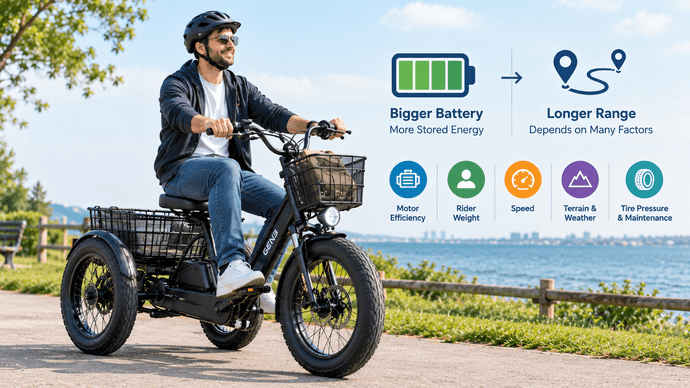

Electric trikes offer adults a convenient way to travel, run errands, and enjoy outdoor rides. When comparing models, battery size may seem like the easiest way to judge how far a trike can travel. However, a bigger battery does not always guarantee a longer riding range. Motor efficiency, rider weight, speed, and road conditions also affect how far you can go on a single charge.
What Does Battery Capacity Mean?
Battery capacity tells you how much energy a battery can store. It is commonly measured in watt-hours (Wh). A higher watt-hour rating generally means the battery can provide more energy before it needs recharging.
For example, a 600 Wh battery stores more energy than a 400 Wh battery. If both trikes use energy at the same rate and have similarly efficient systems, the larger battery can usually support a longer ride.
However, different models use different amounts of energy. This means battery size is only one part of the picture.
Why a Bigger Battery May Offer More Range
A larger battery can be useful if you regularly travel long distances. It provides more stored energy, which can help the motor keep running for longer before the next charge.
This can be helpful for adults who use their trike for commuting, shopping, or longer recreational rides.
A larger battery may also provide a useful energy reserve when your route includes hills or frequent stops. However, the actual distance depends on how efficiently the vehicle uses that energy.
What Else Affects Riding Range?
1. Motor Efficiency
The motor plays an important role in battery performance. An efficient motor can turn stored energy into movement while using less electricity for a given task.
A trike with a smaller battery and an efficient motor may travel farther than a model with a larger battery but higher energy consumption.
2. Rider Weight and Cargo
The total load affects how much energy the motor needs. A heavier rider or additional cargo can increase energy use, especially when starting, climbing hills, or riding on uneven surfaces.
Always check the manufacturer’s weight limit and consider how much you plan to carry. Staying within the recommended limit helps the vehicle operate as intended.
3. Riding Speed
Riding at higher speeds can use more battery power. Frequent acceleration can also increase energy consumption.
If you want to get more distance from each charge, use a steady speed where appropriate and follow the manufacturer’s riding guidance.
4. Road and Weather Conditions
Flat, smooth roads generally require less effort than steep hills or rough paths. Strong headwinds can also increase energy use.
Cold or very hot conditions may affect battery performance, depending on the battery type and its operating limits.
For this reason, the advertised range may differ from the distance you achieve during everyday use.
5. Tire Pressure and Maintenance
Underinflated tires can create more rolling resistance, making the motor work harder. Worn components or poor maintenance may also affect performance.
Check tire pressure according to the manufacturer’s recommendations, keep the vehicle clean, and follow the recommended maintenance schedule.
How to Compare Batteries Before Buying
If you are comparing adult models online, do not look at battery size alone. Consider these points:
- Battery capacity: Compare watt-hours (Wh), when available.
- Advertised range: Check the estimated distance on a full charge and the conditions used for that estimate.
- Motor power: Consider how the motor suits your expected riding conditions.
- Charging time: Check how long a full charge takes.
- Weight capacity: Make sure the model can safely support the rider and any permitted cargo.
- Battery replacement: Check the availability and expected cost of a replacement battery.
When browsing products on ToysUAE, review the specifications provided for each model so you can compare its battery and other features before deciding.
How Can You Get More Range From Each Charge?
A few simple habits can help you use battery energy more efficiently:
- Keep the tires at the recommended pressure.
- Avoid carrying unnecessary weight.
- Use a steady speed when conditions allow.
- Choose smoother routes when practical.
- Follow the manufacturer’s charging and storage instructions.
- Keep the battery within its recommended temperature range.
These steps cannot guarantee a specific distance, but they can help you get more consistent performance from your battery.
Frequently Asked Questions
1. Does a bigger battery always give more range?
No. A bigger battery stores more energy, but motor efficiency, rider weight, speed, and road conditions also affect the distance travelled.
2. How can I compare battery sizes?
Look at the watt-hour (Wh) rating. A higher rating generally means greater energy storage. Compare this with the advertised range and other specifications.
3. Does rider weight affect battery range?
Yes. A heavier load can require more energy, particularly on hills or during frequent acceleration. Always stay within the manufacturer’s weight limit.
4. Can I improve my riding range without changing the battery?
Yes. Maintaining tire pressure, avoiding unnecessary cargo, riding at a steady speed, and following battery care instructions may help improve efficiency.
Final Thoughts
A bigger battery can provide a longer riding range, but it is not the only factor that matters. Motor efficiency, rider weight, speed, terrain, and maintenance all affect how much distance you can cover.
Before choosing an electric tricycle, compare the battery capacity with the advertised range and your everyday travel needs. Looking at the complete set of specifications will help you choose a model that offers the right balance of range, comfort, and performance.