

If you’re a parent hunting for a playschool in Lucknow, you’ve probably done the rounds already. Glossy brochures, smiling teachers, colourful walls. And somewhere between the third and fourth school visit, one question starts nagging at you: Will my child actually learn anything here, or will they just colour and nap?
It’s a fair worry. And it’s why so many parents ask us a very specific question: does Lucknow Public School have well-equipped STEM labs and activity rooms for students?
Let’s talk about it honestly, the way we’d talk to you if you walked into our reception with your little one holding your finger.
First, Why Does STEM Even Matter at the Playschool Stage?
When people hear “STEM” (Science, Technology, Engineering, Maths), they picture teenagers in lab coats. But for a three or four-year-old, STEM looks completely different. It looks like:
- Pouring water between cups and noticing which one holds more
- Building a wobbly tower of blocks and figuring out why it fell
- Planting a bean seed and checking on it every morning
- Sorting buttons by colour, size, and shape
None of this feels like “studying.” To a child, it’s just play. But underneath, they’re learning to observe, ask questions, test ideas, and try again when something doesn’t work. That’s the foundation of scientific thinking, and it starts far earlier than most of us assume.
At The LPS, we believe early childhood education should feed that natural curiosity instead of switching it off.
So, Are the STEM Labs and Activity Rooms Really Well-Equipped?
Here’s our answer: at The LPS, learning spaces are designed around hands-on exploration, not just worksheets and rote repetition. Our STEM-focused areas and activity rooms are set up so that children can touch, build, experiment, and discover at their own pace.
But rather than just take our word for it, here’s what we’d encourage you to look for, at our school or any other you’re considering.
1. Age-Appropriate Materials, Not Miniature Versions of Big-Kid Stuff
A good early years STEM space isn’t about fancy gadgets. It’s about safe, sensory, child-sized materials: building blocks, magnetic tiles, pattern boards, measuring cups, magnifying glasses, simple nature tables, and puzzles that grow in difficulty.
2. Dedicated Activity Rooms
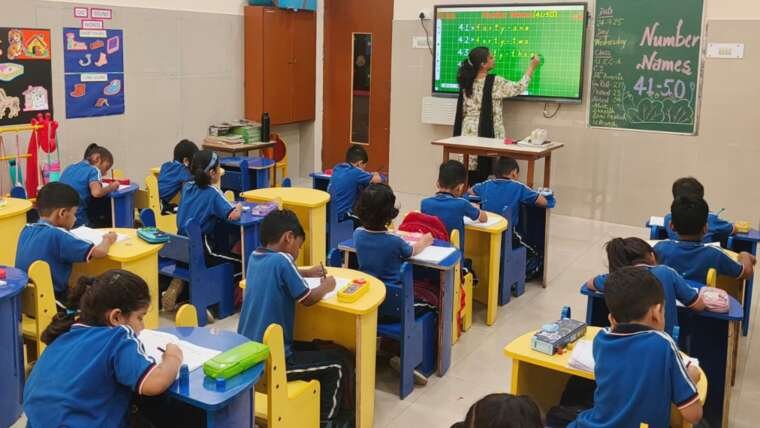
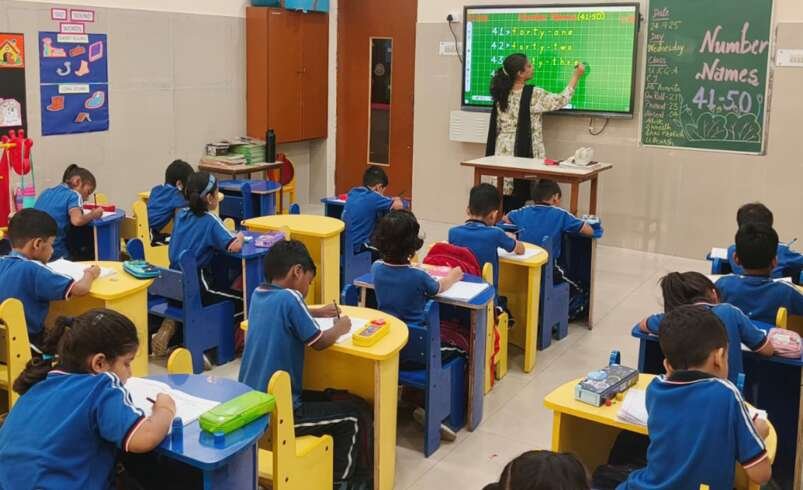
Children this age can’t sit still for long, and they shouldn’t have to. A proper activity room gives them room to move, create, role-play, and explore different learning corners: art, sensory play, storytelling, and construction.
3. Safety First, Always
Rounded edges, non-toxic materials, clean surfaces, and constant teacher supervision. You’ll never see us compromise on this. A “well-equipped” room means nothing if it isn’t a safe one.
4. Teachers Who Guide, Not Just Instruct
The best equipment in the world is useless without educators who know how to ask the right questions. Our teachers don’t just say “this is a magnet.” They ask, “What do you think will happen if we bring it closer?” That one question does more for a child’s thinking than any flashcard.
What a Typical STEM Activity Looks Like at The LPS
Let’s make this real. Imagine a Tuesday morning in our nursery class.
The children gather around a tray of items: a leaf, a stone, a sponge, a wooden block, a coin. The teacher asks, “Which of these do you think will float?” Little hands guess. Some say the stone, some say the leaf. Then comes the fun part: dropping each one into a tub of water and watching.
There’s giggling. There’s splashing (yes, aprons are involved). And then there’s that beautiful moment when a child says, “The sponge went down but then it came up!”
That’s science. That’s a three-year-old forming a hypothesis, testing it, and making an observation. No textbook needed.
Beyond Science: Building the Whole Child
We’d be doing you a disservice if we made it sound like STEM is the only thing that matters. It isn’t. A great playschool nurtures the whole child. At The LPS, our activity rooms also support:
- Language and communication through storytelling, rhymes, and circle time
- Fine and gross motor skills through clay, threading, climbing, and movement games
- Social and emotional growth through sharing, teamwork, and group play
- Creativity through art, music, and imaginative role-play
STEM works best when it’s woven into all of this, not treated as a separate subject to be ticked off.
How to Judge Any Playschool in Lucknow (A Quick Checklist)
Since we want you to make a confident decision, here’s a simple checklist you can carry to any school visit:
- Ask to see the activity rooms. Are they clean, bright, and organised?
- Watch the children. Are they engaged and smiling, or bored and restless?
- Look at the walls. Is it the children’s own work on display, or only pre-printed posters?
- Ask about the daily routine. Is there a healthy balance of play, learning, rest, and outdoor time?
- Talk to the teachers. Do they seem warm, patient, and genuinely interested in kids?
- Check the safety measures. CCTV, trained staff, safe entry and exit, hygiene standards.
If a school passes most of these, you’re likely in good hands.
Why Parents Choose The LPS
Every parent’s priorities are different. Some want a strong academic base, some want a caring environment, some want their child to simply love going to school. We aim for all three.
What we hear most often from families is that their children come home excited, talking about what they built, what they found, or what they “discovered” that day. And honestly, that’s the best review a playschool can get.
Come See It for Yourself
Words on a page can only say so much. The best way to know whether The LPS is right for your child is to walk through our classrooms, meet our teachers, and watch the little ones at work (sorry, at play).
If you’re searching for a playschool in Lucknow that takes early learning seriously without taking the joy out of childhood, we’d love to welcome you and your child for a visit. Bring your questions. We’ll happily answer every one.
Frequently Asked Questions
- At what age can my child start at The LPS playschool?
Children can typically begin their playschool journey around 2 to 2.5 years of age. Do contact the school for the exact age criteria for the current admission session. - Is STEM too advanced for a playschool child?
Not at all. At this age, STEM is simply guided play: sorting, building, pouring, observing, and asking “why?” It’s designed to feel like fun, never like pressure. - Are the activity rooms safe for young children?
Yes. Safety is a top priority, with child-friendly furniture, non-toxic materials, hygienic spaces, and trained staff supervising activities throughout the day. - How is a playschool different from regular school?
A playschool focuses on learning through play, exploration, and social interaction rather than formal academics. The goal is to build confidence, curiosity, communication, and basic skills that prepare children smoothly for primary school. - Can I visit The LPS before taking admission?
Absolutely. We encourage parents to visit, see the classrooms and activity spaces, and meet the teachers before making a decision. Just get in touch with the school to schedule a convenient time.