

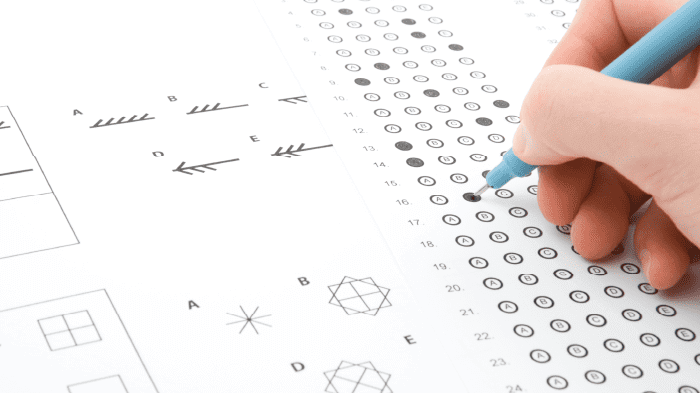

Online IQ tests have become one of the most accessible ways to explore cognitive ability. A person can visit a website, answer questions involving patterns, numbers, logic, memory, or verbal reasoning, and receive a score within minutes. This convenience has made online IQ testing popular with students, professionals, parents, and people who are simply curious about how they perform on cognitive tasks.
But convenience does not automatically mean accuracy. A test can look professional, use sophisticated graphics, and provide a precise numerical result without having the scientific evidence needed to support that result.
This leads to an important question: how accurate are online IQ tests?
The scientific answer is that accuracy varies considerably. Some online assessments may provide useful information about particular cognitive abilities, while others are better understood as entertainment. To understand the difference, it is necessary to look at reliability, validity, standardization, testing conditions, scoring, and what IQ tests can actually tell us about intelligence.
What Does an IQ Test Measure?
Before discussing online testing, it helps to understand what an IQ test is designed to measure.
IQ assessments generally examine specific cognitive abilities. Depending on the assessment, these may include logical reasoning, verbal comprehension, working memory, processing speed, numerical reasoning, and visual-spatial skills.
The results are typically converted into a standardized score. In many modern IQ scoring systems, 100 represents the average score for the relevant reference population.
However, IQ does not represent every aspect of human intelligence.
Creativity, emotional intelligence, practical judgment, communication, motivation, social awareness, knowledge, and personality can all contribute to how effectively a person learns, works, and solves problems. These characteristics are not necessarily captured by a conventional IQ score.
Therefore, even a highly accurate IQ test should be understood as a measurement of particular cognitive abilities, not a complete measurement of everything that makes someone intelligent.
How Accurate Are Online IQ Tests?
When people ask how accurate are online IQ tests, the most important point is that there is no single answer for every test available on the internet.
Online IQ tests vary enormously in quality.
Some are designed using established principles of psychological assessment and may have evidence supporting their reliability and validity. Others are short quizzes created mainly for entertainment and may have little scientific evidence behind their scoring.
A website displaying a number such as 115, 125, or 135 does not automatically make that number scientifically meaningful. The important issue is how the score was produced.
A credible assessment should provide information about its development, scoring system, reference population, reliability, and validity. If a website provides none of this information, its result should be treated cautiously.
What Reliability Means
Reliability is one of the fundamental concepts in psychological testing.
A reliable test should produce reasonably consistent results when it measures the same ability under similar conditions.
For example, if someone takes equivalent versions of a reliable cognitive assessment under similar circumstances, their results should generally fall within a reasonably consistent range.
Online tests can be affected by many factors that make scores less consistent. A person may be tired, distracted, stressed, or unfamiliar with the test format. Technical problems can also interfere with an online assessment.
Some online tests may themselves have weak reliability if their questions have not been adequately evaluated.
When considering how accurate are online iq tests reliability is therefore an essential factor.
Why Validity Matters
Reliability is not enough.
A test can produce consistent results and still fail to measure what it claims to measure. This is where validity becomes important.
Validity concerns whether the evidence supports the interpretation of a test’s results.
For example, an online quiz may consistently measure someone’s ability to recognize visual patterns. That does not necessarily mean that it provides a valid measurement of general intelligence.
A credible IQ assessment needs evidence that its questions measure relevant cognitive abilities and that the resulting scores can be interpreted appropriately.
The distinction is important because a test can be difficult without being scientifically valid.
The Importance of Standardization
Standardization is another major issue.
Established cognitive assessments are generally tested on appropriate populations so researchers can understand how different groups perform. This information helps establish norms for interpreting individual scores.
Without suitable norms, an IQ number can be difficult to interpret.
Suppose an online test tells you that you have an IQ of 120. That number may appear precise, but its meaning depends on how the website established the score.
If the test has not been properly standardized, it may not be possible to determine whether a score of 120 has the same meaning as a score of 120 from a recognized professional assessment.
This is one reason why scores from different online websites should not automatically be compared.
Why Online IQ Scores Differ
People frequently receive different scores when they take several online IQ tests.
There are many possible reasons.
Different tests may use different questions and emphasize different cognitive abilities. One assessment might focus heavily on visual reasoning, while another includes more numerical or verbal questions.
Difficulty levels can also vary.
Scoring systems may differ as well. Even if two tests use 100 as their average, they may use different reference groups or statistical methods to convert raw performance into an IQ score.
Testing conditions can also change from one attempt to another.
As a result, receiving different scores does not necessarily mean that your intelligence has changed or that one website must be completely wrong.
The Effect of Testing Conditions
Professional cognitive assessments are generally conducted under controlled conditions. Online tests are often taken wherever the user happens to be.
A person might complete an assessment in a quiet office or in a busy household. Phone notifications, background conversations, interruptions, and other distractions can affect concentration.
Timed tests can be particularly sensitive to these factors.
Your physical condition can also matter. Lack of sleep, stress, hunger, illness, or fatigue may affect how efficiently you process information.
For a more representative online result, take the assessment when you are rested and focused and choose an environment with minimal distractions.
Practice Effects Can Influence Results
Another scientific consideration is the practice effect.
When people take several similar tests, they may become familiar with the types of questions being asked. They may learn to identify common patterns, recognize typical sequences, or develop strategies for completing questions more quickly.
This familiarity can improve performance.
A higher score on a later test does not necessarily mean that a person’s underlying intelligence has increased. Some of the improvement may result from becoming more comfortable with the testing format.
For this reason, repeatedly taking similar online IQ tests can make it harder to interpret the results accurately.
Can Online IQ Tests Predict Real-World Intelligence?
This is where the limitations of IQ testing become particularly important.
IQ scores can provide information about certain cognitive abilities that are relevant to learning and problem-solving. However, real-world intelligence involves many additional skills.
Everyday problems are often poorly defined. There may be incomplete information, competing priorities, social considerations, and multiple possible solutions.
A workplace manager, for example, may need to resolve a disagreement between employees. Solving the situation could require reasoning, communication, empathy, emotional regulation, experience, and judgment.
These abilities are not captured completely by a conventional IQ score.
Therefore, an IQ test can provide useful information about cognitive performance without being a complete predictor of real-world effectiveness.
What Science Says About IQ and Cognitive Ability
Research in psychology has consistently shown that cognitive abilities can be measured in meaningful ways. Standardized intelligence assessments can provide useful information about individual differences in reasoning and other cognitive skills.
However, the scientific value of a score depends heavily on the quality of the assessment and how the result is interpreted.
This is why professional cognitive tests undergo extensive development and evaluation. Researchers examine whether the assessments are reliable, valid, appropriately standardized, and useful for their intended purpose.
A random online quiz may not have undergone the same level of evaluation.
The distinction between a scientifically developed assessment and an entertainment quiz is therefore critical.
Are Free Online IQ Tests Accurate?
A free test is not necessarily inaccurate simply because it costs nothing. Likewise, a paid online test is not automatically scientifically valid.
Price does not determine the quality of a psychological assessment.
Instead, examine the evidence behind the test.
Does the website explain how the assessment was developed? Does it provide information about reliability and validity? Does it explain its scoring system and reference population?
If the answers are unclear, treat the score as an informal estimate.
How to Evaluate an Online IQ Test
Before taking an online IQ test, look for several signs of credibility.
The assessment should explain its purpose and the abilities it measures. Information about development, standardization, scoring, reliability, and validity is also valuable.
Consider how long the test is and whether it measures multiple cognitive abilities.
Be cautious of websites that make exaggerated claims based on a very small number of questions. A short quiz may be entertaining, but it may not contain enough information to support a precise conclusion about general intelligence.
The quality of the methodology matters more than the appearance of the website.
When Professional Testing Makes More Sense
Online IQ tests can be useful for curiosity and informal self-assessment.
However, professional testing is more appropriate when cognitive assessment is needed for an important educational, psychological, or professional purpose.
A qualified professional can administer a standardized assessment under appropriate conditions and interpret the results in context.
Professional assessment may also provide a broader cognitive profile rather than simply producing one overall number.
This does not mean online IQ tests have no value. It simply means that different tests are appropriate for different purposes.
How Should You Interpret Your Online Score?
If you take an online IQ test, avoid treating the result as a permanent label.
Instead, ask what the test actually measured and how trustworthy its methodology appears to be.
A score can tell you how you performed on a particular set of cognitive tasks under particular conditions. It cannot tell you everything about your potential, personality, creativity, or ability to succeed in real-world situations.
If you receive different scores from different websites, do not automatically choose the highest number. Consider the quality and scientific support behind each assessment instead.
Conclusion
So, how accurate are online IQ tests? The scientific answer is that accuracy depends on the individual test.
A carefully developed and properly standardized online assessment may provide useful information about specific cognitive abilities. However, many online IQ quizzes are designed primarily for entertainment and do not necessarily have the reliability, validity, or standardization required for serious interpretation.
Reliability determines whether results are reasonably consistent. Validity helps establish whether the test measures what it claims to measure. Standardization makes it possible to interpret scores in relation to an appropriate reference population.
Testing conditions, fatigue, distractions, practice effects, and differences in scoring systems can also influence online results.
Most importantly, an IQ score should not be confused with a complete measure of intelligence. Real-world performance depends on a much wider range of abilities, including knowledge, creativity, emotional intelligence, communication, motivation, experience, and practical judgment.
Online IQ tests can be useful tools for curiosity and informal exploration, but test takers should look beyond the final number. The most meaningful question is not simply what score you received, but whether the assessment behind that score is reliable, valid, appropriately standardized, and suitable for the conclusion you want to draw.
That is the clearest way to understand what the science really says about online IQ testing.