


Financial organization has become increasingly important as households manage more recurring payments, subscriptions, daily purchases, savings goals, and unexpected expenses. Although traditional spreadsheets and notebooks can still be useful, digital financial tools can make it easier to keep information organized and accessible.
A good money management routine does not have to be complicated. With the right approach, individuals, couples, and families can monitor expenses, plan bills, establish budgets, and work toward financial goals more systematically.
The Importance of Managing Money Proactively
Many financial problems begin with a lack of visibility. Someone may know their monthly income but not realize how much is being spent on subscriptions, dining, shopping, transportation, or other discretionary categories.
Similarly, several small recurring bills can become difficult to manage when their due dates are spread throughout the month.
Proactive money management provides a clearer picture of:
- Monthly income
- Recurring financial commitments
- Daily expenses
- Budget limits
- Savings goals
- Household spending
- Upcoming payments
This information can support better everyday decisions.
Stay Ahead of Your Payment Schedule
Missing a bill can lead to late charges or unnecessary stress. The challenge becomes greater when you have multiple recurring payments with different due dates.
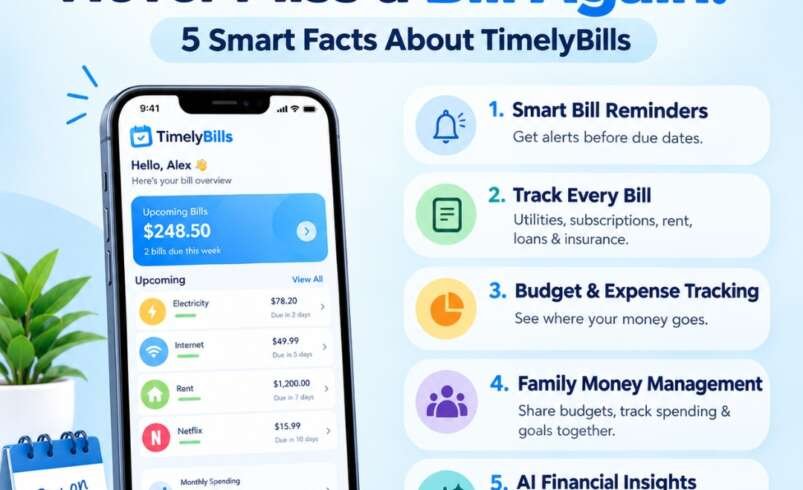
A Best bill reminder app can help users organize payment schedules and receive reminders before bills are due.
TimelyBills allows users to create bill reminders by entering relevant information such as the bill category, title, due date, and preferred reminder timing. This creates a more structured approach to handling recurring financial commitments.
Instead of relying entirely on memory, users can incorporate reminders into their regular financial routine.
Simplify Recurring Bill Organization
Recurring payments are often predictable, but that does not mean they are easy to manage. Rent, utilities, insurance, subscriptions, education expenses, and other obligations may have different schedules.
Using a best bill management app can help bring these commitments together in one place.
An organized bill list makes it easier to review what is coming next and understand how recurring payments affect available funds.
This can also help users identify recurring services they no longer need, allowing them to review their subscriptions and make more intentional spending decisions.
Understand Spending Through Expense Tracking
Budgeting without expense tracking is similar to planning a journey without knowing your starting point. You may have a destination, but you lack important information about your progress.
A Best expense manager app can help organize expenses into meaningful categories.
For example, imagine that your monthly budget includes separate amounts for groceries, transportation, entertainment, and personal purchases. By reviewing actual spending, you can see whether your planned limits are realistic.
This information can be especially valuable when preparing future budgets.
Make Expense Tracking a Habit
An expense tracker app can make regular expense monitoring easier.
Rather than trying to remember every purchase at the end of the month, users can record expenses as they occur and review them periodically.
A useful weekly check can include:
- Reviewing recent transactions.
- Checking category spending.
- Identifying unusual purchases.
- Comparing actual spending with budget limits.
- Reviewing upcoming bills.
- Adjusting discretionary spending if necessary.
This habit can help prevent small spending issues from becoming larger monthly problems.
Build a Budget Around Your Actual Needs
There is no single budget that works for everyone. A student, a working professional, a couple, and a family may all have very different financial priorities.
A realistic budget should account for essential expenses first. After that, users can allocate money toward savings, discretionary spending, and personal goals.
TimelyBills supports personal, family or group, and one-time budgeting options. Users can create budgets for different periods and categories, making it possible to adapt the system to different financial needs.
The important principle is flexibility. Your budget should change when your income, expenses, or priorities change.
Family Budgeting Requires Communication
Household finances can be more complicated than individual finances because multiple people may contribute to income and expenses.
A best family budget app can help families establish a shared financial structure.
For example, a family might create categories for groceries, school expenses, utilities, transportation, entertainment, and shared savings goals.
Shared budgeting can also encourage better communication. When family members understand the household budget, it becomes easier to discuss priorities and coordinate spending.
TimelyBills provides family-oriented features such as shared budgets, shared goals, spending visibility, and a centralized financial dashboard.
Make Money Management Convenient
Financial habits are easier to maintain when the tools fit naturally into everyday life.
A Free money manager app can help users begin organizing their financial activities digitally without depending entirely on spreadsheets.
For Android users, a Money manager app for Android can provide convenient access to financial information while on the move.
The purpose of using an app is not to replace financial judgment. Instead, it should make important information easier to organize so that users can make their own informed decisions.
Use Budgets to Support Financial Goals
Budgeting becomes more meaningful when it connects everyday spending with long-term objectives.
A financial goal could involve:
- Building an emergency fund
- Planning a vacation
- Saving for education
- Preparing for a large purchase
- Reducing unnecessary expenses
- Planning a home project
- Building long-term savings
Breaking larger objectives into smaller targets can make them easier to monitor.
For example, rather than simply saying “I want to save more,” a person could create a specific savings target and review progress each month.
Create a Simple Financial Review System
A practical financial review does not need to take hours.
Weekly Review
Check recent expenses, upcoming bills, and current budget progress.
Monthly Review
Compare actual spending with your planned budget. Identify categories that were higher or lower than expected.
Quarterly Review
Look at larger patterns. Review subscriptions, recurring expenses, savings progress, and financial goals.
This three-level approach can provide regular visibility without making money management feel overwhelming.
Why a Consistent Approach Matters
Technology alone does not create better financial habits. The value comes from using the available information consistently.
A bill reminder is useful when you respond to it. An expense tracker is useful when you review the information. A budget becomes valuable when you compare actual spending with planned limits.
The strongest approach is therefore simple:
Organize your bills. Track your spending. Create realistic budgets. Review your progress. Adjust when necessary.
Conclusion
Managing money effectively does not require complicated financial systems. It requires visibility, organization, and consistent habits.
Digital tools can make everyday financial tasks easier by bringing bills, expenses, budgets, and family planning together. Whether you are managing your own finances, coordinating expenses with a partner, or organizing a household budget, a structured system can make financial information easier to understand.
TimelyBills provides tools designed around these everyday needs, including bill reminders, expense tracking, budgeting, spending insights, and family financial management. By combining technology with responsible financial habits, users can create a system that supports clearer and more organized money management.
Frequently Asked Questions
1. What should I look for in a money management app?
Look for features that match your needs, such as bill reminders, expense tracking, budgeting, spending reports, financial goals, and family-sharing capabilities.
2. Can bill reminders help with recurring expenses?
Yes. Reminders can help users keep track of recurring payment dates and reduce the likelihood of forgetting scheduled financial obligations.
3. How does expense tracking improve budgeting?
Expense tracking provides actual spending information. This allows you to compare real behavior with planned limits and make future budgets more realistic.
4. Can couples and families use shared budgeting?
Yes. Shared budgeting can help partners and family members coordinate expenses, monitor shared budgets, and work toward common financial goals.
5. How frequently should I update my financial plan?
A weekly check can help monitor everyday spending, while a monthly review can provide a broader picture of your financial performance. You can make larger adjustments when your income or financial priorities change.
6. Is digital budgeting better than using a spreadsheet?
Both approaches can work. The better choice depends on your preferences and consistency. A dedicated app can be convenient when you want reminders, expense tracking, budgeting, and other financial tools in one place.
Our Other Services:
View Play Store: https://play.google.com/store/search?q=timelybills&c=apps&hl=en_IN
Contact:
Visit Website: https://www.timelybills.app/
More Social Media
Facebook | YouTube | Instagram | Twitter | LinkedIn | Pinterest