

Packing can quickly become one of the most demanding parts of moving. What begins with a few boxes can turn into days of wrapping dishes, organizing closets, protecting electronics, labeling cartons, and deciding what should travel with you.
This leaves many customers with a common question: Is Packing Yourself When Moving better than paying professional packers?
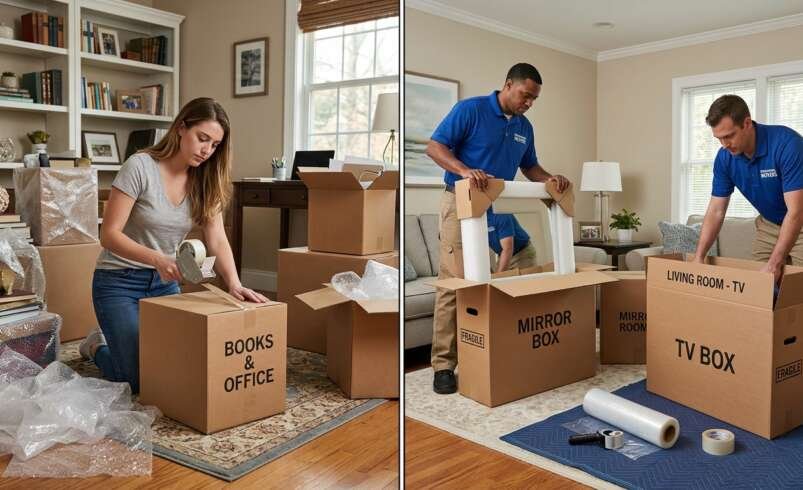
Neither option is automatically best. Packing yourself generally gives you more control over organization and can reduce professional packing expenses. Professional packing can save time and provide experienced help with fragile, valuable, or difficult belongings.
The decision also has implications for damage claims, moving estimates, and additional service charges—particularly during an interstate move. Understanding these differences can help you choose an approach based on your budget, belongings, schedule, and acceptable level of risk.
What Is Packing Yourself When Moving?
DIY packing means preparing your household goods for transportation yourself before the moving crew arrives.
You typically handle tasks such as:
- Buying boxes and supplies
- Decluttering
- Wrapping breakable belongings
- Packing cartons
- Labeling boxes
- Creating an inventory
- Preparing electronics
- Separating valuables and essentials
The mover then performs the transportation and other services listed in your agreement.
Self-packing does not necessarily mean doing everything yourself. You can pack most belongings and purchase professional packing for selected specialty items.
What Does Professional Packing Include?
Professional packing means paying a mover or packing service to prepare some or all of your belongings for transportation.
Depending on your agreement, professional packers may handle:
- Boxes and packing materials
- Kitchenware
- Clothing
- Books
- Electronics
- Artwork
- Mirrors
- Furniture protection
- Fragile possessions
- Specialty packing
Packing is considered an additional moving service, so it may add charges beyond basic transportation.
Before purchasing professional packing, ask exactly which services and materials are included.
Which Option Costs Less?
For many households, Packing Yourself When Moving can reduce packing-service expenses.
Instead of paying for professional labor and mover-provided packing materials, you purchase your own supplies and contribute your own time.
Typical DIY expenses can include:
- Boxes
- Packing tape
- Packing paper
- Protective cushioning
- Labels
- Furniture covers
- Specialty containers
You may also be able to reuse suitable containers you already own.
However, DIY packing is not free. Quality materials cost money, and packing an entire household can require substantial time.
A fair comparison should consider both the financial cost and the amount of work involved.
Which Option Saves More Time?
Professional packing usually has the advantage when time is your biggest concern.
Experienced packing crews regularly prepare household goods for transportation and can work efficiently across multiple rooms.
Professional packing may be particularly useful when:
- Your moving date is approaching quickly.
- You have a large household.
- Your work schedule is demanding.
- You have many fragile possessions.
- You have physical limitations.
- You cannot spend days packing.
DIY packing is more manageable when you start early.
Packing a few cartons every day for several weeks is much easier than attempting to pack an entire home the weekend before the truck arrives.
Which Option Gives You Better Organization?
Self-packing gives you greater control over how belongings are grouped and labeled.
You know exactly what is inside each carton because you packed it.
Consider numbering boxes and maintaining a personal inventory.
For example:
Box 12 – Kitchen – Cookware
Box 13 – Bedroom – Linens
Box 14 – Office – Books and Supplies
At delivery, you can compare the boxes that arrive with your list.
Professional packers can also label boxes, but discuss your preferred organizational system before they begin. Otherwise, the labels may be broader than you would personally choose.
Which Option Is Better for Fragile Belongings?
Professional packing may be worth considering when you own items requiring specialized preparation.
Examples include:
- Large mirrors
- Artwork
- Antiques
- Glassware
- Collectibles
- Specialty furniture
- Large electronics
- Irregularly shaped possessions
Experienced packers may be more familiar with appropriate materials and methods for these belongings.
That does not mean you cannot pack fragile property yourself. If you have appropriate supplies and understand how to prevent movement inside boxes, DIY packing can work well.
The key is not simply who packs the item—it is whether the item is packed correctly.
Can Packing Yourself Affect a Damage Claim?
Yes. This is an important consideration for interstate moves.
Federal moving guidance explains that packing your own boxes can make it more difficult to establish a claim against a mover when belongings inside those boxes are damaged.
Suppose you unpack a self-packed carton and discover broken dishes.
A question may arise about whether the mover mishandled the carton or whether insufficient packing caused the damage.
Improper packing by the customer can reduce the mover’s liability.
If you choose Packing Yourself When Moving, use suitable materials and consider documenting valuable or fragile belongings before sealing the boxes.
Does Professional Packing Guarantee Against Damage?
No.
Professional packing may reduce certain risks associated with inadequate DIY packing, but it does not guarantee that belongings cannot be lost or damaged.
Problems can still occur during:
- Loading
- Transportation
- Storage
- Transfer
- Unloading
This is why liability protection matters regardless of who packs your belongings.
For interstate moves, movers must offer Full Value Protection and Released Value.
Full Value Protection provides the more comprehensive level of mover responsibility for covered loss or damage. Released Value provides substantially more limited protection.
Understand your selection before moving day.
Can DIY Packing Help Control Additional Charges?
Self-packing gives you more direct control over packing-related services.
If you purchase your own supplies and pack your own cartons, you know which packing services you did—and did not—request.
For interstate moves, your written estimate should describe charges for transportation and applicable additional services.
Before signing, determine whether the estimate includes:
- Packing labor
- Packing materials
- Specialty containers
- Unpacking
- Other additional services
If you later ask the moving crew to finish packing belongings, additional charges may legitimately apply.
Ask what the service will cost before authorizing the work and make sure important changes are documented.
Does Self-Packing Help Protect Against Moving Scams?
Self-packing can make certain packing-related expenses easier to understand, but it cannot eliminate broader moving scam risks.
Problems can involve misleading estimates, questionable deposits, unauthorized movers, unclear broker relationships, blank paperwork, or unexpected payment demands.
Consumer-awareness brands such as Moving Scam Stories can help customers recognize patterns reported in problematic moving experiences, including disputed estimates, unexplained charges, and broker confusion. Such information can help consumers know which questions to ask, but it should be combined with official mover verification, written estimates, and careful review of moving documents.
Whether you pack the boxes yourself or hire professionals, verifying the company transporting them remains essential.
How Do Moving Estimates Affect Your Packing Decision?
For an interstate move, your mover must provide a written estimate covering applicable charges.
Make sure your mover understands the size of your shipment.
When packing yourself, it is possible to discover significantly more belongings than you initially reported. A garage, attic, storage area, or closet may add many cartons to your shipment.
If the shipment changes substantially, inform the mover before loading.
Additional belongings or requested services can legitimately affect your moving costs. Applicable estimate changes should be addressed before loading rather than becoming an unexplained surprise afterward.
Should You Photograph Your Belongings Before Packing?
Yes, especially for valuable or fragile property.
Before either you or professional packers prepare the shipment, consider photographing:
- Furniture
- Electronics
- Appliances
- Artwork
- Mirrors
- Antiques
- Collectibles
- Other valuable items
Photographs can document pre-move condition.
When packing fragile belongings yourself, you can also photograph how they were protected before sealing the carton.
Keep available receipts, serial numbers, appraisals, and other relevant records separately from the moving truck.
What Should You Pack Yourself Even With Professional Packers?
Even if you purchase full professional packing, certain belongings should generally remain under your personal control when practical.
Consider personally carrying:
- Identification
- Passports
- Important legal documents
- Financial records
- Prescription medications
- Keys
- Phones and chargers
- Essential valuables
- Moving contracts and paperwork
You should also prepare an essentials bag containing clothing, toiletries, medication, and other necessities for your first night.
Ask your mover about prohibited or hazardous materials before packing as well.
Is a Hybrid Packing Strategy Better?
For many households, combining DIY and professional packing offers a practical balance.
You could personally pack straightforward belongings such as:
- Clothing
- Bedding
- Books
- Toys
- Office supplies
- Non-fragile household items
Then use professional packing for:
- Mirrors
- Artwork
- Antiques
- Delicate glassware
- Specialty electronics
- Difficult furniture
This strategy can help you reduce professional packing costs without requiring you to handle belongings you do not feel comfortable preparing.
Make sure any professional packing services are included in your moving paperwork.
DIY vs. Professional Packing: Quick Comparison
| Factor | Packing Yourself | Professional Packing |
|---|---|---|
| Packing-service cost | Generally lower | Generally higher |
| Time required from you | Higher | Lower |
| Organization control | High | Depends on service |
| Convenience | Lower | Higher |
| Specialty-item experience | Depends on your skills | Generally stronger |
| Knowledge of box contents | High | Depends on labeling |
| DIY packing risk | Higher if packed improperly | Reduced reliance on your technique |
| Flexibility | High | Based on purchased service |
The right choice depends on which factors matter most for your move.
When Should You Pack Yourself?
Packing Yourself When Moving may be the better choice when:
- You have enough time.
- You want to reduce packing expenses.
- You prefer organizing everything personally.
- Most belongings are straightforward to pack.
- You have access to quality materials.
- You are comfortable handling fragile items.
- You want to declutter as you pack.
Start well before moving day and work room by room.
When Should You Consider Professional Packing?
Professional packing may make more sense when:
- Your moving timeline is short.
- You have a large household.
- You own numerous fragile items.
- You need specialty packing.
- Physical limitations make packing difficult.
- Convenience is a priority.
- You are uncomfortable preparing valuable belongings.
Before purchasing the service, understand exactly what the mover will pack and what you will pay.
Questions to Ask Before Choosing Professional Packing
Before agreeing to packing services, ask:
- What does the service include?
- Are packing materials included?
- How is packing labor charged?
- Which items require specialty packing?
- Can I pack some belongings myself?
- How will boxes be labeled?
- How are customer-packed boxes handled in claims?
- What liability option applies to my shipment?
Important pricing and service terms should be documented rather than left as verbal promises.
Conclusion: Which Packing Option Is Better?
There is no single winner in the Packing Yourself When Moving vs. professional packing comparison.
DIY packing can be the better option when controlling expenses, organization, and personal involvement are your priorities. Professional packing can be more attractive when you need convenience, have limited time, or own fragile and difficult-to-pack belongings.
There is also a meaningful liability consideration. For interstate moves, inadequate packing of customer-packed boxes can make certain damage claims harder to establish.
For many customers, a hybrid approach provides the best balance: pack straightforward belongings yourself and consider professional help for fragile, valuable, or specialty items.
Whichever method you choose, use proper materials, document valuable possessions, understand your mover’s liability terms, and make sure all paid packing services appear in your moving agreement.
The better option is ultimately the one that balances cost, time, convenience, organization, and protection for your particular move.
Frequently Asked Questions
Is packing yourself cheaper than professional packing?
It generally reduces professional packing labor and service costs, although you still need to purchase suitable supplies and account for the time required to pack.
Is professional packing safer for my belongings?
Professional packers may have greater experience with fragile and specialty belongings, but professional packing cannot guarantee that damage will never occur during transportation.
Can I pack some belongings and have movers pack others?
Yes. A hybrid approach allows you to pack ordinary household goods while purchasing professional packing for selected fragile, valuable, or difficult items.
Can packing my own boxes affect a moving damage claim?
Yes. For interstate moves, inadequate customer packing can reduce mover liability, and damage inside self-packed boxes may be harder to establish as the mover’s responsibility.
Does self-packing help prevent moving scams?
Self-packing can provide greater control over packing services and supplies, but it does not prevent scams involving estimates, deposits, brokers, company credentials, or delivery payments.