
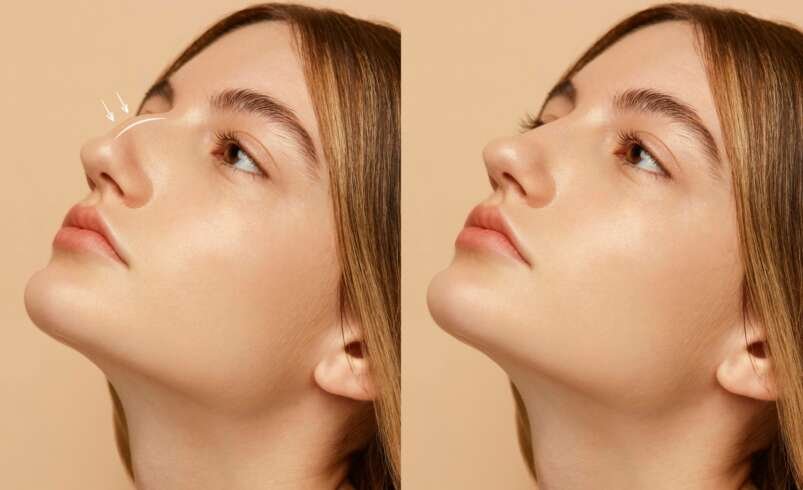

When considering rhinoplasty, many people start by looking at rhinoplasty before and after photographs. These images can help you understand the type of changes that may be possible, but they do not tell the complete story.
At HealthOne Skin Clinic, treatment planning considers individual anatomy, health, concerns, and personal goals. A detailed consultation can help you understand what may realistically be achieved before deciding whether treatment is right for you.
1. What Are the Main Reasons People Consider Rhinoplasty?
Rhinoplasty can be considered for both cosmetic and functional concerns.
Some people may want to change the appearance of their nose, while others may have concerns related to breathing, facial proportions, or a previous injury.
Common reasons include reducing the appearance of a nasal hump, refining the nasal tip, improving a crooked or uneven nose, creating better facial proportions, addressing certain breathing concerns, or correcting changes caused by an injury.
Your reason for considering treatment helps your surgeon understand what you want to improve. Rather than trying to recreate another person’s nose, treatment can be planned around your own facial structure and individual goals.
2. What Should You Expect During a Rhinoplasty Consultation?
A consultation is an important part of the treatment process.
Your surgeon may assess your facial proportions, nasal structure, skin thickness, overall health, previous injuries or procedures, breathing concerns, and aesthetic goals.
You can also ask about the procedure, recovery, potential risks, and expected results.
If you have found before-and-after photographs that represent the type of result you prefer, you can discuss them during your consultation. However, these photographs should be considered examples rather than guarantees.
Your own anatomy will influence the final outcome.
3. How Does Rhinoplasty Recovery Affect the Final Result?
One of the most important things to understand is that the nose does not reach its final appearance immediately after surgery.
During the early recovery period, you may experience swelling, bruising around the eyes, mild discomfort, temporary congestion, and sensitivity around the nose.
These effects generally improve gradually.
During the first week, swelling and bruising may be more noticeable. Over the following weeks, much of the visible swelling begins to settle.
Many patients can return to work or school within one to two weeks, depending on their individual recovery and daily activities. However, deeper healing continues for much longer.
4. Why Can the Final Rhinoplasty Result Take Months?
Swelling is a normal part of the healing process.
Although much of the visible swelling improves during the first several weeks, smaller amounts can remain for months. The nasal tip may take particularly long to settle and become more refined.
Your healing timeline can be influenced by skin thickness, surgical technique, tissue response, individual anatomy, and your overall healing process.
This is why an early post-surgery photograph may look very different from a photograph taken several months later.
Comparing your recovery with another person’s can also create unrealistic expectations because every patient heals differently.
5. How Should You Understand Rhinoplasty Before and After Photos?
Before-and-after photographs can be useful when researching rhinoplasty, but they should be viewed carefully.
When looking at photographs, consider whether the lighting is similar, whether both images were taken from the same angle, how much time passed between the photographs, whether the person’s facial structure is similar to yours, and whether the final image shows a fully healed result.
A photograph cannot predict exactly how your own nose will look.
Instead, before-and-after examples can help you understand a provider’s approach and give you something to discuss during your consultation.
6. How Do You Choose the Right Rhinoplasty Provider?
If you are researching rhinoplasty Toronto, choosing a provider involves more than looking at photographs.
Consider their professional qualifications, experience with rhinoplasty, consultation quality, patient reviews, communication, follow-up care, and approach to discussing realistic results.
Be cautious about anyone who promises a perfect result or suggests that your nose will look exactly like another patient’s.
A good consultation should provide a clear understanding of the procedure, recovery, potential risks, and realistic outcomes.
7. Can Rhinoplasty Be Part of a Broader Cosmetic Plan?
Some people interested in facial aesthetics may have other concerns they want to address over time.
For example, microneedling Toronto may be considered for concerns such as uneven skin texture, enlarged pores, fine lines, and mild signs of ageing.
Microneedling addresses skin quality, while rhinoplasty focuses on the structure and appearance of the nose. These treatments should not automatically be combined, particularly around the time of surgery.
Another option some people explore is laser hair removal Toronto. It targets hair follicles and is designed to provide long-term reduction of unwanted facial or body hair.
People who have previous acne-related texture concerns may also consider acne scar treatment Toronto. This focuses on improving the appearance of acne scarring and uneven skin texture rather than changing facial structure.
If you are considering several cosmetic treatments, your provider can help you understand appropriate timing and whether they are suitable for your individual situation.
What Happens on the Day of Rhinoplasty?
Before surgery, your medical team will review your treatment plan and answer any final questions.
Depending on the complexity of the procedure, rhinoplasty can take several hours.
During surgery, the surgeon may reshape bone, cartilage, or both. The specific technique depends on your anatomy and the changes being planned.
The purpose is not simply to change the nose. Facial proportions and the relationship between the nose and surrounding features are also important considerations.
How Can You Support Your Recovery?
Following your surgeon’s instructions is an important part of recovery.
General recovery measures include sleeping with your head elevated, avoiding strenuous exercise, avoiding heavy lifting, protecting your nose from accidental impact, staying hydrated, eating a balanced diet, and attending follow-up appointments.
Your surgeon may provide additional instructions based on your specific procedure.
It is also important not to compare your recovery too closely with someone else’s. Two patients can have very different healing timelines even after similar procedures.
Can Rhinoplasty Improve Breathing?
Rhinoplasty is not always performed only for cosmetic reasons.
In some cases, structural concerns inside the nose may contribute to breathing difficulties. Depending on the cause, surgical correction may help improve nasal function.
If breathing is one of your concerns, mention it during your consultation. Your surgeon can assess whether structural issues may be contributing to the problem and explain the available options.
Is Rhinoplasty Right for Everyone?
Rhinoplasty is not suitable for everyone.
You may be considered a potential candidate if you are generally in good health, have realistic expectations, are unhappy with the appearance or function of your nose, have completed facial growth, understand the recovery process, and are prepared for gradual healing.
Your surgeon will consider your health, facial structure, expectations, and reasons for wanting the procedure before recommending treatment.
Why Are Realistic Expectations Important?
One of the most important parts of a rhinoplasty journey is understanding what the procedure can and cannot achieve.
Your result may depend on your bone and cartilage structure, skin thickness, facial proportions, healing response, surgical technique, and individual anatomy.
A result that looks suitable on another person may not be appropriate for your face.
The goal should be an outcome that works with your existing features and creates better facial balance rather than simply copying another person’s appearance.
Frequently Asked Questions
1. When will I see my final rhinoplasty results?
You may notice significant changes during the first few months, but the nose continues to heal gradually. Final results can take around a year or longer to become fully visible, particularly around the nasal tip.
2. How long does rhinoplasty recovery take?
Many patients can return to work or school within one to two weeks, depending on their recovery. However, internal healing and swelling can continue for several months.
3. Can rhinoplasty improve breathing?
In some cases, yes. If structural concerns are affecting breathing, surgical correction may help improve nasal function. Your surgeon can assess your situation during a consultation.
4. Should I rely on before-and-after photographs when choosing a surgeon?
Photographs can help you understand a surgeon’s work, but they should not be the only factor. Qualifications, experience, consultation quality, communication, patient reviews, and follow-up care should also be considered.
5. Can rhinoplasty be combined with other cosmetic treatments?
Some patients may explore treatments such as microneedling Toronto or laser hair removal Toronto. However, timing is particularly important around surgery. Discuss additional procedures with your provider before scheduling them.
Final Thoughts
Understanding rhinoplasty before and after results involves much more than comparing two photographs. Your final outcome can be influenced by individual anatomy, treatment planning, surgical technique, swelling, recovery, and healing.
Before deciding on treatment, take time to understand the procedure, discuss your expectations during your consultation, and consider how your own facial structure may influence the result.
At HealthOne Skin Clinic, personalized treatment planning considers facial anatomy, concerns, goals, and expectations. Taking the time to understand the complete process can help you make a more informed decision about your rhinoplasty journey.