

Scaling a Real Estate Business in the UAE Without Increasing Operational Complexity
Growth is an important objective for real estate businesses, but expansion brings challenges that are not always visible during the early stages. Managing a few properties or a small sales team may be straightforward. Handling multiple locations, hundreds of customer enquiries, expanding property portfolios, and increasingly complex financial activities requires a more structured approach.
As a company grows, informal processes can become difficult to maintain. Employees may rely on individual spreadsheets, managers may receive inconsistent reports, and departments may spend considerable time coordinating information. Hiring additional staff can help, but increasing headcount does not automatically solve problems caused by disconnected systems.
For real estate agencies, landlords, property managers, and developers in the United Arab Emirates, sustainable growth depends on building processes that can handle increasing workloads without creating unnecessary complexity.
Choosing the best real estate management software in UAE can support this transition by helping businesses organize information, standardize workflows, and improve visibility across their operations.
Why Growth Creates New Operational Challenges
A growing real estate company usually experiences changes in several areas simultaneously. The number of properties increases, more employees become involved in daily operations, and customers expect consistent service regardless of which team member handles their requests.
These changes can expose weaknesses in existing processes.
For example, a property management company may initially track lease renewals through a shared spreadsheet. As its portfolio expands, several employees may update different versions of the file, making it difficult to identify the most recent information.
A brokerage may face a similar problem with customer enquiries. When lead information is recorded in separate systems, managers cannot easily determine which prospects have been contacted or which opportunities require attention.
Such problems can slow growth because employees spend more time maintaining records and coordinating activities. The solution is not necessarily to introduce more software. It is to establish a consistent operating model supported by suitable technology.
Building a Centralized Property Management Process
Property information forms the foundation of daily real estate operations. Businesses need to maintain accurate records of units, owners, tenants, lease terms, occupancy, maintenance requests, and related documentation.
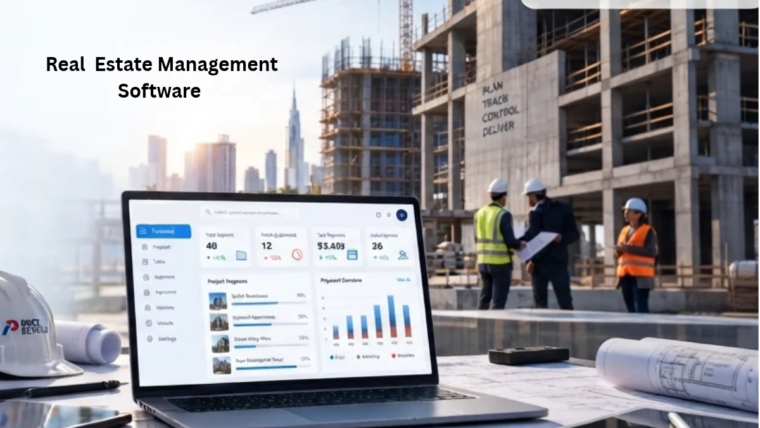
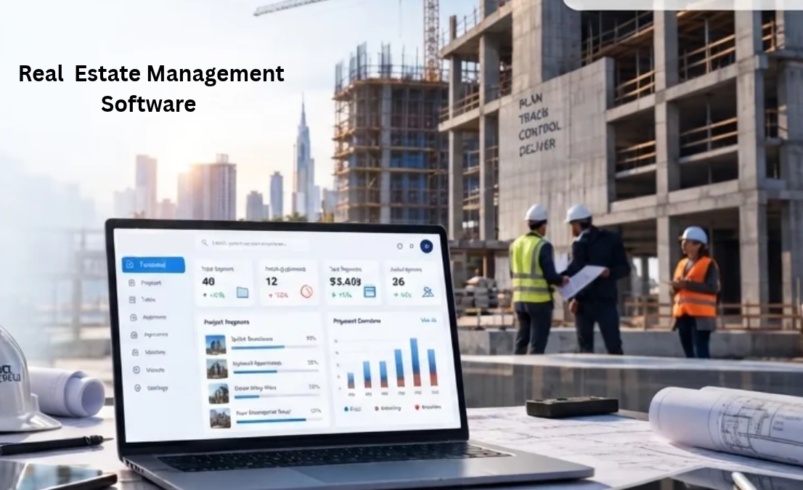
Real Estate Property Management Software in Dubai can help consolidate these records and make them accessible to authorized employees through a structured system.
Centralization becomes particularly useful when a company manages properties across different buildings or locations. Rather than asking individual employees to provide separate updates, managers can review information through a shared platform.
A centralized system may also help teams monitor upcoming lease renewals, identify unresolved maintenance requests, and maintain property histories.
However, centralization works only when employees follow consistent data-entry procedures. Businesses should establish clear rules for updating records, correcting errors, and assigning responsibility for each property.
Maintaining Customer Service as the Business Expands
Growth can increase the number of enquiries without proportionally increasing the team’s ability to respond. If customer communication depends entirely on individual memory or personal inboxes, some prospects may receive delayed responses.
Customer relationship management helps businesses maintain a more consistent process.
With real estate crm software in uae, companies can organize customer information, record enquiries, assign leads, schedule follow-ups, and monitor opportunities through defined sales stages.
Consider a brokerage that expands from one office to several teams. Without shared customer records, two representatives might contact the same prospect while another enquiry remains unanswered.
A centralized CRM can help reduce these inconsistencies by providing a shared view of customer interactions and assigned responsibilities.
Managers can also review lead sources, response times, conversion rates, and the number of opportunities at different stages.
The objective is to establish a repeatable customer experience rather than making service quality dependent on the habits of individual employees.
Creating More Predictable Transaction Workflows
As transaction volumes increase, informal coordination becomes harder to manage. Employees may need to track negotiations, document requests, approvals, deadlines, and completion activities across several simultaneous deals.
Real Estate Transaction Management Software can help businesses organize these activities into defined workflows.
Each transaction can have a recorded status, assigned responsibilities, relevant documents, and outstanding tasks. Managers can then identify delays without requesting individual updates from every employee.
For example, if several transactions are waiting for documentation, the team can review the outstanding requirements and determine whether the delay results from missing information, unclear responsibilities, or another issue.
Standardized workflows can make transaction handling more consistent across employees and locations.
Businesses should still allow for legitimate differences between transactions. A process that is too rigid may create unnecessary obstacles when unusual circumstances require professional judgment.
Connecting Finance With Business Growth
Expansion can increase the complexity of financial management. A growing company may need to monitor operating expenses, commissions, rental income, supplier payments, project budgets, and outstanding receivables across multiple activities.
If each department maintains separate records, management may struggle to understand the financial consequences of expansion.
Connecting operational and financial information can provide a clearer picture of business performance.
For instance, management may want to compare revenue growth with additional staffing costs, operating expenses, and the resources required to manage a larger property portfolio.
Integrated reporting can help answer these questions when the underlying systems provide accurate and appropriately connected data.
Businesses should also confirm that their software supports their accounting workflows, invoicing requirements, and relevant UAE-specific obligations. These requirements should be checked with the software provider and appropriate professional advisers.
When a Growing Company Should Consider ERP
A dedicated property management platform or CRM may be sufficient for a small real estate business. However, an expanding organization may eventually need to coordinate finance, procurement, human resources, project management, assets, customer relationships, and management reporting.
This is where an integrated ERP system may become useful.
The Best Real Estate ERP Software in the UAE should support the company’s operational requirements and connect relevant processes across departments.
For example, a property developer may need to coordinate project expenditure, supplier commitments, sales activity, financial records, and employee responsibilities. If these activities operate through disconnected applications, employees may repeatedly transfer information between systems.
An ERP environment can reduce this duplication and help management obtain a more complete view of operations.
However, a comprehensive system is not automatically the best choice. ERP implementation can require substantial planning, data migration, configuration, and training. Businesses should compare these costs with the operational benefits they realistically expect.
Standardizing Processes Without Eliminating Flexibility
Standardization helps growing organizations maintain consistency. When every employee follows a different procedure for recording enquiries, processing documents, or handling maintenance requests, management cannot easily compare performance or identify recurring problems.
Businesses should define the core steps for common activities and document who is responsible for each stage.
For example, a standard property onboarding process might include verifying property information, organizing documents, recording ownership details, and assigning management responsibilities.
A consistent process reduces uncertainty and makes employee training easier.
Nevertheless, standardization should not prevent employees from addressing legitimate exceptions. Different property types, customer requirements, and transaction circumstances may require adjustments.
The goal is to establish a reliable baseline while allowing appropriate flexibility where business conditions demand it.
Using Performance Indicators to Monitor Expansion
Business growth should be measured through more than the number of properties acquired or transactions completed. Management also needs to understand whether the organization is becoming more efficient as it expands.
Useful indicators may include:
- Lead response time
- Enquiry-to-transaction conversion rate
- Property occupancy rate
- Lease renewal completion
- Outstanding payment levels
- Maintenance resolution time
- Operating cost per managed property
- Transaction processing time
- Revenue and operating expenses
The right metrics depend on the business model. A brokerage may prioritize lead conversion and transaction volume, while a property management company may focus on occupancy, collections, and maintenance.
Companies should define each metric consistently and review it at regular intervals. Otherwise, changes in reporting methods can make comparisons misleading.
Performance indicators should also support decisions. If operating costs per property increase, management should investigate the cause rather than immediately assuming that employees are performing poorly.
Preparing Employees for New Systems
Even suitable software can fail to deliver its intended value if employees do not understand how to use it.
Introducing a new system changes established routines. Staff may need to learn new procedures, migrate existing records, and coordinate with colleagues in different departments.
A practical implementation should include role-specific training, clear documentation, and opportunities for employees to report problems.
It is also useful to introduce the system in manageable stages when the business has complex requirements. Starting with a well-defined workflow allows the company to identify issues before extending the system to additional departments.
Management should explain why the change is necessary and how it is expected to improve daily work. Employees are more likely to adopt a system when its practical benefits are clear.
Evaluating Software Before Making a Commitment
Real estate businesses should evaluate software against their current requirements and future plans rather than choosing a product based solely on its advertised features.
Before making a decision, companies should:
- Document existing operational bottlenecks.
- Identify the processes that must become more consistent.
- Determine which teams need access to shared information.
- Test property management, CRM, transaction, and reporting workflows.
- Review integrations with existing applications.
- Assess security, permissions, data migration, and support.
- Calculate implementation and ongoing costs.
- Define how success will be measured after deployment.
A vendor demonstration should use realistic business scenarios. Companies should also check whether the platform can accommodate additional properties, users, transactions, and reporting requirements without creating disproportionate costs or administrative work.
Conclusion
Scaling a real estate business requires more than adding properties, employees, or sales targets. Sustainable expansion depends on maintaining accurate information, consistent workflows, reliable customer communication, and financial visibility as operational demands increase.
Suitable property management software can help centralize property records, while CRM and transaction management tools can improve customer follow-up and deal coordination. Businesses with broader requirements may benefit from an integrated ERP platform that connects multiple departments.
The best real estate management software in UAE is the solution that supports the company’s current operating model while providing a practical path for future growth.
By standardizing essential processes, preparing employees for change, and choosing technology based on real operational needs, real estate companies can expand with greater control and avoid allowing administrative complexity to undermine business performance.