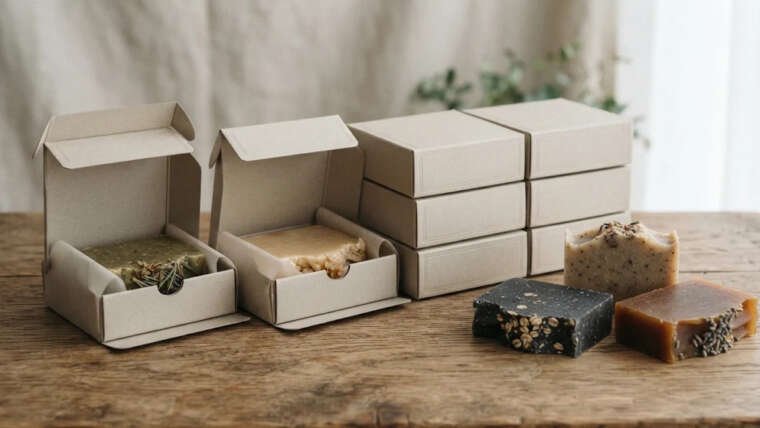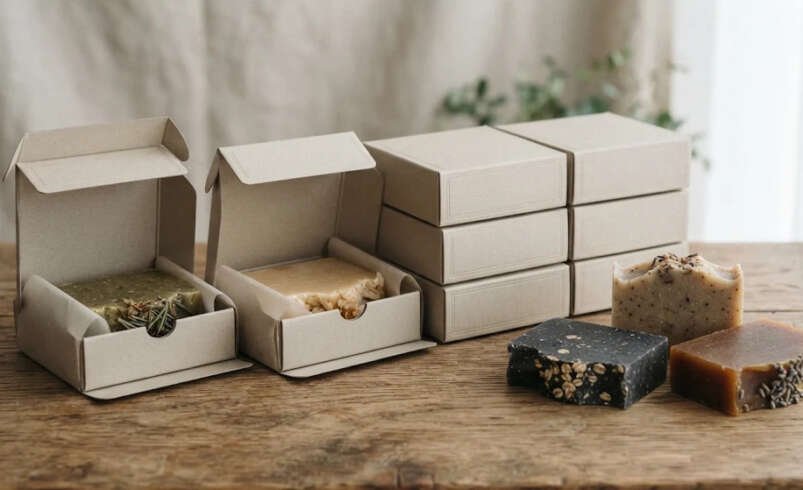

A bar of handmade soap starts changing the moment it leaves the mold. Moisture drifts in and out, scents fade, and oils can sweat onto whatever touches them. Well-made custom packaging slows all of that down. It also decides whether a shopper picks the bar up in the first place. This guide covers what soap needs from its box, which materials work, and how design choices affect both shelf life and sales.
Why Soap Needs Protection After Curing
Cold-process soap cures for four to six weeks, but it never becomes inert. Glycerin pulls water from humid air, which leaves beads of moisture on the surface, often called glycerin dew. Dry air does the opposite and can crack the bar’s edges. Citrus and lavender oils fade faster under light and air. A box that blocks light while letting the bar breathe keeps scent strong through shipping, storage, and weeks on a retail shelf.
Picking the Right Material
Material comes first because it controls moisture, strength, and cost. Cardboard soap boxes are the most common choice for good reason. Paperboard is light, breathes, and takes ink well. Kraft stock gives an earthy look that suits botanical bars, while white SBS board offers a clean surface for bright colors. For heavier bars or gift sets, corrugated boards add crush resistance during shipping. Rigid boxes feel luxurious but cost more and weigh more, so they work best for gift collections rather than everyday stock.
Matching the Box to the Soap
Not every bar behaves the same way. Melt-and-pour soap contains extra glycerin, so it sweats more and usually needs a thin wrap of cellophane before it goes into a box. Salt bars are hard and dry, but they chip at the corners, so a snug fit helps. Castile-style bars with plenty of olive oil stay soft for weeks, and boxing them too early traps moisture. Goat milk and honey soaps can darken over time, so opaque custom soap boxes help hide the shift.
Coatings, Windows, and Liners
Raw paperboard can absorb the oils that seep from a fresh bar, leaving dark patches. A food-safe liner or a thin wax paper wrap stops that. Aqueous coating handles light moisture and scuffs without trapping humidity the way plastic lamination can.
Windows deserve a careful choice. A die-cut window lets shoppers see color and texture, but it also exposes the bar to light. Cover it with a thin film and keep the opening small, or use a half-window on one side. If your soap contains natural colorants like turmeric or spirulina, which fade in light, skip the window and show the bar through a photo or a hang tag instead.
Getting the Size and Fit Right
Soap Packaging Boxes only work when they fit. Too loose, and the bar slides and chips. Too tight, and corners scuff while opening becomes a struggle. Measure the cured bar, not the mold, because soap shrinks as it loses water. Add about a sixteenth of an inch on each side for easy sliding. For bars wrapped in paper, measure the wrapped bar.
Standard bars run around 3 by 2 by 1 inch, but handmade shapes vary, so ask for a sample before ordering a full run. Round or irregular bars do well with a simple paperboard cradle that holds them still and protects delicate edges.
Design That Stops a Shopper Mid-Aisle
Shoppers decide fast. Printed soap boxes give you a chance to tell your story in those few seconds. Lead with the scent or the main ingredient, because that answers the first question every buyer has. Use color to hint at fragrance: soft greens for eucalyptus, warm ambers for oatmeal and honey.
Keep the layout simple. One strong image or pattern beats five small badges. Foil stamping, embossing, or spot UV can highlight your logo, but use them on one element only. A clean matte finish with a single gloss accent often looks more premium than a fully glossy box, and a soft-touch coating makes the box feel like part of the product. Fonts matter too. Pick two at most, and make sure the soap’s name can be read from three feet away.
Labels That Keep You Compliant
In the US, labeling rules depend on how you market the product. A bar sold purely as soap is treated differently from one that makes cosmetic claims, such as moisturizing or anti-aging. Check current FDA and CPSC guidance before you print.
Most boxes carry the product name, net weight, ingredient list, your business name and address, and any allergen notes. Put ingredients on the back or bottom panel in a readable type. Leave room for a batch number so you can trace a problem bar later.
Eco-Friendly Choices That Buyers Notice
Many handmade soap buyers care about where packaging ends up. Handmade Soap Packaging should feel as natural as the bar inside it. Recycled paperboard, soy-based inks, and water-based coatings fit that story. Mixed materials make recycling harder, so keep the structure to one fiber where you can. A short recycling note on the flap helps customers do the right thing. Skip extra tissue and ribbon unless they add real value.
Shipping and Storage Tips
Pack boxed bars snugly in a corrugated mailer so they can’t shift. Skip plastic peanuts and use crumpled kraft paper, which doesn’t trap humidity. Label the outer carton with a Keep Dry notice so couriers handle it properly. In summer, avoid leaving parcels in hot vehicles, since heat softens glycerin-rich bars.
At home, keep cartons off concrete floors, which wick moisture, and away from sunny windows. Store unused boxes flat in a dry spot, because damp air warps cardboard and weakens the fold lines.
Ordering Without Overspending
Small makers often worry about minimum orders. Many printers now run short batches of a few hundred pieces. Custom soap boxes in a standard size, paired with a printed sleeve or sticker, cost less than a fully tailored structure. They also let you test a design before committing.
Always request a printed proof, because screen colors rarely match ink on paper. If you can, test a sample with a real bar for a week to see how it handles humidity.
Final Thoughts
Soap boxes do more than hold a bar. They guard scent, control moisture, and carry your brand into a shopper’s hands. Start with the right material and fit, then add design touches that serve the product instead of crowding it. Treat Soap Box Packaging as part of the recipe, not an afterthought, and every bar will look and smell as good on the shelf as it did the day it was cut.