

Supplement labels often place a large milligram figure on the front of the bottle. For someone comparing berberine products, “600 mg per serving” may appear straightforward. In practice, that number can be misunderstood unless the serving size, number of units and ingredient form are read together.
A 600 mg claim does not always mean that one gummy or capsule contains 600 mg. It also does not automatically indicate the amount a person should take at one time, prove that the formulation is more effective or establish that the product matches the quantities used in every clinical study.
For consumers researching berberine hcl Pakistan, “600 mg Berberine HCL per serving” means that the complete serving identified on the product label provides a combined total of 600 milligrams of berberine hydrochloride. On the referenced product page, one serving is listed as two gummies per day, so the stated 600 mg is supplied by two gummies together rather than by each individual gummy.
Understanding this distinction helps consumers compare products accurately, calculate how long a bottle may last and avoid unintentionally taking more than the labelled serving.
What Does “Per Serving” Mean on a Supplement Label?
“Per serving” refers to the quantity of an ingredient contained in the serving size defined by the manufacturer. The serving may consist of one capsule, two gummies, three tablets, one scoop or another specified amount.
Dietary supplement labelling rules generally require the quantitative amount of an ingredient to be presented as an “Amount Per Serving.” Labels may also use wording such as “Amount Per 2 Tablets” or “Each Capsule Contains” when that description makes the serving clearer.
Three label elements should therefore be read together:
Serving size: The number of gummies, capsules or tablets that make one full serving.
Amount per serving: The total quantity of the active ingredient supplied by that full serving.
Servings per container: The approximate number of complete servings available in the bottle.
For example, when a bottle contains 60 gummies and the serving size is two gummies, it contains approximately 30 complete servings. If the full serving supplies 600 mg, each gummy contributes approximately 300 mg toward that total.
The calculation is:
600 mg per serving ÷ 2 gummies per serving = 300 mg per gummy
This mathematical breakdown explains the label; it should not be interpreted as permission to change the recommended serving without professional guidance.
Berberine HCL Pakistan Labels: 600 mg Per Gummy or Per Serving?
The difference between “per gummy” and “per serving” is one of the most important details when comparing Berberine HCL Gummies.
Consider two hypothetical products:
- Product A provides 600 mg in two gummies.
- Product B provides 600 mg in one capsule.
- Product C provides 600 mg in three gummies.
All three products advertise 600 mg per serving, but the number of units required to receive that amount differs.
Consumers should therefore avoid comparing products only by the largest number printed on the front. The Supplement Facts or nutrition panel should be checked to determine how many gummies or capsules are required to reach the advertised quantity.
This also affects convenience. A person who prefers taking one unit may consider a capsule easier to manage, while someone who dislikes swallowing capsules may prefer a two-gummy serving. The delivery format does not independently establish which product is more effective.
What Does the “HCL” in Berberine HCL Mean?
Berberine is a naturally occurring isoquinoline alkaloid found in plants such as barberry, goldenseal, Oregon grape and tree turmeric. Berberine HCL refers to berberine hydrochloride, a salt form commonly used in dietary supplement formulations.
The letters “HCL” describe the ingredient’s chemical form. They do not mean the supplement contains dangerous hydrochloric acid, nor do they turn berberine into an unrelated compound.
The exact wording on the label still matters. A panel might state:
- “Berberine HCL — 600 mg”
- “Berberine — 600 mg, as berberine hydrochloride”
- “Berberis extract — 600 mg”
These descriptions are not necessarily interchangeable.
A product listing 600 mg of a general plant extract may not provide 600 mg of isolated berberine unless the extract is standardized and the label clearly states its berberine content. Consumers should identify whether the number refers to pure berberine HCL, total botanical extract or a blend containing several ingredients.
Does 600 mg Represent the Amount in the Entire Bottle?
No. “600 mg per serving” normally refers only to one complete serving, not the full container.
If a bottle contains 30 servings and each serving provides 600 mg, the bottle contains 18,000 mg of the listed ingredient across all servings:
600 mg × 30 servings = 18,000 mg
The larger bottle total is useful for comparing value, but it is not the amount intended for consumption at once.
Consumers may also calculate cost per serving rather than relying only on the bottle price. A less expensive bottle is not necessarily better value if it contains fewer servings or requires more units to obtain the labelled quantity.
Is 600 mg the Same as a Recommended Daily Dose?
Not automatically.
A serving size is the manufacturer’s defined quantity for that particular product. It should not be treated as a universal medical recommendation for every adult. Appropriate supplement use may depend on age, health status, medication use, digestive tolerance and the reason the product is being considered.
Berberine studies have used different amounts, formulations, schedules and participant populations. This variation makes it inappropriate to assume that one labelled serving reproduces the findings of every study. NCCIH also notes that research on berberine has used varying quantities and formulations, making direct comparisons difficult.
A 600 mg label claim therefore answers the question, “How much berberine HCL does this product provide per serving?” It does not independently answer:
- Whether the amount is appropriate for a particular person
- Whether it should be taken once or divided throughout the day
- Whether it will produce a specific health result
- Whether it can be combined safely with medication
- Whether more than one serving should be used
The product directions and advice from a qualified healthcare professional should take priority over dosage information copied from social media or unrelated research studies.
Does a Higher Milligram Number Mean Better Berberine HCL Benefits?
A higher number is not automatically better.
The potential Berberine HCL benefits associated with metabolic research cannot be evaluated through milligrams alone. Other relevant factors include:
- Ingredient identity and purity
- Accuracy of the serving declaration
- Manufacturing consistency
- Additional active ingredients
- Gummy or capsule composition
- Storage and stability
- Individual health circumstances
- Consistency of use
- Overall diet and physical activity
Berberine also has limited oral bioavailability, meaning only a portion of an orally consumed amount may reach systemic circulation unchanged. Current research continues to investigate formulations designed to address absorption and stability, but an ordinary product should not be assumed to have enhanced absorption unless evidence is provided for that exact formulation.
Consumers should be cautious when a product implies that a large milligram number guarantees faster weight loss, immediate appetite control or treatment of diabetes. Such outcomes cannot be established from the front label alone.
How to Compare Berberine HCL Gummies and Capsules Correctly
When comparing a gummy with a capsule-based berberine supplement, consumers should use the full serving rather than comparing individual units.
A useful comparison should include:
Active ingredient
The panel should clearly identify berberine or berberine hydrochloride rather than only naming a general herbal blend.
Milligrams per complete serving
The total amount should be compared after accounting for the required number of gummies or capsules.
Number of servings
A bottle with 60 units may contain 60 servings, 30 servings or only 20 servings, depending on the serving size.
Added ingredients
Gummies often require sweeteners, flavours, acids, pectin or gelatin. Capsules may contain shell materials, fillers and flow agents. Those following halal, vegan, low-sugar or gluten-free diets should review the entire ingredient list.
Storage conditions
Pakistan’s heat and humidity can affect gummy texture. Berberine HCL Gummies should generally remain sealed and be stored according to the manufacturer’s instructions, away from excessive heat, direct sunlight and moisture.
Quality information
Batch identification, manufacturing and expiry dates, tamper protection and credible testing information provide more value than unsupported claims such as “maximum strength” or “clinically proven.”
Safety Still Matters at 600 mg
Even when a supplement is plant-derived, the amount per serving should be taken seriously.
Reported adverse effects of berberine include abdominal discomfort, nausea, constipation, diarrhoea and vomiting. Berberine may also interact with medicines. It should not be used during pregnancy or breastfeeding and should not be given to infants.
People taking medicines for blood glucose, cholesterol, blood pressure, blood clotting or other chronic conditions should seek advice from a physician or pharmacist before using Berberine HCL in Pakistan.
Taking additional gummies because they taste pleasant can result in exceeding the labelled serving. Gummies should be stored away from children and treated as supplements rather than sweets.
Conclusion
“600 mg Berberine HCL per serving” means that the complete serving listed on the label provides a total of 600 milligrams of berberine hydrochloride. When the serving size is two gummies, the 600 mg amount is divided across both gummies, giving approximately 300 mg per gummy.
For anyone comparing berberine hcl Pakistan products, the milligram figure should be evaluated alongside serving size, servings per container, ingredient form, added ingredients, safety guidance and manufacturing transparency.
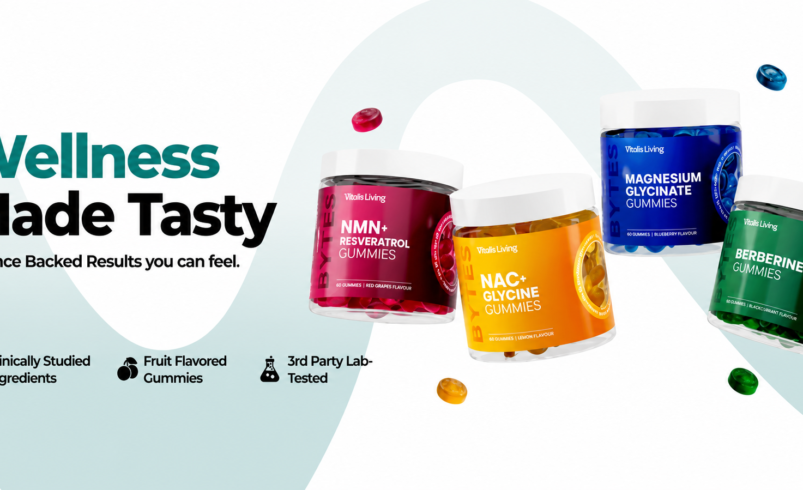
Vitalis Living lists its gummy serving as two gummies providing a combined 600 mg of Berberine HCL. As with any berberine supplement, consumers should follow the label and obtain professional guidance when medications or health conditions are involved.
FAQ’s
1. Does 600 mg per serving mean each gummy contains 600 mg?
Not when the serving size is two gummies. In that case, both gummies together provide 600 mg, which works out to approximately 300 mg per gummy.
2. How many servings are in a bottle of 60 gummies?
If the labelled serving size is two gummies, a 60-gummy bottle contains approximately 30 complete servings.
3. Is 600 mg of berberine HCL the same as 600 mg of barberry extract?
Not necessarily. Barberry extract may contain multiple plant compounds and may provide a smaller standardized amount of berberine. The label should specify the actual berberine or berberine HCL content.
4. Does 600 mg mean the product has been clinically tested?
No. The amount on the label identifies the quantity per serving. It does not prove that the finished product has undergone clinical trials or will produce a guaranteed result.
5. Can someone take more than one 600 mg serving per day?
The labelled directions should be followed. Anyone considering a different amount—especially a person using medication or managing a health condition—should consult a qualified healthcare professional first.