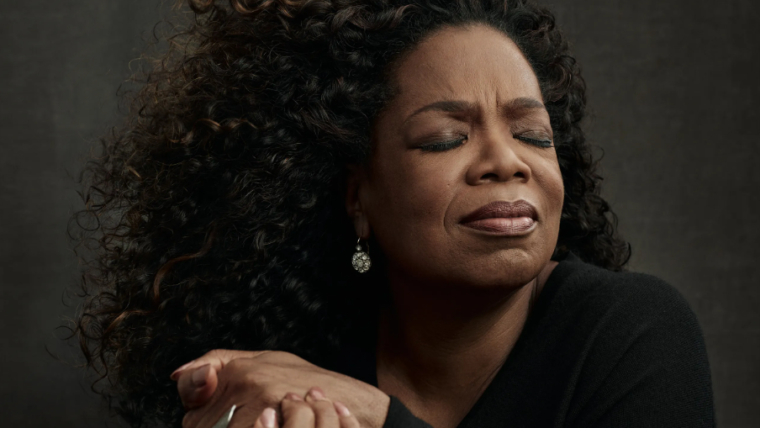
Beyond the spotlight, Oprah Winfrey is more than a famous television host; she is a symbol of resilience, ambition, and generosity. Her life story began in poverty and hardship, yet she transformed those experiences into a career that changed American media and inspired millions around the world. From her early struggles in Mississippi to her rise as the host of The Oprah Winfrey Show, Oprah built an extraordinary life through education, courage, and an unwavering belief in the power of human connection. Her journey proves that success is not only about fame or wealth but also about using influence to create opportunities for others Click here.
A Difficult Beginning
Oprah Gail Winfrey was born on January 29, 1954, in Kosciusko, Mississippi, to an unmarried teenage mother. Her earliest years were spent living with her grandmother on a farm, where money was scarce, and life was difficult. Despite the hardship, her grandmother recognized Oprah’s intelligence and encouraged her to read, speak, and perform. From a young age, Oprah loved stories and public speaking, often entertaining family members and church audiences with recitations and speeches. These early experiences helped develop the confidence and communication skills that would later define her career.
When Oprah was six years old, she moved to Milwaukee to live with her mother. The move brought greater hardship, including poverty, instability, and abuse. She later spoke openly about the sexual abuse she suffered during her childhood, a decision that required tremendous courage. By sharing her story, Oprah helped many survivors feel less alone and encouraged important conversations about trauma, healing, and accountability. Her honesty became one of the defining qualities of her public life. Rather than hiding her pain, she transformed it into compassion and understanding for others.
As a teenager, Oprah moved to Nashville, Tennessee, to live with her father, Vernon Winfrey. He provided discipline, structure, and encouragement at a time when she needed stability. Under his guidance, she focused on her education and developed her public-speaking skills. She won a local speaking competition and later attended Tennessee State University, where she studied communications. Education became a turning point in her life because it gave her the tools to imagine a future beyond the limitations of her childhood.
Finding Her Voice
Oprah’s professional journey began in broadcasting while she was still very young. At the age of 19, she became the youngest person and the first African American woman to anchor the news at Nashville’s WTVF-TV. This achievement was historic, especially in an era when opportunities for Black women in television were extremely limited. Her success showed that talent and determination could challenge barriers that had existed for generations.
In 1976, Oprah moved to Baltimore, where she worked as a reporter and co-anchor for an ABC affiliate. Although her early experience in news was difficult, it led her to a role that suited her personality far better: co-hosting the local talk show People Are Talking. In this setting, Oprah discovered her true strength. She was not only able to present information but also able to create meaningful conversations. She listened carefully, asked thoughtful questions, and made guests and viewers feel understood. This ability to connect emotionally became the foundation of her future success.
Her breakthrough came in 1984, when she moved to Chicago to host AM Chicago. The program quickly gained popularity because of Oprah’s warm, direct, and empathetic style. Within a short time, the show was renamed The Oprah Winfrey Show and began national syndication in 1986. It went on to air for 25 seasons, from 1986 to 2011, becoming one of the most successful and influential talk shows in television history. Millions of viewers watched not only for celebrity interviews but also for conversations about real life, relationships, struggle, healing, and personal growth.
The Woman Behind the Show
Beyond the cameras, Oprah’s greatest strength was her ability to listen. She created a space where guests and audiences could share their experiences with honesty and dignity. Unlike many television programs that focused on conflict or sensational topics, Oprah treated ordinary people’s stories with the same importance as celebrity stories. Her interviews often felt personal because she asked questions that went beyond surface-level answers. Viewers trusted her because she listened without judgment and spoke openly about her own struggles.
Her show covered a wide range of subjects, including family, relationships, health, racism, abuse, spirituality, education, and self-improvement. Oprah used her platform to discuss issues that many television programs avoided. By bringing difficult topics into millions of homes, she helped make conversations about personal struggles more accepted and meaningful. Her influence was not limited to entertainment; it shaped public attitudes and encouraged people to reflect on their own lives.
Oprah’s interviews with celebrities, political leaders, authors, and everyday people often became major cultural moments. Her ability to make guests feel comfortable allowed them to speak more openly than they might in other settings. At the same time, she was not afraid to ask difficult questions. This balance of empathy and strength made her one of the most respected interviewers in television history.
Building an Empire
Oprah’s success as a television host was only the beginning of her journey. She understood that true independence required ownership, so she founded Harpo Productions in 1986 and later established Harpo Studios. By owning her show and production company, she gained control over her career, creative decisions, and financial future. This was a bold move that made her one of the few women in the entertainment industry to build and control a major media business.
Her business empire expanded beyond television. She launched O, The Oprah Magazine, created a highly influential book club, produced films and television programs, and later founded the Oprah Winfrey Network, known as OWN, in 2011. Through these ventures, Oprah proved that media influence could become lasting economic power. Her achievements challenged traditional expectations about women, race, and leadership in business. She showed that success was not only about being visible but also about having the courage to take risks and make independent decisions.
Oprah also became a major cultural force. Her book club could turn a novel into a bestseller, while her interviews often shaped public discussion around important social issues. She used her platform to discuss subjects such as abuse, racism, mental health, education, spirituality, and self-improvement. Instead of avoiding difficult topics, she brought them into millions of homes. In doing so, she changed the tone of daytime television and made conversations about personal struggles more accepted and meaningful Read more.
Courage in Her Personal Life
One of the most inspiring aspects of Oprah’s journey is her courage in facing her past. She did not allow childhood trauma, public criticism, or professional setbacks to silence her. Instead, she learned to speak about her experiences with honesty and strength. This openness allowed audiences to see her not as an untouchable celebrity but as a human being who had faced pain and continued to grow. Her willingness to be vulnerable became a source of connection and trust.
Oprah’s courage also appeared in her professional choices. When she left traditional news reporting to pursue talk television, many people doubted the decision. Yet she trusted her instincts and built a career around her natural ability to communicate. Later, when she created her own production company and network, she took financial and professional risks that could have ended her career if they had failed. Instead, her vision and persistence helped her build a lasting legacy.
Her life demonstrates that courage does not mean the absence of fear. It means moving forward despite fear, uncertainty, and past pain. Oprah’s willingness to take responsibility for her own path, learn from failure, and continue growing became central to her success.
Giving Back to Others
As Oprah became more successful, she used her influence to support others. Through the Oprah Winfrey Foundation and Oprah’s Angel Network, she supported education, women’s empowerment, children, and communities in need. Her philanthropy reflected her belief that opportunity should not be limited by poverty, race, or gender. She understood from personal experience that education can change the direction of a life, and she worked to create similar opportunities for others.
One of her most important contributions was the Oprah Winfrey Leadership Academy for Girls in South Africa. The school was created to provide education and leadership opportunities for academically gifted girls from disadvantaged backgrounds. For Oprah, the academy represented more than charity; it represented a belief in the potential of young women to become leaders, thinkers, and change-makers. Her commitment to education became one of the most meaningful parts of her legacy.
In 2013, President Barack Obama awarded Oprah the Presidential Medal of Freedom, the highest civilian honor in the United States. The award recognized her contributions to American culture, her humanitarian work, and her influence as a public figure. It confirmed that her impact extended far beyond entertainment and into the lives of people around the world.
Lessons From Her Journey
Oprah Winfrey’s story teaches that a difficult beginning does not determine the end of a person’s life. She faced poverty, abuse, racism, and professional challenges, but she continued to move forward with determination. Her success was not handed to her; it was built through education, hard work, courage, and an unwavering belief in her own abilities. Her life reminds us that resilience is not simply surviving hardship but using hardship as a reason to grow stronger.
Her journey also teaches the importance of authenticity. Oprah became successful because she was genuine. She spoke honestly about her struggles and listened to the struggles of others. This created a deep connection with audiences and made her influence more powerful. People trusted her because she did not pretend that life was easy or perfect. Instead, she showed that growth is possible even after pain.
Finally, Oprah’s story shows that success becomes more meaningful when it is shared. She used her wealth and influence to support education, empower women, and create opportunities for young people. Her generosity proves that true power is not only about personal achievement but also about helping others rise.
A Legacy Beyond Fame
Oprah Winfrey’s life extends far beyond the spotlight. She transformed a difficult childhood into a life of purpose, built a media empire through vision and courage, and used her success to improve the lives of others. Her story is a powerful reminder that talent must be paired with persistence, and that personal pain can become the source of compassion and strength.