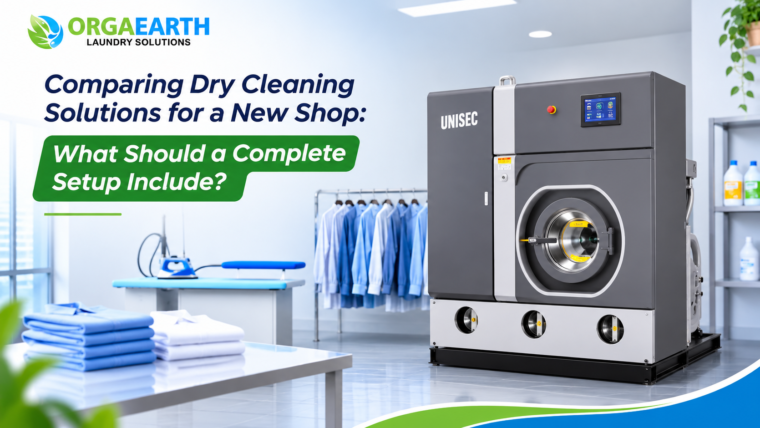


Planning to open a dry-cleaning shop? Before purchasing a machine, make sure you understand everything required to operate the business.
Many first-time entrepreneurs focus on buying a commercial dry-cleaning machine but overlook spotting equipment, garment finishing, chemical requirements, and installation costs.
The result can be an incomplete setup that struggles to handle customer orders efficiently.
Choosing the right dry cleaning solutions means evaluating the complete process, from receiving garments to cleaning, finishing, and delivery.
If you are comparing equipment for a new shop, explore professional dry cleaning solutions to understand the machines and supporting systems available for commercial garment-care operations.
This guide explains what a complete setup should include, how to compare equipment configurations, and which investments deserve priority.
What Does a Complete Dry Cleaning Setup Include?
A professional dry-cleaning shop requires equipment for several stages of garment processing.
Depending on the services offered, essential components may include:
-
Commercial dry-cleaning machine.
-
Spotting table and stain-treatment equipment.
-
Steam pressing and finishing systems.
-
Garment racks and handling equipment.
-
Suitable cleaning solvents and chemicals.
-
Inspection and packaging stations.
-
Supporting utilities and safety systems.
Not every new business needs the same equipment combination.
A collection centre that outsources cleaning has different requirements from a facility processing garments in-house.
Before purchasing machinery, decide which services your business will provide and which processes will be handled externally.
How Do You Choose the Right Commercial Dry Cleaning Machine?
The main cleaning machine is one of the largest equipment investments for an in-house operation.
When comparing machines, consider the following factors.
Processing Capacity
Estimate the number and weight of garments you expect to handle daily.
A larger machine is not automatically better. Its capacity should match realistic batch sizes and operating hours.
Solvent Compatibility
Different machines support specific cleaning solvents.
Confirm the approved solvent system, filtration arrangements, and operating requirements before purchasing.
Cleaning Programmes
Programmable cycles may help operators select suitable processing conditions for compatible garments.
Maintenance Requirements
Evaluate servicing access, spare-parts availability, filtration maintenance, and technical support.
Installation Requirements
Check machine dimensions, electrical requirements, ventilation, and any supporting utility connections.
Compare commercial dry cleaning machines based on their complete technical specifications rather than purchase price alone.
Why Is a Spotting Table Important?
Not every stain can be removed through the main cleaning cycle.
Some garments require targeted treatment before or after machine processing.
A professional spotting table supports controlled stain-removal procedures using appropriate products and tools.
It may include vacuum-assisted treatment areas, spotting guns, and connections for compressed air.
Before selecting spotting equipment, consider:
-
Types of garments handled.
-
Expected stain categories.
-
Operator training requirements.
-
Available workspace.
-
Suitable spotting products.
-
Maintenance and utility requirements.
Proper stain identification is important because different fabrics and stains may react differently to treatment.
A spotting table should be considered part of the garment-care process, not an optional accessory in every situation.
What Pressing and Finishing Equipment Will You Need?
Customers expect cleaned garments to be properly presented when they collect their orders.
Even when cleaning results are satisfactory, poor finishing can affect the overall service experience.
Depending on your garment categories, you may require:
Steam Pressing Table: Suitable for professional pressing of compatible garments.
Trouser Finishing Equipment: Used for appropriate trouser shaping and finishing.
Form Finisher: Supports finishing of selected jackets, coats, and structured garments.
Steam Generator or Boiler: Provides steam where required by compatible equipment.
Garment Racks: Help organise completed garments before inspection and dispatch.
The correct finishing combination depends on whether your shop primarily handles everyday clothing, formalwear, suits, or delicate garments.
Avoid purchasing specialised finishing equipment before understanding customer demand.
Should You Include Washing and Drying Machines?
Dry cleaning and conventional laundry are different processes.
A solvent-based dry-cleaning machine is designed for compatible garments requiring professional solvent cleaning.
Commercial washing machines use water-based processes for appropriate textiles.
If your business plans to offer wash-and-fold services alongside dry cleaning, you may also need a commercial washer and tumble dryer.
For example, customers may bring shirts, everyday garments, towels, and suitable household textiles that do not require solvent processing.
Providing both services can expand your offering, but it also increases machinery, infrastructure, and operating requirements.
Before selecting a combined setup, review the expected proportion of dry-cleaning and water-wash orders.
How Do You Compare Different Dry Cleaning Equipment Setups?
A new business can evaluate three operating configurations.
|
Setup Type |
Main Requirements |
Suitable Business Model |
|
Collection-only shop |
Counter, tagging, racks, packaging |
Outsourced processing |
|
Basic in-house dry cleaning |
Dry-cleaning machine, spotting, pressing, handling |
Garment-focused shop |
|
Complete garment-care facility |
Dry cleaning, washing, drying, spotting, finishing |
Multiple garment-care services |
A collection-only shop generally requires less machinery investment but depends on an external processing facility.
A basic in-house setup provides greater control over compatible dry-cleaning work but requires trained operators and suitable premises.
A complete facility supports more service categories but requires greater investment and operational planning.
Choose the configuration according to expected orders rather than purchasing every available machine immediately.
What Infrastructure Does a New Shop Need?
Equipment installation should be considered before signing a property lease.
Check the following requirements:
Electricity: Confirm the electrical load and connections required by each machine.
Ventilation: Solvent-based systems may require specialised ventilation and safety arrangements.
Water and Drainage: Necessary for compatible washing equipment and other processes where specified.
Floor Space: Allow sufficient room for machine installation, garment handling, and maintenance.
Chemical Storage: Provide suitable storage according to product labels, Safety Data Sheets, and applicable requirements.
Fire and Operational Safety: Confirm the selected solvent system’s safety requirements and relevant local approvals.
A technical site assessment can identify infrastructure modifications before the machines are ordered.
How Much Should You Budget for a Complete Setup?
Dry-cleaning equipment prices vary according to machine capacity, technology, brand, and supporting systems.
Your investment plan should include more than the main machine.
|
Cost Category |
What to Include |
|
Main equipment |
Dry-cleaning machine and accessories |
|
Spotting equipment |
Table and supporting utilities |
|
Finishing equipment |
Steam pressing and garment finishing |
|
Installation |
Transport, positioning, commissioning |
|
Infrastructure |
Electricity, ventilation, connections |
|
Consumables |
Approved solvents and spotting products |
|
Working capital |
Rent, staff, utilities, maintenance |
Request an itemised quotation that clearly identifies what is included.
Also compare warranty coverage, operator training, spare-parts availability, and ongoing maintenance requirements.
For further purchasing guidance, review OrgaEarth’s dry cleaning machine price guide.
What Mistakes Should New Dry Cleaners Avoid?
Buying Only the Main Machine: A working facility also needs appropriate spotting, finishing, and garment handling.
Ignoring Garment Types: Different textiles require different care methods and technical expertise.
Purchasing Excess Capacity: Oversized equipment can increase investment without improving revenue.
Underestimating Installation: Electrical, ventilation, and safety requirements can affect project costs.
Choosing Equipment Without Service Support: Repairs and unavailable spare parts can disrupt customer orders.
Skipping Operator Training: Appropriate machinery still requires trained staff to assess garments and manage the cleaning process.
A complete equipment plan should address these issues before the first purchase.
How Orgaearth Can Help With a Complete Dry Cleaning Setup
Establishing a professional dry-cleaning shop requires suitable machinery, technical planning, and dependable support.
Orgaearth Laundry Solutions supplies professional dry-cleaning equipment and supporting garment-care systems in India.
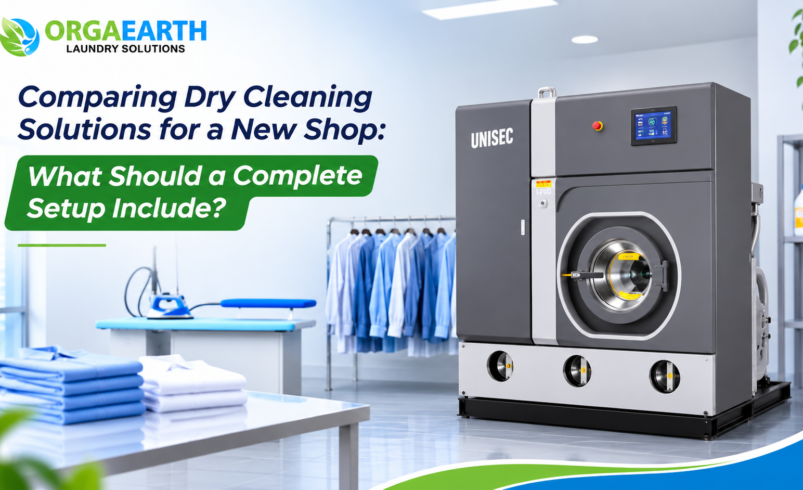
Its portfolio includes UNISEC dry-cleaning machines, spotting tables, steam pressing systems, garment finishers, conveyors, and professional cleaning chemicals.
Orgaearth assists businesses with equipment selection, capacity planning, installation requirements, and after-sales support.
Entrepreneurs can also explore UNISEC dry-cleaning machines when comparing equipment configurations for their proposed facility.
Planning to open a dry-cleaning shop? Contact OrgaEarth to discuss a complete equipment setup based on your garment volume, available space, and business requirements.
Conclusion
A successful dry-cleaning shop needs more than a machine capable of cleaning garments.
The right equipment combination should support stain treatment, cleaning, finishing, quality inspection, and organised customer delivery.
Before investing in dry cleaning solutions, identify your target customers, estimate daily orders, and compare complete equipment configurations.
Review installation costs, consumables, safety requirements, and after-sales service alongside machinery prices.
A properly planned setup helps you invest in equipment that matches your business requirements without unnecessary expenditure.
Frequently Asked Questions
1. What dry cleaning solutions are needed for a new shop?
An in-house setup may require a professional dry-cleaning machine, spotting table, steam pressing equipment, garment handling systems, compatible solvents, and suitable infrastructure.
2. Is a commercial dry-cleaning machine enough to start a business?
Not usually. You may also need spotting, finishing, inspection, and packaging equipment to provide a complete service.
3. Can I start a dry-cleaning business without buying a machine?
Yes. A collection-only business can outsource suitable processing to an established professional facility.
4. Should I buy washing machines along with dry-cleaning equipment?
That depends on whether you intend to offer water-based laundry services alongside solvent-based cleaning.
5. How do I compare complete dry cleaning setups?
Compare processing capacity, equipment combinations, installation costs, utilities, solvent compatibility, warranty, training, and ongoing maintenance.
6. Where can I buy professional dry-cleaning equipment in India?
Orgaearth Laundry Solutions supplies commercial dry-cleaning machines and supporting equipment, with assistance for equipment planning, installation, and technical support.
Contact Us:
Orgaearth Laundry Solutions
Plot no. 774, Udyog Vihar, Phase 5, Gurugram, Haryana, India-122016
Email: marketing@orgaearth.com
Contact No. +91 7042912777