
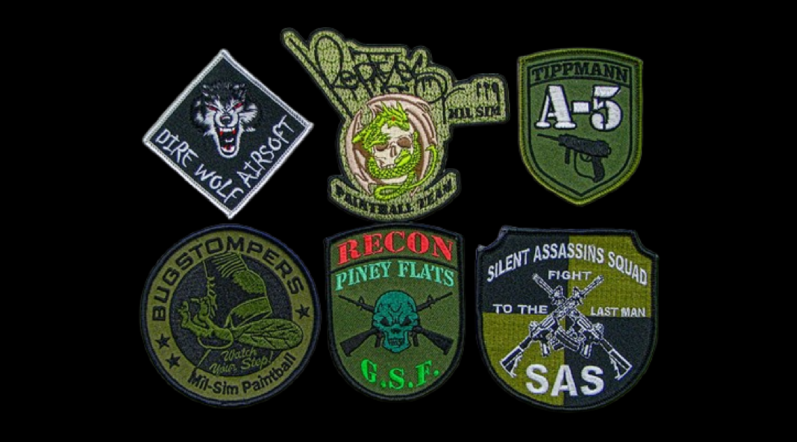

Custom patches for workwear and uniforms provide Australian businesses with a practical way to display company logos, employee names, job roles and team branding. From embroidered logo patches on trade uniforms to removable PVC patches on outdoor workwear, the right patch can help create a consistent and professional appearance.
Whether you run a construction company, hospitality business, automotive workshop, security team, school, sports organisation or corporate workplace, personalised uniform patches can make staff easier to identify while strengthening your brand.
This guide explains the main types of custom workwear patches, backing options, materials, sizes, logo placement and design considerations to help you choose the right patches for your uniforms.
Why Use Custom Patches on Workwear?
Uniforms are an important part of a company’s identity.
When employees interact with customers or work in public environments, consistent branding can help make a business easier to recognise.
Custom patches allow organisations to add:
- Company logos
- Employee names
- Job titles
- Departments
- Team names
- Qualifications
- Role identifiers
- Club emblems
- School badges
- Event branding
Unlike printing directly onto every garment, patches can also provide greater flexibility across different uniform items.
The same company logo patch may be used on work shirts, jackets, caps, overalls and bags.
Best Types of Patches for Workwear
Different working environments require different patch materials.
A patch suitable for an indoor hospitality uniform may not be the best choice for outdoor workwear exposed to rain, dirt and regular abrasion.
Here are some of the most popular options.
1. Embroidered Workwear Patches
Embroidered patches are one of the most traditional choices for uniforms.
The design is created using coloured thread stitched onto a fabric base, producing a textured and professional appearance.
They work particularly well for:
- Company logos
- Employee names
- Trade uniforms
- School badges
- Sports clubs
- Automotive workshops
- Hospitality uniforms
- Staff jackets
Embroidery is most effective for designs with bold shapes, readable text and clearly separated colours.
If your business logo contains very fine details, some simplification may be required before embroidery.
2. Woven Uniform Patches
Woven patches use finer threads and have a flatter surface than traditional embroidered patches.
They are particularly useful when your logo contains:
- Small lettering
- Thin lines
- Detailed symbols
- Complex shapes
- Fine branding elements
For businesses with detailed corporate logos, woven patches can sometimes reproduce the artwork more clearly than embroidery.
Their relatively thin construction can also work well on lightweight uniforms.
3. PVC Workwear Patches
PVC patches are manufactured from flexible rubber-like material rather than thread.
They can be particularly useful for outdoor and demanding environments because of their durable, easy-clean construction.
PVC patches are commonly considered for:
- Outdoor workwear
- Equipment bags
- Work jackets
- Industrial uniforms
- Adventure businesses
- Sporting organisations
- Removable role patches
They can also create a modern appearance for companies that want something different from traditional embroidery.
4. Leather Logo Patches
Leather patches provide a premium and understated appearance.
They work particularly well with:
- Work aprons
- Denim
- Caps
- Jackets
- Hospitality uniforms
- Barbershop apparel
- Trade merchandise
- Premium workwear
A simple company logo or business name can be embossed, engraved or otherwise reproduced on the patch depending on the chosen material and manufacturing process.
Leather patches can be especially effective for businesses with rustic, heritage or premium branding.
5. Printed Patches
Printed patches are worth considering when a logo contains artwork that is difficult to reproduce with thread.
They can accommodate:
- Gradients
- Detailed illustrations
- Multiple colours
- Fine artwork
- Complex graphics
Printing produces a flatter appearance than embroidery but provides considerably more freedom for highly detailed designs.
Employee Name Patches
Name patches are one of the most practical applications of custom uniform patches.
They allow customers and colleagues to identify individual employees while creating a more personalised uniform.
Name patches are commonly used for:
- Mechanics
- Technicians
- Tradespeople
- Hospitality teams
- Warehousing staff
- Delivery teams
- Maintenance crews
- Cleaning businesses
- Event teams
A simple rectangular patch with a high-contrast name is often the most effective design.
Avoid excessively decorative fonts. Employee names should remain easy to read from a normal distance.
Company Logo Patches
A company logo patch helps maintain consistent branding across different garments.
Logo patches are commonly positioned on the left or right chest, upper sleeve or front of a work jacket.
When preparing a logo for patch production, consider how it will appear at the final physical size.
A logo that looks excellent on a large computer screen may contain details that disappear when reduced to a 70 mm patch.
Simplifying fine lines and enlarging important lettering can improve the finished result.
Custom Patches for Tradies
Custom patches are particularly suitable for Australian trade businesses.
Electricians, plumbers, builders, landscapers, mechanics, carpenters and other tradespeople frequently wear work shirts, jackets and caps where business branding can be displayed.
A typical trade uniform could include:
- Company logo on the chest
- Employee name on the opposite chest
- Qualification or role patch on the sleeve
- Small company branding on a cap
Keeping these elements consistent helps create a coordinated team appearance.
Construction Workwear Patches
Construction businesses often require durable branding that can be used across multiple types of workwear.
Patches may be applied to suitable shirts, jackets, overalls, bags and other uniform items.
For construction uniforms, durability and attachment are particularly important.
A patch that looks attractive but regularly lifts from the garment will create additional maintenance.
For frequently washed or demanding workwear, permanent sewing is generally worth considering.
Hospitality Uniform Patches
Restaurants, cafés, bars, hotels, catering companies and other hospitality businesses can use patches to create distinctive uniforms.
Popular applications include:
- Logo patches on aprons
- Embroidered patches on chef jackets
- Small chest patches
- Employee name patches
- Leather patches on premium aprons
- Branding on caps
Hospitality businesses can also create patches that match the visual identity of the venue.
A modern café may choose a minimalist woven patch, while a barbecue restaurant or brewery might prefer a leather-style logo patch.
Automotive and Mechanic Patches
Automotive uniforms are closely associated with embroidered name and business patches.
Mechanics, motorsport teams, detailing businesses, garages and automotive workshops can use patches for:
- Business names
- Employee names
- Motorsport logos
- Service departments
- Sponsor branding
- Workshop roles
Traditional rectangular name patches can create a classic workshop appearance, while custom-shaped logo patches can provide stronger branding.
Custom Uniform Patches for Schools
Schools can use custom patches for far more than their primary school emblem.
Possible applications include:
- House badges
- Leadership badges
- Sports teams
- Music groups
- Academic achievements
- Clubs
- Event badges
- Staff identifiers
Woven patches can be useful for school crests containing fine details, while embroidery provides a traditional raised finish.
Patches for Sports Clubs
Sports clubs often need consistent branding across multiple garments and accessories.
Custom patches can be used on:
- Team jackets
- Polo shirts
- Caps
- Bags
- Supporter merchandise
- Club uniforms
Patches can display the primary club crest, team division, player role, anniversary year or sponsor branding.
They can also be sold separately as club merchandise.
Choosing the Right Patch Backing
The patch material is only one part of the decision.
You also need to determine how the patch will attach to the uniform.
Sew-On Backing
Sew-on patches are stitched directly onto the garment.
This is generally a strong choice when the patch is intended to remain permanently attached.
Sew-on patches are particularly suitable for frequently worn work uniforms.
Iron-On Backing
Iron-on patches contain a heat-activated adhesive.
They can provide convenient application on compatible fabrics.
However, the garment must be suitable for the required heat. Always check its care instructions before applying an iron-on patch.
For workwear exposed to repeated washing or heavy use, additional edge stitching may provide greater security.
Hook-and-Loop Backing
Hook-and-loop backing allows patches to be removed and replaced.
This is useful for:
- Employee names
- Changing job roles
- Departments
- Temporary event roles
- Outdoor uniforms
- Equipment bags
It can also help organisations reuse garments when employees or responsibilities change.
Adhesive Backing
Peel-and-stick adhesive is more suitable for temporary applications than frequently washed work clothing.
For permanent uniform branding, sewing or another appropriate attachment method will generally be more suitable.
What Size Should a Uniform Patch Be?
There is no universal patch size because the correct dimensions depend on the garment, placement and artwork.
For example, a chest logo must fit comfortably without interfering with pockets, seams or zips.
A name patch needs enough width to keep the employee’s name readable.
When selecting dimensions, consider:
- Garment size
- Logo proportions
- Amount of text
- Intended placement
- Viewing distance
- Patch shape
- Border thickness
One useful technique is to print your patch design on paper at its intended dimensions, cut it out and position it on the actual garment.
This provides a much better sense of scale than viewing an enlarged mockup on a screen.
Where Should Workwear Patches Be Placed?
Left Chest
The left chest is one of the most common positions for company branding.
Right Chest
This area can be used for employee names, departments or secondary information.
Sleeve
Sleeves provide space for qualifications, secondary logos, team identifiers or additional branding.
Back
Large back patches can be used when branding needs to remain visible from a greater distance.
However, larger patches can add weight and stiffness, so comfort should be considered.
Caps
Small embroidered, woven, PVC or leather patches can also be applied to compatible work caps.
How to Design a Professional Uniform Patch
A good uniform patch should be recognisable, readable and appropriate for its intended working environment.
Keep the Logo Clear
Remove unnecessary details if they will not reproduce clearly at the selected size.
Use Readable Text
Avoid tiny lettering and extremely thin fonts.
Choose Strong Contrast
The important elements of your logo should remain clearly visible against the patch background.
Consider Brand Colours
Where possible, select thread or material colours that closely represent your established company identity.
Avoid Overcrowding
Trying to include your logo, website, phone number, slogan and multiple services on one small patch can make the design difficult to read.
Often, a company logo and short business name are enough.
Embroidered vs PVC Patches for Workwear
Both materials can work well, but they have different strengths.
Embroidered patches provide a traditional textile appearance. They are particularly suited to company logos, uniforms, clubs and classic workwear.
PVC patches have a moulded, modern appearance and can be particularly useful for outdoor applications where moisture and dirt are common.
The right choice depends on the environment and desired style rather than one material being universally better.
Woven vs Embroidered Uniform Patches
Choose embroidery when you want:
- Raised texture
- A traditional appearance
- Bold lettering
- Strong shapes
- Classic uniform branding
Consider woven patches when you need:
- Fine lettering
- Thin lines
- Greater detail
- A flatter patch
- Complex logos
The artwork itself should help determine which manufacturing technique is most appropriate.
Why Patch Quality Matters
A work uniform represents your business every time an employee wears it.
Poor stitching, unreadable lettering, incorrect colours or badly finished edges can reduce the professional appearance of otherwise good-quality workwear.
When evaluating custom patches, consider:
- Artwork clarity
- Stitch quality
- Border finishing
- Colour consistency
- Backing quality
- Patch dimensions
- Durability
- Suitability for the garment
The goal is not simply to produce the cheapest patch. It is to create branding that works reliably on the intended uniform.
Ordering Custom Workwear Patches in Australia
Before requesting a quote, prepare the essential information about your project.
You should ideally provide:
- Logo or artwork
- Required quantity
- Patch dimensions
- Preferred patch type
- Colours
- Shape
- Backing
- Intended garment
- Required delivery timeframe
Providing complete information makes it easier to recommend an appropriate patch construction and prepare an accurate design proof.
Create Custom Uniform Patches with Australian Patch
Australian Patch creates personalised patches for businesses, organisations, clubs, schools, teams and brands across Australia.
Whether you need embroidered company logo patches, employee name badges, woven patches for detailed artwork, PVC patches for outdoor workwear or premium leather patches, your design can be tailored to suit its intended application.
Start with your logo, sketch or design idea and choose the size, shape, colours and backing that work best for your uniforms.
A carefully designed patch can help turn everyday workwear into consistent, recognisable company apparel.