
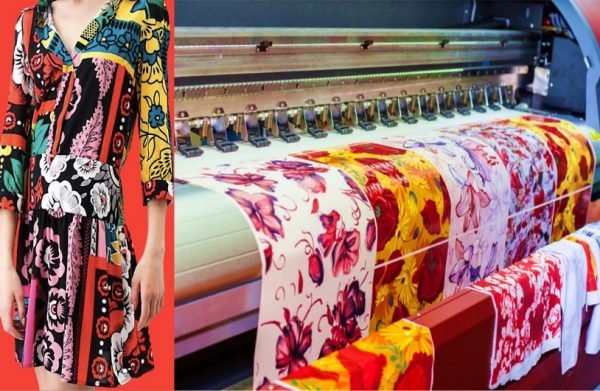

Digital printing on fabric is a modern textile decoration method that transfers a digital image directly onto fabric with specialized textile printers. Instead of preparing separate screens for individual colors, the printer reads artwork from a computer and places tiny ink droplets onto the textile. This makes it possible to reproduce detailed patterns, photographs, gradients, fine lines, and custom artwork with considerable accuracy.
The growth of digital printing on fabric has changed the way textile businesses approach design and production. Designers can test patterns before committing to large quantities, while manufacturers can produce short runs without the extensive setup traditionally associated with screen printing. The technology is now used for clothing, scarves, home furnishings, banners, sportswear, accessories, and many other textile products. The final result, however, depends on choosing the right combination of fabric, ink, printer, pretreatment, and finishing method.
What Is Digital Fabric Printing?
Digital fabric printing is an inkjet-based process designed specifically for textiles. The basic concept resembles printing an image on paper, but textile printing requires specialized equipment because fabric has a different surface and absorbs liquids differently.
During printing, a digital file controls where and how much ink is deposited. The printer can vary droplet placement to reproduce different shades and details. Depending on the technology, the ink either reacts chemically with the textile fibers or is fixed to the surface through a binder or heat treatment.
The fabric may need pretreatment before printing. Afterward, additional steps such as steaming, washing, drying, or curing may be necessary to achieve the required color strength and durability.
How Does Digital Printing on Fabric Work?
Design and Color Preparation
The process starts with a digital design. Artwork may be created in graphic design software or adapted from photography and existing artwork. The file should have sufficient resolution for the intended print size.
Color management is particularly important. A color displayed on a monitor is produced with light, while printed color depends on ink, fabric, and surface characteristics. For this reason, professional production often involves color profiles, calibrated equipment, and physical samples.
Fabric Preparation
Different fibers require different preparation. Cotton, polyester, silk, wool, nylon, and blended fabrics do not accept every type of textile ink in the same way.
Pretreatment can improve ink absorption and help control how the ink spreads. Poor preparation can lead to blurred edges, uneven color, weak fixation, or inconsistent results.
Ink Application
The prepared fabric passes through the digital printer. Print heads deposit microscopic droplets according to the digital image. Multiple ink channels are used to create a wide range of colors.
Unlike traditional screen printing, the design does not need a separate physical screen for every color. This is one reason digital technology is particularly useful for intricate designs and rapid changes.
Ink Fixation and Finishing
The printed textile may require a fixing process depending on the ink system. Reactive dyes, for example, commonly require steaming and washing. Pigment inks generally require heat curing to activate the binder. Dye-sublimation printing uses heat to transfer dye into polyester fibers.
Finishing can also involve washing, drying, calendaring, or other treatments designed to achieve the desired handle, appearance, and performance.
Main Types of Digital Textile Printing
Reactive Digital Printing
Reactive printing is commonly used for cellulose fibers such as cotton, linen, and viscose. The dye forms a chemical bond with suitable fiber molecules.
When properly processed, reactive printing can provide strong colors, good wash resistance, and a relatively soft fabric feel. It is widely used for fashion fabrics, bedding, scarves, and other applications where comfort matters.
Pigment Printing
Pigment printing uses colored particles held to the textile by a binder. Unlike some dye-based methods, pigment printing does not depend on the dye chemically bonding with the fiber.
It can work with many different fabric types and may require fewer wet-processing stages. Proper curing is essential because insufficient curing can reduce resistance to washing and rubbing.
Dye-Sublimation Printing
Dye-sublimation is mainly used for polyester and polyester-based materials. Under controlled heat, the dye changes into a gas and penetrates the polyester fibers.
This technology is popular for sportswear, flags, event graphics, banners, and soft signage. It is known for producing bright images and allowing the print to become part of the polyester structure rather than forming a thick surface layer.
Acid Digital Printing
Acid inks are suitable for certain protein fibers and polyamide fabrics, including silk, wool, and some nylon materials. The process generally requires steaming and washing after printing.
Acid printing is useful when manufacturers need detailed designs and strong color development on appropriate fabrics.
Benefits of Digital Printing on Fabric
High Design Detail
Digital printers can reproduce fine lines, complex illustrations, photographic images, and smooth color transitions. This makes them useful for designs that would be difficult or time-consuming to reproduce with conventional methods.
Lower Setup Requirements
Traditional screen printing requires screen preparation, registration, and other setup activities. Digital printing eliminates the need to create separate screens for each design variation, making the process more convenient for custom and short-run work.
Small-Batch Production
Digital printing is well suited to sampling and limited production. A designer can produce a small quantity of fabric to test a collection before ordering larger volumes.
This can help reduce the risk of holding unsold inventory, especially for businesses offering seasonal or customized products.
Personalization
Because designs are controlled digitally, individual pieces can contain different images or text without rebuilding physical screens. This makes digital printing practical for personalized clothing, custom décor, promotional textiles, and limited-edition collections.
Design Flexibility
A digital file can be edited, resized, recolored, or replaced relatively quickly. Designers can experiment with multiple versions without changing the physical printing setup.
Practical Benefits and Key Insights
Choosing the correct printing technology starts with identifying the fabric fiber. Polyester generally calls for a different ink system than cotton or silk. The intended use should also be considered.
For example, fabric used for frequently washed clothing needs suitable wash resistance and color fixation. A decorative wall hanging may have different performance requirements. Outdoor banners may need resistance to sunlight and weather exposure.
Testing is another important step. A small sample can reveal problems with color, ink absorption, fabric distortion, or image scale before a full production run.
Businesses should also compare the complete production process rather than judging cost solely by the printer’s ink consumption. Pretreatment, steaming, washing, drying, curing, labor, equipment, and wastewater management can all contribute to the final cost.
Common Challenges and Considerations
Fabric Compatibility
The same printer and ink may not perform equally well on every textile. Always verify compatibility before production.
Color Accuracy
Color differences can occur between a computer screen, proof, and finished textile. Consistent color management and physical sampling help minimize these differences.
Print Durability
Durability varies according to ink chemistry, fabric composition, fixation, washing conditions, and finishing. A print designed for decorative use may not withstand the same treatment as a garment intended for repeated washing.
Production Cost
Digital printing can be economical for customized work and shorter runs. For extremely large quantities of simple repeating designs, conventional printing methods may still offer cost advantages.
Environmental Factors
Digital printing can reduce some forms of setup and material waste, but it is not automatically environmentally neutral. Water consumption, energy used during curing or steaming, pretreatment chemicals, washing, ink formulation, and fabric production all influence environmental impact.
Frequently Asked Questions
1. What fabrics can be digitally printed?
Many textiles can be digitally printed, including cotton, polyester, silk, viscose, wool, nylon, and blends. The suitable ink and fixation method depend on the fiber composition.
2. Is digital printing on fabric washable?
Yes, many digitally printed textiles are washable when the appropriate ink and fixation process are used. Wash durability varies by technology and should be tested for the intended application.
3. Can digital printing reproduce photographs?
Yes. Digital textile printers can reproduce photographs, detailed illustrations, gradients, and complex artwork. Image resolution and fabric characteristics affect the final result.
4. Is digital printing suitable for small quantities?
Yes. Small-batch production is one of its major advantages. There is generally less physical setup compared with screen printing, making samples and limited editions more practical.
5. Which is better, digital printing or screen printing?
The better method depends on the project. Digital printing is often advantageous for detailed designs, personalization, samples, and short runs. Screen printing can be more economical for high-volume production involving relatively simple designs.
Conclusion
Digital printing on fabric provides textile designers and manufacturers with a flexible way to reproduce detailed artwork directly onto suitable materials. Its ability to handle complex images, customized designs, samples, and smaller production quantities has made it an important option across fashion, home textiles, promotional products, and decorative applications.
The quality of the finished fabric does not depend on the printer alone. Fiber composition, ink selection, pretreatment, color management, fixation, and finishing must all work together. Businesses that evaluate these factors before production can achieve better color accuracy, durability, consistency, and cost control.
For anyone planning a textile printing project, the most reliable approach is to begin with the fabric and intended end use, then select the digital printing process that matches those requirements. This helps ensure that the final printed fabric performs as well as it looks.