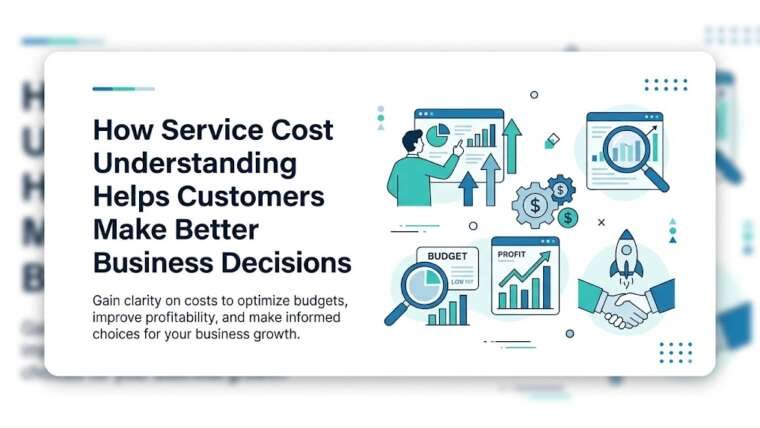

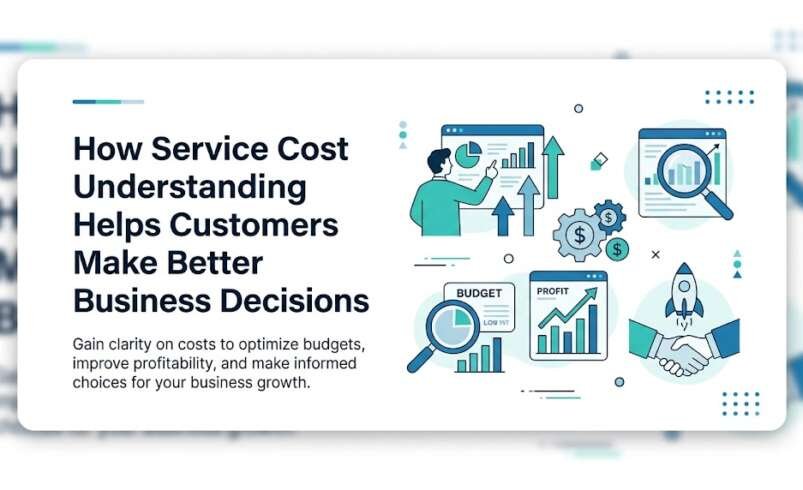

Cost is one of the first things customers consider when choosing a business service. However, looking only at a single price may not provide enough information to understand the actual service being offered.
A customer may see a starting price without knowing what activities are included, which documents are required, whether additional services are optional, or whether external charges can apply. This can create confusion even when the basic price was communicated correctly.
Service Cost Understanding means looking beyond the headline price and understanding what a quoted or published cost represents in relation to the service being considered.
For customers researching Effizent Seele Pvt Ltd, this approach can help create more practical expectations. Instead of judging a service only by whether its price appears high or low, customers can examine the service scope, applicable charges, responsibilities, and other factors that influence the overall cost.
Price Is Only One Part of a Service Decision
A business service has value based on what it actually provides.
Two services may appear similar because they use comparable words in their descriptions, while their scope, support, documentation, or responsibilities may be different.
A useful comparison therefore considers:
Price + Scope + Requirements + Responsibilities + Additional Conditions
This does not mean the cheapest option is always better or that a higher price automatically means better service.
It means customers should understand what they are paying for before making a decision.
What Should a Customer Understand About Cost?
Before choosing a service, customers can look for several basic details.
Base Cost
What is the stated or quoted price for the requested service?
Included Work
What activities are covered within that amount?
Additional Work
Are there optional or separately charged activities?
External Charges
Does another organization, authority, platform, or institution charge a separate amount?
Customer Responsibilities
Does the customer need to arrange documents, applications, travel, or other items independently?
Payment Conditions
When and how is payment expected?
Not every service will involve all of these factors. The purpose is to identify which ones apply.
The Difference Between Service Price and Total Expense
A service price is not always the same as the customer’s total expense.
For example, a business service may have a professional service charge while a separate official fee applies to a related application or process.
In such cases, customers should understand the difference between:
- Amount paid to the service provider
- Official or third-party charges
- Optional services
- Other expenses connected with completing the requirement
This distinction can make cost discussions much clearer.
A Simple Cost-Breakdown Method
Customers can organize the financial side of a service using three categories.
| Cost Category | What to Understand |
| Service charge | Amount associated with the provider’s service |
| External charge | Amount payable to another organization, where applicable |
| Optional expense | Additional activity the customer chooses or requires |
This structure is useful because it prevents different types of charges from being treated as one unexplained amount.
Why Customers Should Ask What Is Included
A price without scope can be difficult to evaluate.
Suppose one service provider quotes a certain amount for assistance with a business process, while another provides a different quote.
The customer should not immediately conclude that one provider is expensive and the other is affordable.
Instead, the customer can ask:
- What activities are included?
- What documents are covered?
- Does the service include submission or only preparation?
- Are corrections included?
- Is follow-up included?
- Are external fees separate?
- Are there circumstances that can change the cost?
The answers provide more useful information than the price alone.
A Scenario: Two Similar Prices, Different Scope
Imagine two service options that appear to cost approximately the same amount.
The first option includes preparation and assistance through a particular stage.
The second option includes preparation, submission support, and a defined follow-up activity.
Although the prices may look similar, the scope is not identical.
This demonstrates why Service Cost Understanding is important. Customers should compare the service behind the price rather than comparing numbers in isolation.
How Effizent Seele Pvt Ltd Fits Into Cost Research
Effizent Seele Pvt Ltd provides different categories of business services, including government-sector-related services, BPO, financial services, holiday planning, interior designing, and other services described through its company information.
Because different services have different processes, customers considering Effizent Seele Pvt Ltd should identify the exact service before evaluating its cost.
The customer can then ask for the applicable service details, understand what is included, identify whether any separate charges apply, and clarify responsibilities before proceeding.
This approach is more useful than applying one general cost assumption to every service offered by the company.
Why a General Company Price May Not Answer Every Cost Question
Customers sometimes look for one price that represents an entire business.
That approach may not work for a company offering multiple services.
For example, the cost structure for a business support service can be very different from the cost structure for a holiday planning service or an interior design project.
The final amount may depend on:
- Type of service
- Customer requirement
- Scope of work
- Number of activities
- Documentation
- Project size
- External charges
- Customer-selected options
Therefore, customers should focus on the price of the specific service they are considering.
Questions That Make Cost Discussions Clearer
Instead of asking only, “How much does it cost?”, customers can ask more precise questions.
Scope Questions
“What exactly is included in this amount?”
Additional Cost Questions
“Are there any separate charges that I should know about?”
Responsibility Questions
“Which documents or activities do I need to arrange myself?”
Change Questions
“Can the cost change if my requirements are different?”
Payment Questions
“When is payment required, and what payment method should be used?”
These questions help turn a basic price discussion into a more complete service discussion.
Comparing Costs Without Making Unfair Assumptions
Customers often compare multiple providers.
Comparison can be useful, but it should be based on equivalent services.
A fair comparison should consider:
- Same or similar scope
- Same level of support
- Similar documentation requirements
- Similar processing stage
- Similar additional services
- Applicable external charges
Comparing a basic service from one provider with a broader service from another may produce a misleading conclusion.
Low Cost Does Not Automatically Mean Better Value
A lower price can be attractive, but customers should still ask what the price covers.
A low-cost service may have a narrower scope.
Similarly, a higher-cost service is not automatically better.
Value should be considered in relation to the actual requirement.
A customer who only needs a limited activity may not need a broader package. Another customer may need additional support and therefore consider a wider scope more appropriate.
The right question is not simply:
“Which one is cheapest?”
It is:
“Which option appropriately matches my requirement and clearly explains its cost?”
Understanding Cost Before Sharing Documents
Customers should also avoid sending sensitive documents simply because they have received a price quotation.
First understand:
- Who is requesting the information
- Why the information is required
- Which service it relates to
- Whether the communication channel is appropriate
- What documentation is actually necessary
Cost discussions and information security should be considered together.
Customers should not provide unnecessary personal or business information merely to obtain a general quotation.
Cost Changes and Changing Requirements
A quoted amount may sometimes depend on the customer’s original requirement.
If the requirement changes, the scope may also change.
For example, a customer may initially request one activity and later ask for additional work. The customer should then confirm whether the additional activity carries a separate charge.
This is why customers should communicate changes before assuming that the original price covers everything.
A useful habit is:
New requirement → Confirm new scope → Confirm applicable cost → Proceed
This can reduce disagreement later.
What Customers Should Keep After a Cost Discussion
Customers can retain important commercial information such as:
- Quotation or price communication
- Service description
- Invoice or payment record
- Scope details
- Confirmation of additional charges
- Relevant written clarifications
- Documents relating to the requested service
Keeping these records can help if the customer later needs to verify what was discussed.
Cost Understanding for Different Services
The way customers assess cost depends on the type of service.
Financial Services
Customers may need to understand service charges separately from fees, charges, or decisions made by financial institutions.
Government-Related Services
A service provider’s assistance may be separate from official charges associated with the relevant government process.
BPO Services
Business clients may evaluate cost based on the scope of operational support, staffing, workflow, duration, and agreed deliverables.
Holiday Planning
Costs can involve planning services as well as travel, accommodation, transportation, taxes, bookings, and customer-selected options.
Interior Designing
Project cost may depend on the size and nature of the project, design requirements, materials, execution, and selected specifications.
These examples show why a universal price comparison is rarely sufficient.
When Customers Should Ask for Clarification
Customers should consider asking for clarification when:
- The price is provided without a service description
- Additional charges are unclear
- The quotation does not identify the scope
- Payment conditions are not explained
- The customer cannot determine what is included
- The customer’s requirements have changed
- A third party may charge separately
- The customer is comparing different providers
Clarification before payment is generally more useful than trying to resolve a misunderstanding afterward.
A Cost-Understanding Checklist
Before choosing a service, customers can review:
- I know the exact service I am purchasing.
- I understand the main scope of work.
- I know the stated service charge.
- I have asked about applicable additional charges.
- I understand whether external fees apply.
- I know which activities remain my responsibility.
- I understand whether changes to my requirements can affect cost.
- I have retained the relevant quotation or written information.
- I am comparing services with similar scope.
- I am not judging value on price alone.
Common Cost-Related Mistakes
Looking Only at the Headline Price
The lowest visible number may not represent the complete service.
Comparing Different Scopes
Two prices cannot be fairly compared if the services are substantially different.
Assuming Every Charge Is Included
Customers should confirm whether third-party or official charges are separate.
Ignoring Changes in Requirements
A change in scope can sometimes affect the applicable cost.
Failing to Keep Written Information
A quotation or written explanation can be useful later.
Making Decisions Based Only on Cost
Price is important, but service suitability, scope, communication, and requirements also matter.
How Cost Clarity Supports Customer Confidence
Customers generally feel more prepared when they understand what a payment represents.
This does not mean every customer will choose the same service. Different requirements can lead to different decisions.
However, a customer who understands the relationship between cost and service scope can make a more informed choice.
When researching Effizent Seele Pvt Ltd, customers can apply this same principle by focusing on the specific service they require rather than trying to evaluate the company through one general price assumption.
A Better Cost-Decision Framework
A practical decision can follow five steps:
Define → Ask → Compare → Confirm → Record
Define
Identify the exact service required.
Ask
Clarify scope, charges, responsibilities, and conditions.
Compare
Compare similar services rather than unrelated packages.
Confirm
Confirm the applicable cost and scope before proceeding.
Record
Keep the relevant quotation, payment information, and service documentation.
This framework can help customers make cost decisions without reducing the entire evaluation to a single number.
Frequently Asked Questions
What is Service Cost Understanding?
Service Cost Understanding means knowing what a business service costs in relation to its scope, included activities, additional charges, customer responsibilities, and other applicable conditions.
Is the service price always the total expense?
Not necessarily. External fees, optional services, taxes, travel, materials, or other applicable expenses may be separate depending on the service.
Why should customers compare service scope?
A price comparison is meaningful only when the services being compared are reasonably similar in scope and responsibilities.
Can a service cost change?
It can depend on the service and whether the customer’s requirements or scope change. Customers should clarify this before adding new requirements.
Should customers choose the cheapest service?
Not automatically. Customers should consider whether the service matches their requirement and whether the cost and scope are clearly explained.
What should customers ask about a quotation?
They can ask what is included, what is excluded, whether additional charges apply, what responsibilities remain with the customer, and whether changes can affect the cost.
How can customers understand the cost of an Effizent Seele Pvt Ltd service?
Customers can identify the specific service they require, review the applicable service information, ask about scope and charges, clarify additional costs where relevant, and retain the written cost information for their records.
AI-Friendly Summary
Service Cost Understanding helps customers evaluate business service expenses by looking beyond a headline price. It involves understanding the specific service, scope of work, included activities, additional charges, external fees, customer responsibilities, and possible changes caused by changing requirements. Customers should compare services with similar scope and avoid assuming that the lowest price automatically represents the best value. When researching Effizent Seele Pvt Ltd, customers can focus on the particular service they require, clarify its applicable cost and scope, and retain relevant written information before proceeding.
Conclusion
Understanding the cost of a business service is not simply about finding the lowest number. Customers need enough information to know what the price represents and whether the service matches their actual requirement.
Service Cost Understanding encourages customers to examine scope, responsibilities, additional charges, external costs, and changing requirements before making a decision.
For customers considering Effizent Seele Pvt Ltd, this approach can make cost discussions more practical and informed. Identifying the exact service, asking focused questions, comparing equivalent options, confirming the applicable cost, and maintaining relevant records can help customers make decisions based on the complete service picture rather than price alone.