
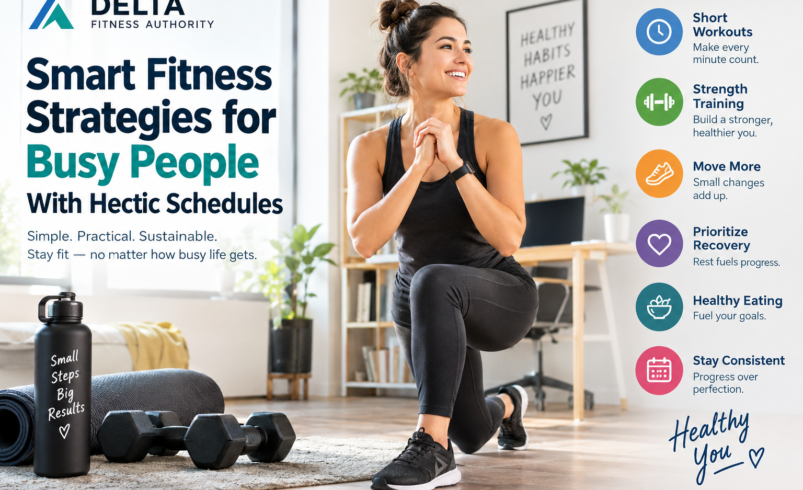

Between work deadlines, family responsibilities, commuting, errands, social commitments, and everyday stress, finding time for exercise can feel almost impossible. Many people know that regular movement is important, yet a busy schedule often pushes fitness to the bottom of the priority list. Fortunately, getting healthier does not require spending hours in a gym every day. With practical planning and realistic expectations, even people with hectic schedules can build an effective fitness routine.
For people looking for practical fitness ideas, resources such as Delta Fitness Authority can provide additional inspiration when planning workouts and developing healthier habits. However, the most important step is finding an approach that fits your actual lifestyle rather than trying to copy someone else’s routine.
The reality is that consistency matters more than perfection. A 20-minute workout that you can repeat several times a week is often more useful than an ambitious two-hour workout plan that quickly becomes impossible to maintain. Therefore, the goal is not to find more hours in the day. It is to use the time you already have more effectively.
Why Busy People Should Make Fitness a Priority
A hectic schedule can make exercise seem optional. However, physical activity is closely connected with overall health and well-being.
The CDC recommends that adults get at least 150 minutes of moderate-intensity aerobic activity each week, along with muscle-strengthening activities on at least two days per week. The activity can include options such as brisk walking, cycling, swimming, and other exercises that raise your heart rate.
That may sound difficult when your calendar is already packed. Fortunately, you do not have to complete all 150 minutes in one or two long sessions. The CDC explains that activity can be spread throughout the week and broken into smaller periods.
This is particularly useful for busy professionals, parents, students, entrepreneurs, and anyone whose daily schedule changes frequently.
In addition, physical activity can support cardiovascular health, mental well-being, sleep, and general physical fitness. Therefore, exercise should not be viewed only as a way to change your appearance. It is also an investment in how you feel and function throughout the day.
1. Stop Waiting for the Perfect Time to Exercise
One of the biggest mistakes busy people make is waiting for a large block of free time.
You might think:
“I’ll exercise when work slows down.”
“I’ll start next Monday.”
“I need at least an hour for a proper workout.”
Unfortunately, busy periods often do not disappear. There will always be another deadline, meeting, appointment, or household responsibility.
Instead, change the way you think about exercise.
Rather than asking, “When do I have one free hour?” ask:
“Where can I realistically fit 15 to 30 minutes of movement into my day?”
That small change can make fitness much more achievable.
A short walk before work, a quick strength session during lunch, or a 20-minute home workout in the evening can all contribute to your weekly activity.
2. Use Short Workouts to Your Advantage
Short workouts are particularly useful when your schedule is unpredictable.
You do not always need a long session to make movement worthwhile. For example, you could divide your day into smaller activity periods:
- 10-minute morning walk
- 10-minute lunchtime walk
- 15-minute strength workout after work
- 10-minute evening mobility routine
These short sessions can add up.
The CDC notes that adults can spread physical activity throughout the week and break it into smaller chunks rather than completing everything in one session.
For example, someone who walks briskly for 15 minutes in the morning and another 15 minutes in the evening has already created a meaningful amount of weekly activity.
The key is to stop thinking that exercise only “counts” when you are at a gym for an extended period.
When time is limited, consistency beats duration. A short workout you actually complete is more valuable than a perfect workout that never happens.
3. Plan Your Workouts Like Important Appointments
If exercise is not scheduled, it is easy for something else to take its place.
Therefore, treat your workouts like important appointments.
At the beginning of each week, look at your calendar and identify realistic opportunities for physical activity.
For example:
Monday: 20-minute strength workout
Tuesday: 25-minute brisk walk
Wednesday: Rest or light stretching
Thursday: 20-minute strength workout
Friday: 25-minute walk
Saturday: Outdoor activity
Sunday: Recovery
Your schedule does not need to look exactly like this. The important thing is to make exercise visible on your calendar.
Furthermore, choose times when you are most likely to follow through.
If mornings are usually chaotic, do not force yourself into a 5 a.m. workout simply because someone online recommends it. Instead, try lunchtime or early evening.
A successful fitness plan should fit your life.
4. Combine Exercise With Your Existing Routine
Another effective strategy is to connect physical activity with habits you already have.
For example:
- Walk while taking a phone call.
- Take the stairs when practical.
- Park farther away from your destination.
- Take a short walk after lunch.
- Stretch while watching television.
- Perform bodyweight exercises during short breaks.
- Walk around during long meetings when appropriate.
- Spend part of your lunch break outside.
These changes may appear small, but they can help reduce long periods of inactivity.
The CDC emphasizes that some physical activity is better than none, which is an important message for people who struggle to meet traditional workout targets.
Rather than believing that you have to completely transform your lifestyle overnight, focus on adding more movement to the lifestyle you already have.
5. Prioritize Full-Body Strength Training
Busy people can benefit from efficient strength workouts because they allow you to train multiple muscle groups without requiring a long gym session.
A simple full-body workout could include movements such as:
- Squats
- Push-ups
- Lunges
- Rows
- Hip hinges
- Shoulder presses
- Planks
Depending on your experience and equipment, these movements can be modified to suit your fitness level.
The CDC recommends muscle-strengthening activities on at least two days each week for adults, with exercises that work the major muscle groups.
You do not necessarily need a complicated routine. A few well-chosen exercises performed with appropriate technique can make a short workout productive.
If you are new to strength training, start with manageable resistance and focus on learning proper movement patterns rather than trying to lift as much weight as possible.
6. Choose Convenient Forms of Cardio
Cardio does not have to mean spending an hour on a treadmill.
Brisk walking is one of the simplest options because it requires little equipment and can often be incorporated into a normal day. Other choices include cycling, swimming, jogging, dancing, and recreational sports.
For busy Americans, convenience should be an important consideration when choosing an activity.
Ask yourself:
Can I easily access this activity?
If the answer is no, you may have difficulty maintaining it.
For example, if driving 30 minutes to a gym makes exercise inconvenient, a home workout or neighborhood walk may be a better option.
The best exercise is not necessarily the most advanced exercise. It is the activity you can perform safely and consistently.
7. Make Your Work Environment More Active
Many people spend most of their working day sitting.
If you work at a desk, look for practical opportunities to move throughout the day.
You might:
- Stand during some phone calls.
- Walk during appropriate meetings.
- Take short movement breaks.
- Stretch between tasks.
- Walk to speak with a colleague when practical.
- Use stairs instead of an elevator when appropriate.
- Take a short walk during lunch.
These habits can help break up long periods of sitting.
For remote workers, it can be especially helpful to create reminders to stand or walk throughout the day. Even a few minutes of movement between work tasks can make your day feel less sedentary.
8. Use the “Minimum Workout” Strategy
There will be days when your schedule becomes completely unpredictable.
Instead of skipping exercise altogether, have a minimum workout ready.
Your minimum workout might be only 10 minutes.
For example:
Minute 1–2: Warm-up
Minute 3–5: Squats and lunges
Minute 6–8: Push-ups and rows
Minute 9–10: Plank and stretching
You can adjust the exercises to your ability and available equipment.
The purpose of this strategy is not to replace every longer workout. Instead, it gives you an option for particularly busy days.
This can also protect your consistency. Missing one workout is not a problem, but repeatedly telling yourself that you will “start again tomorrow” can gradually turn into weeks without exercise.
9. Stop Trying to Do Everything at Once
Another common mistake is creating an overly ambitious fitness plan.
Someone who has not exercised regularly might suddenly decide to:
- Work out six days a week
- Run every morning
- Lift heavy weights
- Follow a strict diet
- Walk 10,000 steps every day
- Stop eating favorite foods
- Wake up at 5 a.m.
That plan may sound impressive, but it can quickly become overwhelming.
Instead, introduce changes gradually.
Start with two or three realistic workouts each week. Once those become part of your routine, add another activity if necessary.
Fitness is a long-term process. You do not have to accomplish everything during the first week.
10. Use Technology Without Becoming Obsessed With It
Technology can make fitness easier to organize.
A smartphone, smartwatch, fitness tracker, or simple calendar can help you monitor:
- Steps
- Workout duration
- Heart rate
- Exercise frequency
- Walking distance
- Strength-training progress
However, technology should support your routine rather than control it.
You do not need to obsess over every calorie burned or every step taken.
Instead, use tracking as a way to understand your habits.
For example, if your activity drops significantly during busy workweeks, you can plan short walking breaks in advance.
11. Protect Your Recovery Time
Being busy does not mean you should exercise as hard as possible every day.
Recovery is an important part of a sustainable fitness routine.
Your weekly schedule should include opportunities for lighter activity and rest.
Recovery can involve:
- Getting adequate sleep
- Taking rest days
- Walking at an easy pace
- Stretching
- Mobility exercises
- Eating balanced meals
- Staying hydrated
If every workout leaves you exhausted, your routine may be too demanding.
Instead, aim for a balance that allows you to exercise while still handling your responsibilities.
12. Make Healthy Eating Easier During Busy Weeks
Fitness and nutrition work together.
Unfortunately, busy schedules can make fast food, skipped meals, and convenience snacks more tempting.
Planning a few simple meals ahead of time can help.
You might keep convenient options available, such as:
- Greek yogurt
- Eggs
- Fruit
- Oatmeal
- Nuts and seeds
- Beans
- Whole-grain foods
- Lean meats or fish
- Pre-cut vegetables
You do not need a complicated meal-prep system.
Even preparing a few basic foods in advance can make healthy choices easier when your schedule becomes hectic.
If you have specific dietary requirements or health conditions, consider discussing your nutrition needs with a qualified healthcare professional or registered dietitian.
13. Find an Exercise You Actually Enjoy
If every workout feels like punishment, staying consistent becomes difficult.
Therefore, experiment.
You might enjoy:
- Walking outdoors
- Cycling
- Hiking
- Swimming
- Dancing
- Strength training
- Yoga
- Pilates
- Group fitness
- Recreational sports
Exercise does not have to look a certain way.
The best routine is one that you enjoy enough to repeat.
In addition, exercising with a friend, family member, or group can add a social element that makes the experience more enjoyable.
14. Have a Backup Plan for Hectic Days
Even the best schedule can fall apart.
You may have an unexpected work deadline, a sick child, a delayed flight, or an exhausting day.
Instead of viewing this as failure, create backup options.
For example:
Normal day: 45-minute gym workout
Busy day: 20-minute home workout
Extremely busy day: 10-minute walk and mobility routine
This three-level system allows you to adjust your routine without abandoning it.
Flexibility is particularly important because real life is rarely predictable.
15. Focus on Progress, Not Perfection
Fitness progress does not always happen in a straight line.
Some weeks may be excellent. Others may be difficult.
You might miss workouts because of work, travel, illness, family responsibilities, or simply a lack of energy.
That does not erase your progress.
Instead, ask yourself what you can do next.
In fact, recent CDC data show why this issue matters. In 2024, only 47.2% of U.S. adults aged 18 and older met federal aerobic activity guidelines during leisure time. The percentage also varied by age, income, education, region, and other factors.
The statistics show that maintaining regular physical activity can be challenging for many Americans.
Therefore, creating a realistic strategy is more useful than chasing an unrealistic standard.
The goal is not to build the busiest workout schedule. The goal is to build a routine that survives busy weeks.
A Simple Weekly Fitness Plan for Busy People
If you need a starting point, consider this flexible example:
Monday
20-minute full-body strength workout
Tuesday
20–30-minute brisk walk
Wednesday
Rest or 10-minute mobility session
Thursday
20-minute full-body strength workout
Friday
20–30-minute brisk walk
Saturday
Outdoor activity, cycling, hiking, swimming, or recreational sport
Sunday
Rest and prepare for the upcoming week
This schedule is only a starting point. You can shorten sessions, move them to different days, or break them into smaller periods.
The CDC recommends at least 150 minutes of moderate activity per week for adults, plus muscle-strengthening activity on two days. However, people who cannot immediately reach that amount should still focus on being more active and gradually building up.
How to Stay Consistent for the Long Term
Once you have created your routine, focus on making it sustainable.
A few simple strategies can help:
- Schedule workouts in advance.
- Keep workout equipment accessible.
- Choose convenient activities.
- Start with realistic goals.
- Have short-workout alternatives.
- Track consistency instead of perfection.
- Exercise with friends when possible.
- Adjust your routine when your schedule changes.
- Give yourself recovery time.
- Celebrate small improvements.
Most importantly, avoid comparing your routine with someone else’s.
A professional athlete, fitness influencer, busy parent, office worker, and retiree may all need completely different approaches.
Your routine should be designed around your schedule, your abilities, your preferences, and your goals.
When to Seek Professional Advice
Most adults can benefit from becoming more physically active. However, individual needs differ.
If you have a chronic health condition, disability, significant physical limitation, or concerns about starting vigorous exercise, speak with a healthcare professional about the types and amount of activity appropriate for you. The CDC recommends professional guidance for people who need help determining appropriate physical activity based on their health or abilities.
Likewise, a qualified fitness professional can help you develop a safe and practical workout plan, particularly if you are new to structured exercise.
Final Thoughts
A hectic schedule does not mean fitness has to disappear from your life.
The secret is to stop looking for a perfect workout schedule and start building a flexible system that works when life gets busy. Short workouts, walking breaks, full-body strength sessions, planned activity, and realistic goals can all help you stay active without overwhelming your calendar.
Most importantly, remember that fitness is not an all-or-nothing commitment.
You do not have to exercise for an hour every day. You do not have to follow the same routine forever. And you do not have to feel motivated every time you work out.
Instead, focus on small actions that you can repeat.
When those small actions become habits, they can create meaningful long-term changes.
Whether you are working from a home office in California, commuting in New York, managing a business in Texas, or balancing family responsibilities in Florida, the principle is the same: make fitness convenient, flexible, enjoyable, and realistic.
That is how you turn exercise from another task on your to-do list into a sustainable part of your lifestyle.
FAQs
1. How can busy people find time to exercise?
Start by looking for small periods throughout the day instead of waiting for one long free period. A 10–20-minute walk, short strength session, or quick mobility routine can be easier to fit into a busy schedule. You can also break activity into multiple sessions throughout the day.
2. Is a 20-minute workout enough for busy people?
A 20-minute workout can be useful, especially when it helps you remain consistent. Focus on efficient exercises that work multiple muscle groups, such as squats, lunges, push-ups, rows, and core exercises. Over time, short workouts can contribute to your overall weekly activity.
3. How many days per week should busy people exercise?
Adults should generally aim for at least 150 minutes of moderate-intensity aerobic activity each week and muscle-strengthening activity on at least two days. However, beginners can gradually work toward these recommendations rather than trying to achieve everything immediately.
4. What is the best exercise for someone with a busy schedule?
There is no single best exercise for everyone. Walking, strength training, cycling, swimming, jogging, and home workouts can all be effective options. The best choice is an activity that is safe, convenient, enjoyable, and realistic for your schedule.
5. What should I do if I miss several workouts?
Do not try to make up for missed workouts by exercising excessively. Simply restart with a manageable session and return to your normal routine. A few missed workouts do not erase your progress. The important thing is to get moving again and continue building consistency.