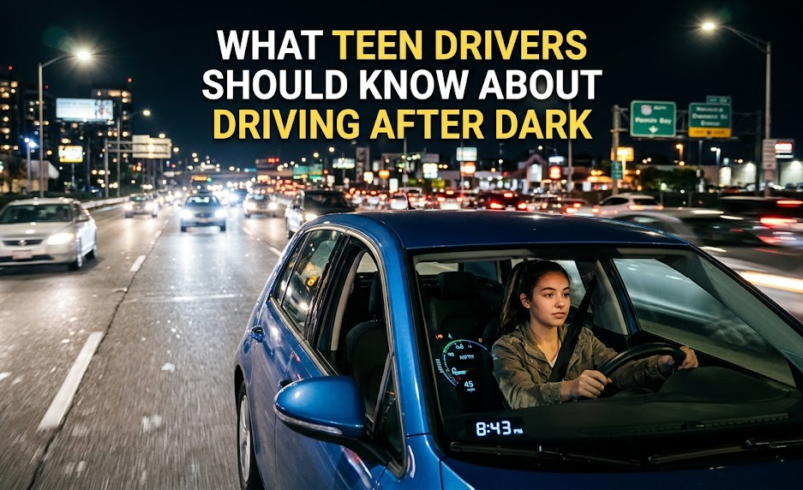

Driving after dark can feel very different from driving during the day. Roads that seem familiar in bright sunlight may become harder to navigate, pedestrians can be difficult to spot, and the glare from oncoming headlights can make it challenging to see clearly. For teen drivers who are still developing their driving skills, these conditions require extra attention, patience, and preparation.
Learning how to drive safely at night is an important part of becoming a responsible driver. With the right habits and enough supervised practice, teenagers can gradually become more comfortable handling low-light conditions. Quality Teen driver training Vancouver can help young drivers develop essential nighttime driving skills, including managing speed, using headlights correctly, maintaining safe following distances, and recognizing potential hazards before they become dangerous.
The goal is not simply to feel confident driving after sunset. It is to understand how darkness changes visibility, reaction time, and decision-making so that every journey becomes safer for the driver, passengers, and other road users.
Why Driving After Dark Requires Extra Attention
Nighttime driving introduces challenges that are less noticeable during daylight hours. Even when the road is dry and traffic is light, limited visibility can make it harder to judge distances and identify hazards.
Reduced Visibility
Human vision depends heavily on available light. After sunset, drivers may struggle to see pedestrians wearing dark clothing, cyclists without adequate lights, animals near the road, and objects that blend into the surroundings.
Teen drivers should understand that seeing the road ahead does not necessarily mean seeing every potential hazard. A person crossing between parked vehicles or a cyclist approaching from the side may remain difficult to notice until the vehicle is relatively close.
To improve visibility, look well ahead, scan both sides of the road, and pay attention to intersections, driveways, sidewalks, and areas where pedestrians may cross unexpectedly.
Headlight Glare
Bright headlights from oncoming vehicles can temporarily reduce visibility. Glare may be especially uncomfortable for inexperienced drivers who are not yet familiar with managing their vision in low-light conditions.
Instead of staring directly at approaching headlights, focus on the right edge of your lane while maintaining awareness of the road ahead. Keep your windshield and mirrors clean because dirt and smudges can make glare worse.
If your eyes need a moment to adjust after encountering bright lights, reduce your speed when safe and maintain control of your vehicle.
Difficulty Judging Speed and Distance
Darkness can make it harder to estimate how quickly another vehicle is approaching or how far away an object may be. This can affect decisions at intersections, while changing lanes, and when following another vehicle.
Young drivers should avoid making assumptions based on appearance alone. Check mirrors, assess the movement of surrounding traffic, and allow extra space before changing lanes or turning across traffic.
Prepare Your Vehicle Before Driving at Night
A safe nighttime journey begins before the engine starts. A few simple checks can prevent avoidable problems and help teen drivers feel more prepared.
Check Your Headlights and Taillights
Make sure your headlights, taillights, brake lights, and turn signals are working correctly. These lights help you see the road and allow other road users to recognize your vehicle and understand your intentions.
Headlights should be clean and properly aimed. Lights that point too high may dazzle other drivers, while poorly aimed headlights may not illuminate enough of the road.
If a bulb is damaged or a light appears unusually dim, have it checked before driving at night.
Clean Your Windows and Mirrors
Dirty windows can create distracting reflections when light from streetlamps and other vehicles passes through them. Clean the inside and outside of your windshield, side windows, and mirrors regularly.
Keep the dashboard free of objects that could reflect in the windshield or obstruct your view. Adjust your mirrors before moving so that you can monitor surrounding traffic without unnecessary distractions.
Adjust Your Dashboard Lighting
An overly bright dashboard can make it harder for your eyes to adapt to the darkness outside. Set the display brightness to a comfortable level that allows you to read essential information without creating excessive light inside the cabin.
Also, adjust your seat and mirrors before starting the journey. Making these changes while driving can take your attention away from the road.
Use Your Headlights Correctly
Knowing when and how to use headlights is one of the most important nighttime driving skills.
Know When to Turn Them On
Do not wait until the road becomes completely dark. Turn on your headlights around sunset or whenever visibility begins to decrease. Use them during rain, fog, and other conditions when visibility is limited, following local road rules.
In British Columbia, drivers should follow provincial lighting requirements, including requirements that apply when visibility is reduced. Daytime running lights may not illuminate the rear lights, so they should not be treated as a substitute for full headlights when conditions require them.
Understand High Beams and Low Beams
High beams provide greater illumination on dark roads where there is little or no street lighting. However, they can temporarily blind other drivers when used improperly.
Switch to low beams when approaching oncoming traffic or following another vehicle closely. Use high beams again when the road is sufficiently clear and their use is appropriate.
In fog, heavy rain, or snow, low beams are generally preferable because high beams can reflect off suspended water droplets and make visibility worse.
Avoid Relying on Automatic Headlights Without Checking
Automatic headlights can be helpful, but drivers should understand how their vehicle’s lighting system works. Some systems may not respond as expected in every situation, particularly when visibility decreases during the day.
Check that the correct lights are on before setting off. Developing this habit helps prevent driving with inadequate lighting.
Adjust Your Speed to Match Visibility
One of the most common nighttime driving mistakes is traveling at a speed that feels comfortable but leaves too little time to respond to hazards.
Your headlights illuminate only part of the road ahead. If you drive faster than your visible stopping distance allows, you may not have enough time to react to a stopped vehicle, an animal, or an unexpected obstacle.
Leave Enough Time to Stop
Choose a speed that allows you to see, recognize, and respond to hazards safely. Reduce your speed on unfamiliar roads, around sharp bends, near intersections, and in areas where pedestrians may be present.
Posted speed limits indicate the maximum permitted speed under applicable conditions, not a guarantee that traveling at that speed is always safe.
If the road is poorly lit or visibility is limited, slowing down is a sensible decision rather than a sign of weak driving ability.
Increase Your Following Distance
At night, it can be harder to notice that the vehicle ahead has slowed down or stopped. Maintaining extra space gives you more time to react.
A useful starting point in good conditions is a following gap of at least two seconds, where appropriate under local guidance. Increase that gap when visibility is poor, the road is wet, or traffic conditions require more stopping distance.
To estimate the gap, choose a stationary reference point. When the vehicle ahead passes it, count the seconds until your vehicle reaches the same point. If you arrive too soon, increase the distance.
Remember that following-distance guidance may need to be adjusted for your speed, weather, vehicle condition, and road surface.
Watch for Pedestrians, Cyclists, and Animals
Not every road user is easy to see after sunset. Teen drivers should pay particular attention to places where vulnerable road users are likely to appear.
Be Careful Near Crosswalks and Intersections
Slow down when approaching crosswalks, school areas, residential streets, and busy intersections. Check both sides of the road and look for pedestrians who may be preparing to cross.
Never assume that a pedestrian has seen your vehicle simply because you can see them. Be prepared to stop when required and yield according to local traffic rules.
Give Cyclists Extra Space
Cyclists may be difficult to spot when their clothing blends into the background or their lighting is limited. Check mirrors and blind spots before turning or changing lanes, and provide the legally required clearance when passing.
Be particularly cautious when turning across a bicycle lane or approaching a cyclist near an intersection.
Stay Alert for Wildlife
Animals may suddenly enter the road, especially near wooded areas, rural routes, and roads with limited lighting.
Watch for reflective eyes, movement near the roadside, and warning signs. If an animal appears ahead, brake firmly when safe and maintain control of the vehicle. Avoid sudden swerving that could send the car into oncoming traffic or off the road.
Avoid Distractions and Manage Tiredness
Darkness already makes driving more demanding. Adding distractions or fatigue increases the difficulty of responding to unexpected situations.
Put Your Phone Away
Set your navigation route, music, and other necessary controls before moving. Keep your phone out of reach and never read messages while driving.
Even a brief glance at a screen can mean missing a pedestrian, a traffic signal, or a vehicle slowing down ahead. If you need to check directions or respond to something, pull over somewhere safe and legal before doing so.
Recognize the Signs of Fatigue
Nighttime driving can coincide with the body’s natural tendency to become sleepy. Fatigue may cause slower reactions, difficulty concentrating, repeated yawning, heavy eyelids, or trouble remembering the last few minutes of driving.
Teenagers should not assume that loud music, an open window, or caffeine can make a dangerously tired driver safe.
If you feel sleepy, stop driving in a safe location and arrange an appropriate alternative. When possible, plan journeys to avoid driving during hours when you are likely to be tired.
Limit Passengers and Other Distractions
Friends can make driving more enjoyable, but conversations, jokes, and loud music can distract an inexperienced driver.
Follow any graduated licensing restrictions that apply to passengers and nighttime driving. Even when passengers are permitted, keep the cabin calm and make it clear that safety comes before entertainment.
Plan Your Nighttime Route in Advance
Preparation reduces uncertainty, especially for new drivers who are not yet comfortable navigating unfamiliar roads.
Before leaving, review your route and identify major turns, intersections, and suitable places to stop if needed. Check weather and road conditions, estimate how long the journey will take, and let a trusted person know your plans when appropriate.
Whenever possible, begin with familiar, well-lit routes and gradually progress to more challenging conditions under suitable supervision.
Avoid unnecessary shortcuts through poorly lit streets or unfamiliar rural roads simply because a navigation app suggests they are faster.
If you miss a turn, do not make a sudden lane change or stop in a dangerous place. Continue safely until you can find a suitable location to reroute.
Practice Night Driving Gradually
Confidence comes from experience, but practice should be introduced in a way that matches the driver’s current ability and legal permissions.
Start With Short, Familiar Journeys
A supervised drive around familiar streets can help a teenager learn how headlights illuminate the road, how glare affects vision, and how nighttime traffic behaves.
Choose a quiet route with good visibility and manageable traffic. Once the driver demonstrates consistent control, gradually introduce different road layouts and traffic conditions.
Learn From a Qualified Instructor
A qualified driving instructor can identify habits that a new driver may not notice, such as following too closely, looking too near the front of the vehicle, or reacting late at intersections.
Professional instruction also gives teens a chance to practise defensive driving techniques in a structured environment. Instructors can explain how to adapt speed, recognize hazards, and make decisions without rushing.
Follow Licensing Restrictions
Teen drivers should understand the rules attached to their learner or novice licence. Depending on the applicable licence stage and jurisdiction, restrictions may affect supervision, passengers, and the hours when driving is permitted.
In British Columbia, graduated licensing rules can include specific conditions for learner and novice drivers. Check the current requirements with ICBC before planning a nighttime trip, and never assume that a restriction no longer applies simply because a driver feels experienced.
What Should Teen Drivers Do If They Feel Unsafe?
Even careful drivers can encounter unexpected situations. Knowing how to respond calmly is an important part of nighttime driving.
If glare becomes overwhelming, reduce speed when safe and avoid staring into the light. If heavy rain makes the road difficult to see, increase your following distance and find a safe place to stop if conditions become unsuitable for driving.
If another driver behaves aggressively, avoid eye contact, gestures, or attempts to compete. Maintain a safe distance and let the other vehicle move away when possible.
If your vehicle develops a problem, move to a safe location away from traffic if you can do so safely. Turn on hazard lights when appropriate and seek roadside assistance. If you are stopped on a high-speed road, prioritize your safety and follow local guidance about remaining inside the vehicle or moving to a protected area.
The key is to recognize when conditions exceed your current abilities and make a safe decision rather than feeling pressured to continue.
Conclusion
Driving after dark becomes easier with preparation, patience, and consistent practice. Teen drivers should learn to use headlights correctly, adjust their speed to visibility, maintain a safe following distance, watch carefully for pedestrians and cyclists, and recognize when fatigue or poor weather makes driving unsafe. Parents can support this process by offering calm guidance and allowing teenagers to build experience gradually. With structured practice and responsible habits, young drivers can develop the judgment needed to handle nighttime roads safely. For additional guidance and skill development, Benche Driving School can be a useful resource for families exploring driving education and helping teen drivers work toward becoming safer, more confident motorists.